
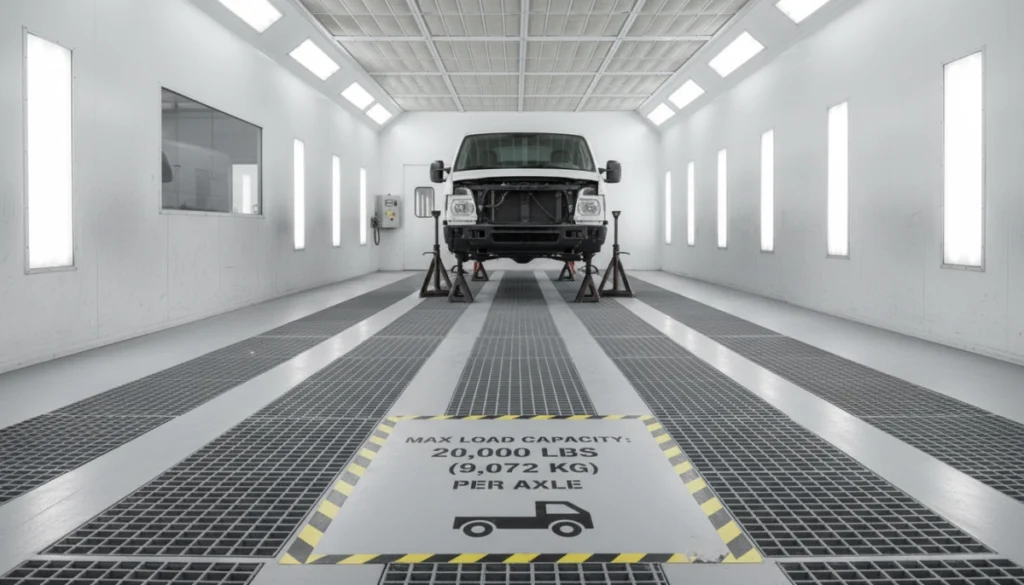
Most shop owners spend their energy thinking about airflow, filtration, and heating systems — and then completely overlook the floor. That’s a mistake that shows up later as cracked slabs, misaligned panels, and booth doors that won’t seal properly. Before a single panel gets bolted down, the foundation needs to be right. This guide covers how to calculate what your floor is actually carrying, what concrete specifications matter, how to handle pit installations, and what to watch for over the long term.
Page URL: https://sprayboothmanufacturer.com/product/
Understanding What Your Floor Is Actually Supporting
The weight your slab carries isn’t just the booth structure — it’s everything combined. Getting this wrong is how you end up with a floor that settles unevenly and throws the whole booth out of alignment.
Dead Load: The Constant Pressure
Dead load is the weight of everything that stays in place permanently. This includes the wall and ceiling panels, the overhead plenum and air distribution system, lighting fixtures, and all the hardware that holds the structure together. Double-wall insulated panels across a large booth footprint add up faster than most people expect, and the plenum is typically the heaviest single component of the booth box itself.
Mechanical systems belong in this category too. Air Makeup Units and exhaust fans create concentrated point loads — especially when they’re mounted on the roof of the booth or on dedicated stands. They also introduce vibration when running, which the floor has to absorb continuously over the life of the equipment.
Live Load: The Variable Weight
Live load is everything that moves in and out — primarily the vehicles or parts you’re spraying. The key point here is that a heavy vehicle doesn’t spread its weight evenly across the floor. A 6,000-pound truck applies that weight through four relatively small tire contact patches, creating concentrated pressure at those specific points. If the booth is positioned so those tire patches line up with reinforced areas of the slab, the floor handles it well. If they’re off-center or over a weakened section, that’s where settling and cracking start.
Static vs. Dynamic Loading
A truck sitting still in the booth is a static load. That same truck rolling in over a pit grate is a dynamic load — moving weight creates different stress patterns than stationary weight. The total load calculation needs to account for both, using the dead load of the booth structure plus the maximum weight of the heaviest vehicle or part you’ll ever spray. Never design to your average load — design to your worst case.
| Component | Weight Source | Load Type |
|---|---|---|
| Booth structure | Panels, doors, plenum, glass | Dead load — constant |
| Mechanical systems | AMUs, fans, ductwork | Dead load — concentrated |
| Vehicles and equipment | Curb weight through tire patches | Live load — variable |
| Personnel and carts | Technicians, equipment racks | Live load — minimal |
Concrete Specifications: What the Slab Needs to Handle Industrial Weight
Compressive Strength
For most spray booth installations, a concrete compressive strength of 3,000 to 4,000 PSI is the industry standard. This range handles the combined static weight of the booth structure and the dynamic stress of vehicles moving in and out over years of daily use. Residential garage floors are often poured to lower PSI ratings — if you’re moving into a converted space, verify the existing slab spec before assuming it’s adequate.
Slab Thickness
Thickness determines how much long-term abuse the slab can absorb.
| Slab Thickness | Recommended Use |
|---|---|
| 4-inch | Standard automotive refinishing, light-duty vehicles, small crossovers |
| 6-inch | Commercial trucks, heavy industrial equipment, downdraft pit perimeters |
A 4-inch slab works for many standard automotive booth installations when the concrete is in good condition and properly reinforced. For anything heavier — full-size trucks, large AMUs, or booths with pit installations — a 6-inch slab is the safer call.
Reinforcement
Thickness alone doesn’t prevent cracking. The concrete needs internal reinforcement to handle the tensile stress created by heavy point loads without fracturing.
Grade 60 rebar is the right choice for 6-inch slabs handling heavy-duty point loads. Welded wire mesh works well for 4-inch pours, primarily to prevent surface hairline cracks. Fiber mesh additives are often used alongside rebar or wire mesh to reduce shrinkage cracking during the initial concrete cure. For most professional installations, a combination of rebar and fiber mesh provides solid long-term performance.
Foundation Prep and Cure Time
Two things that often get rushed and shouldn’t. The slab needs to be level within 1/8 inch over a 10-foot span — even a small deviation affects whether booth panels align properly and whether doors seal cleanly. And new concrete needs a full 28 days to reach its design strength before heavy equipment gets anchored to it. Installing before that point risks sinking and cracking under the initial static load.
Point Loads: Where the Real Stress Concentrates
The average weight distributed across the full booth footprint often looks manageable on paper. The problem is that the booth doesn’t distribute weight evenly — it concentrates it at specific locations.
Booth legs carry the combined weight of the plenum, panels, lighting, and mechanical systems above them. The motor and blower assembly creates a dense footprint with high localized pressure. When exhaust fans start up, the vibration adds a cycling stress at those same points that the floor absorbs continuously over years.
To get a working baseline for floor loading, the calculation is:
- Dead load = total weight of booth structure, including panels, plenum, lights, and mounted mechanical equipment
- Live load = maximum weight of the heaviest vehicle or part, plus technician and equipment weight
- Total PSF = (Dead load + Live load) ÷ total booth square footage
Keep in mind that the average PSF figure can look reasonable while a single booth leg is carrying several thousand pounds on a small contact area. The concrete PSI rating needs to handle those concentrated hot spots, not just the average distributed load.
Pit Installations: Special Structural Requirements
A downdraft booth pit is more than a hole in the floor. It’s a structural component that has to handle significant vertical loads while resisting the lateral pressure of the surrounding soil.
Pit Wall Design
Pit walls typically need to be at least 8 inches thick and reinforced with rebar to resist inward soil pressure. The walls also carry vertical loads from the booth structure above — the plenum and wall panels often sit on the pit perimeter, and that weight transfers down through the pit walls to the footing. Both of these forces need to be accounted for in the wall design, not just one of them.
Grating Support
The ledge where the floor grating sits — sometimes called the rebate — has to be level and reinforced to handle vehicles and heavy parts moving directly over it. Unevenness or weakness at this ledge shows up as grating that rocks or shifts under load, which creates both a safety issue and an alignment problem for the booth structure.
Moisture and Drainage
A pit that collects water creates corrosion problems for booth components and structural problems for the concrete over time. Vapor barriers under the pit floor prevent groundwater infiltration. Sump pits or drain provisions handle water from floor cleaning or accidental spills. Proper rebar schedules also account for freeze-thaw cycles in cold climates, which create cyclical stress on the pit walls that can eventually cause cracking if the reinforcement isn’t adequate.
Compliance and Professional Assessment
NFPA 33 sets the standards for spray finishing operations and influences local building codes across the US, including requirements that touch on how floors handle load and heat cycling. Before installation, verify fire-rated clearances, confirm the slab meets the minimum thickness for your specific booth model, and make sure load data is documented and ready for permit and fire marshal review.
If you’re moving into an older building or a converted warehouse, don’t assume the existing slab is adequate. Get a licensed structural engineer involved if the concrete shows deep scaling or significant cracking, if the original pour records are missing, or if you’re installing a heavy industrial booth or multi-car downdraft system on a slab of unknown specification. Finding out the floor won’t handle the load after the equipment arrives is an expensive lesson.
Long-Term Floor Maintenance
Installation is the beginning, not the end. The floor needs ongoing attention to keep the booth in proper alignment and the structure performing as designed.
Monitoring for Cracks
Pay attention to the areas around booth legs and vehicle entry points — these are the highest-stress locations. Minor hairline cracks can be normal settling, but spider-web patterns or cracks that are widening are early signs of floor fatigue. Left unaddressed, these cracks allow moisture to reach the reinforcing steel, which corrodes it from the inside and accelerates structural decay.
Protecting the Concrete Surface
Raw concrete is porous and absorbs solvents, thinners, and paint spills. An epoxy or polyaspartic floor coating creates a chemical-resistant barrier that prevents these materials from working into the slab. The coating also makes cleanup easier, improves slip resistance, and doesn’t affect load distribution. Apply it after the concrete has fully cured and before equipment is installed.
Checking for Booth Alignment
If the slab settles unevenly over time, it throws the booth structure out of level. This shows up as door seals that no longer close properly — which ruins the pressure balance inside the booth — or as AMU and exhaust fan assemblies that aren’t sitting level, which creates vibration imbalance and accelerates motor wear. Checking levels periodically catches these issues while they’re still cheap to address.
Common Questions
Can a standard 4-inch garage floor support a paint booth? For light-duty automotive booths with standard vehicles, a 4-inch slab in good condition often works. The key variables are the concrete PSI — residential pours are often below the 3,000 to 4,000 PSI industrial standard — and whether the slab is reinforced. For heavy trucks, downdraft pit installations, or large AMUs, a 6-inch reinforced slab is the appropriate specification.
How long does new concrete need to cure before installing? 28 days is the standard. Concrete achieves its full design strength at that point. Installing heavy equipment earlier than that risks sinking or cracking under initial load before the slab has reached its rated compressive strength. It also allows moisture to escape fully, which matters for floor coating adhesion later.
What happens if the slab doesn’t meet the load requirements? The booth frame can shift, which causes doors to lose their seal and airflow balance to deteriorate. Deep stress fractures can develop at point load locations where booth legs contact the floor. In severe cases, localized areas of the slab can fail under concentrated load. Getting the floor right before installation is significantly cheaper than remediation after.
Is a vapor barrier necessary under the slab? Yes. Ground moisture migrating up through porous concrete raises humidity inside the booth and contributes to corrosion on the bottom of booth panels and mechanical components. A vapor barrier under the slab is a low-cost preventive measure with real consequences if it’s skipped.
| Specification | Requirement |
|---|---|
| Minimum slab thickness | 4 inches (standard) to 6 inches (heavy-duty) |
| Concrete compressive strength | 3,000–4,000 PSI |
| Reinforcement | Rebar or welded wire mesh |
| Curing time before installation | 28 days |
| Levelness tolerance | 1/8 inch over 10 feet |
Tell Us What You’re Working With
Share your facility details, floor condition, booth type, and the heaviest vehicles or parts you plan to spray. We’ll help you verify whether your existing slab is ready or what preparation is needed, and send a detailed installation quote with layout drawings — usually within 48 hours.
Related Pages
- Bus Spray Booth Design Guide → https://sprayboothmanufacturer.com/transit-coach-spray-booth-requirements/
- Truck Paint Booth Guide → https://sprayboothmanufacturer.com/truck-paint-booth-semi-truck-spray-booth-specifications-buying-guide/
- Other related products → https://www.autokemanufacture.com/product
- Contact our sales Team → https://sprayboothmanufacturer.com/contact-us/
✅ CE Certified | ✅ ISO 9001:2015 | ✅ Factory Direct | ✅ Ships to 60+ Countries | ✅ 1-Year Warranty | 🔒 HTTPS Secured