
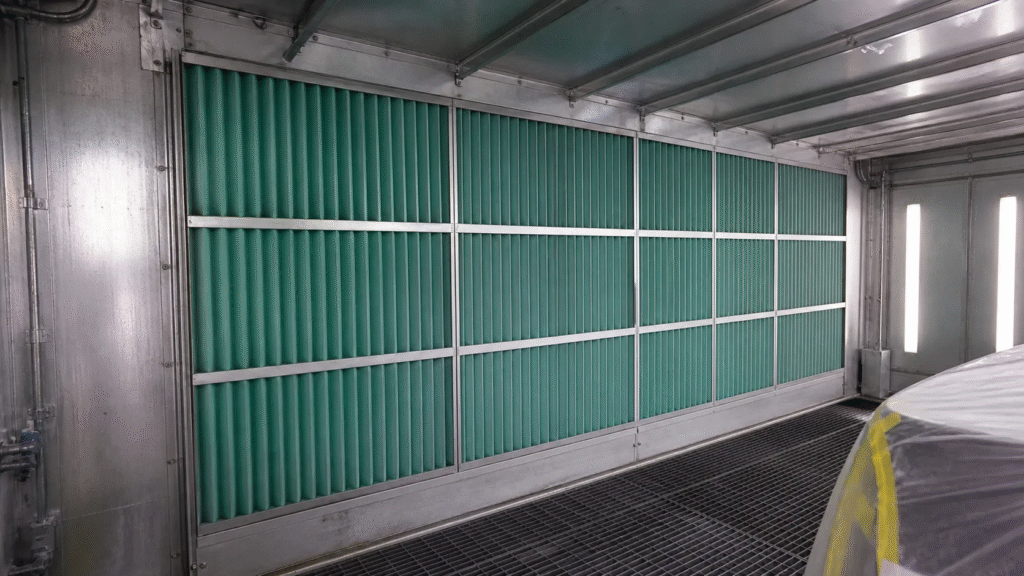
What Are Paint Booth Filters and Why Are They Essential?
Ensuring Superior Paint Finish Quality
Paint booth filters play a critical role in achieving flawless paint finishes by capturing dust, debris, and airborne particles before they contact the painted surface. Fine filtration prevents surface defects such as paint sagging, fisheyes, and color inconsistencies, ensuring a smooth, high-quality coating. By maintaining a clean, controlled airflow environment, filters help deliver consistent, professional-grade results every time.
Protecting Worker Health and Air Quality
Effective paint booth filtration safeguards worker health by trapping overspray, VOCs, and harmful particulate matter. Moreover, filters improve indoor air quality by reducing contaminants that can cause respiratory irritation or long-term health risks in the painting area. As a result, this filtration support is essential for meeting occupational safety standards and providing a safer workplace.
Maintaining Equipment Efficiency and Environmental Compliance
Paint booth filters help protect critical components like fans and ducts from clogging with paint mist, extending equipment lifespan and reducing maintenance costs. Proper filtration minimizes airflow resistance and maintains optimal static pressure levels crucial for efficient booth operation. Additionally, filtering overspray and hazardous emissions ensures compliance with environmental regulations, preventing harmful pollutants from entering the atmosphere.
Key Filter Stages in Paint Spray Booths
Pre-Filtration Stage
The pre-filtration stage serves as the first line of defense in paint booths, capturing large particles like dust, dirt, and debris before they enter the booth’s air system. This stage uses coarse intake filters designed to trap contaminants greater than 10 microns in size with an efficiency exceeding 82%. By preventing large airborne particles from infiltrating the workspace, pre-filters help protect downstream filtration components and maintain a cleaner environment inside the booth, ultimately enhancing paint finish quality.
Intake Air Supply Filtration
Following pre-filtration, intake air supply filters refine the airflow entering the spray booth. These filters capture finer particles—down to 1 micron—with efficiencies reaching up to 98%. This stage helps ensure the airflow remains uniform and contaminant-free, delivering consistent laminar airflow that minimizes defects such as paint sagging or surface blemishes. Proper intake filtration also safeguards workers and equipment by maintaining clean air quality throughout the spraying process. For insight into airflow design and safety impacts, reviewing automotive paint booth ventilation strategies can be beneficial.
Exhaust Air Filtration
Exhaust filtration captures liquid overspray, oil mist, and paint particles as the air exits the spray booth. Meanwhile, exhaust filters, often known as paint mist arrestors, employ specialized media rated as G3 (EN779) or EU3 (EUROVENT) to trap over 98% of overspray particles. Furthermore, these filters are flame retardant and designed to handle typical pressure differentials around 200 Pa to protect fans and ventilation equipment. Therefore, consistent maintenance and timely replacement of exhaust filters prevent buildup, ensuring efficient airflow and environmental compliance. Additionally, detailed approaches on spray booth air circulation systems offer valuable guidance for effective exhaust filtration.
Primary Types of Paint Booth Filters
Intake and Crossdraft Filters
Intake filters serve as the first barrier in paint booths, capturing larger debris, dust, and contaminants before air enters the spray area. Crossdraft intake filters are designed specifically for booths with crossdraft airflow, ensuring clean air flows evenly across the workspace. These filters typically target particles larger than 10 microns and maintain filtration efficiency above 80%, helping prevent surface contamination and protecting downstream filters and equipment.
Ceiling and Downdraft Diffusion Filters
Ceiling diffusion filters play a crucial role in creating uniform, laminar airflow inside downdraft paint booths. Firstly, they capture finer particles down to 1 micron, with filtration efficiencies reaching up to 98%, delivering clean, smooth air circulation that minimizes paint defects and overspray turbulence. In addition, downdraft diffusion filters are engineered to ensure airflow is evenly distributed from the ceiling downward, promoting high-quality paint finishes and consistent booth performance.
Exhaust Filters and Paint Mist Arrestors
Exhaust filters, including paint mist arrestors, focus on capturing wet paint overspray, oil mist, and airborne particles before the air exits the booth. These filters are typically made of fiberglass or synthetic media rated at G3 or EU3 filter classes, with efficiencies of 90% up to 98% depending on the arrestor type. They reduce environmental emissions and ensure the booth complies with safety and air quality standards. Timely replacement is critical to prevent pressure build-up and airflow restrictions.
Pre-Filters and Bag Filters
Pre-filters and bag filters serve as supplemental filtration to protect primary filters and extend their life. Pre-filters trap coarse dust and larger particulates ahead of more sensitive filter stages, while bag filters offer higher capacity for holding overspray particulates in larger industrial spray booths. Both types are designed for easy replacement and help maintain booth air quality and system efficiency by reducing clogging and pressure drop in critical filtration layers.
For a detailed overview of paint booth configurations and filter applications, the comprehensive automotive paint booth guide provides valuable insights tailored to professional paint operations.
Paint Booth Filter Media and Specialty Options
Fiberglass Exhaust Media
Fiberglass exhaust media is a durable and flame-retardant filter material widely used in paint booth exhaust systems. Specifically, it effectively captures wet paint mist, overspray, and oil particles. Furthermore, known for its high resistance to moisture and chemicals, fiberglass media maintains filtration efficiency without rapid clogging. Ultimately, this material meets strict flame retardancy standards, making it suitable for high-volume automotive or industrial paint booths.
Paper and Poly Exhaust Media
Paper and synthetic polyester (poly) filter media offer a cost-effective solution for exhaust filtration. Paper media is designed for disposable use, providing reliable capture of overspray and contaminants with decent airflow resistance. Poly media, being synthetic, resists humidity better and tends to last longer than paper filters under normal booth conditions. Both types are lightweight, easy to replace, and commonly used as pre-filters or secondary exhaust filters.
High-Efficiency Cassette and Pocket Filters
High-efficiency cassette and pocket filters deliver superior particle capture down to sub-micron levels while balancing airflow and pressure drop. Their pleated design increases surface area, improving dust-holding capacity and filter lifespan. These filters are essential in spray booths requiring enhanced air quality control, such as those serving high-end automotive finishing or specialized industrial painting operations. The modular cassette form allows easy installation and maintenance to support consistent airflow and booth performance.
| Filter Media Type | Key Features | Application | Replacement Interval |
|---|---|---|---|
| Fiberglass Exhaust Media | Flame retardant, high moisture resistance | Exhaust paint mist arrestors | Typically 50–100 operating hours |
| Paper Exhaust Media | Cost-effective, disposable | Pre-filter/exhaust stage | 2–4 months or per workload |
| Poly Exhaust Media | Durable, humidity resistant | Secondary exhaust filter | 3–6 months depending on usage |
| Cassette/Pocket Filters | High capture efficiency, pleated design | Fine filtration stages | Annual or per static pressure readings |
Choosing the right filter media is crucial to maintaining booth airflow balance, controlling overspray, and extending equipment life. Proper selection ensures regulatory compliance and a defect-free paint finish, supporting high productivity in demanding shop environments such as those detailed in this automotive paint booth guide.
Paint Booth Filter Maintenance and Replacement Schedule
Recommended Replacement Frequency by Filter Type
Proper maintenance and timely replacement of paint booth filters are critical to maintaining optimal paint quality and operational efficiency. Each filter type has a specific lifespan based on its function and exposure:
- Pre-filters and Intake Filters: Replace every 2 to 4 months or after roughly 250 to 300 operating hours to prevent large debris from entering the booth.
- Ceiling Diffusion Filters: Typically changed annually or after about 2,000 hours of use, or sooner if static pressure readings spike.
- Exhaust Filters and Paint Mist Arrestors: Require more frequent attention, usually every 50 to 100 operating hours, with daily visual inspections recommended.
- Powder Coating Cartridge Filters: Last up to a year or more, with pulse-cleaning features extending their usefulness before replacement.
Following these intervals ensures consistent airflow, prevents contamination, and avoids unnecessary strain on booth fans.
Key Signs That Your Filters Need Changing
- Noticeable increase in static pressure or unusual pressure drops measured by manometers or digital gauges.
- Reduced airflow causing uneven spray patterns, paint defects, or longer drying times.
- Visible buildup of dust, overspray, or oil mist clogging the filter media.
- Irregular odors, excessive paint dust presence, or difficulty maintaining booth temperature.
- Frequent filter dust “carry-through” indicating saturation and loss of filtration performance.
Recognizing these signs early prevents costly downtime and maintains the highest quality finish standards.
Effects of Clogged Filters on Booth Airflow
Clogged paint booth filters directly impact airflow dynamics, increasing resistance within the ventilation system. This causes:
- Excessive strain on supply and exhaust fans, leading to higher energy consumption and potential equipment failure.
- Turbulent and uneven airflow patterns, resulting in paint defects such as orange peel, dust nibs, or sagging.
- Elevated booth static pressure beyond recommended limits (often 200 Pa for exhaust filters), impairing the booth’s ability to exhaust hazardous fumes properly.
- Reduced filter life of downstream components and compromised operator safety due to poor air quality.
Regular maintenance ensures filters perform efficiently, preserving consistent airflow and meeting environmental standards. For detailed replacement guidelines, consult the spray booth filter replacement schedule.
How to Select the Right Filters for Your Paint Booth
Matching Filters to Spray Booth Configuration
Choosing the right paint booth filters starts with understanding your booth’s airflow design—whether it’s downdraft, crossdraft, or semi-downdraft. Each configuration demands specific filter types and placements to optimize airflow and contamination control. For example, downdraft booths require high-efficiency ceiling diffusion filters to ensure smooth, laminar air distribution, while crossdraft booths depend heavily on effective intake and exhaust filters. Selecting filters engineered to fit your booth’s size and design helps maintain consistent airflow and prevents overspray buildup, critical for achieving a flawless paint finish. For tailored solutions that fit different booth setups, the options offered by leading manufacturers can ensure perfect compatibility with your specific spray environment.
Evaluating Filtration Efficiency and Pressure Drop
When selecting filters, balance filtration efficiency with the impact on airflow—specifically, the pressure drop across the filter. High-efficiency filters that capture particles down to one micron or smaller are essential for superior paint quality but generally create higher resistance to airflow. Monitor static pressure using manometers or digital gauges to avoid excessive strain on your booth’s ventilation system. Keeping pressure drop within recommended ranges (typically 10–80 Pa) helps sustain energy efficiency and extends fan life. Filters with moderate resistance yet effective particle capture provide the best overall performance, reducing the risk of paint imperfections and equipment wear.
Balancing Performance, Cost, and Compliance Standards
Filters vary widely in cost and lifespan, so balancing upfront expense against maintenance frequency and operational ROI is vital. Factory-direct industrial paint booth filters offer competitive pricing with CE certification that meets US environmental and safety compliance. Opt for multi-stage filtration systems where pre-filters, intake filters, and exhaust arrestors work together to maximize efficiency while minimizing replacement costs. Remember, skipping on quality can lead to surface defects, rework expenses, and potential regulatory fines. Investing in certified, durable filters with proven flame retardancy and high particle removal rates delivers dependable protection without compromising budget constraints.
For more on booth design and filter integration, consider exploring solutions for automotive paint booths that fit your specific application and compliance needs.