
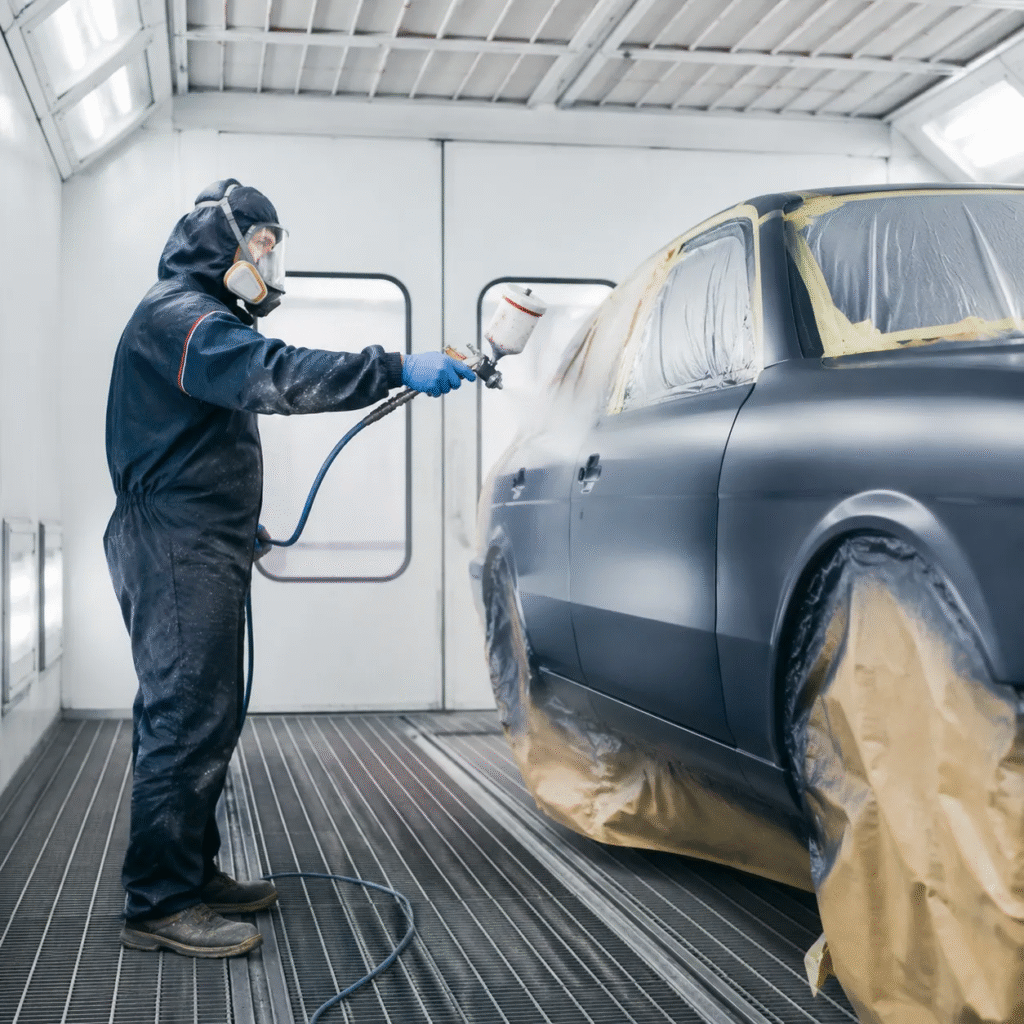
What Is an Industrial Automotive Paint Booth?
Definition and Core Purpose
An industrial automotive paint booth is a specialized, controlled environment designed specifically for applying paint finishes to vehicles and automotive components. Its core purpose is to ensure a dust-free, well-ventilated space that optimizes paint application quality while minimizing overspray and contaminants. These booths enable consistent, professional-grade finishes by maintaining precise airflow, temperature, and humidity controls tailored for heavy-duty, large-scale automotive painting operations.
How Industrial Spray Booths Work
Industrial spray booths function by creating a balanced airflow system that draws in clean, filtered air and exhausts overspray and fumes safely. This airflow design helps contain paint particles within the booth, protecting workers and the environment from harmful emissions. The process involves air intake through filtration units, circulation around the painted object, and removal via exhaust fans equipped with capture and filtration technologies. Heating options such as electric or diesel systems may be integrated to accelerate drying and curing times, enhancing productivity.
Key Components and Structure
Key components of an industrial automotive paint booth include:
- High-efficiency filtration systems that maintain clean air and prevent dust intrusion.
- Airflow ventilation setups (downdraft, cross-draft, or side-downdraft) designed to optimize paint finish quality.
- Heating units for temperature control and paint curing acceleration.
- Durable steel framework and non-reactive interior panels that resist corrosion and support safety compliance.
- Lighting systems that provide bright, shadow-free illumination.
- Control panels to monitor airflow, temperature, and safety systems.
Together, these elements create a safe, efficient, and compliant environment for industrial-scale automotive painting, ensuring superior finish quality and operational reliability.
Main Benefits of Industrial-Grade Paint Booths
Enhanced Finish Quality and Control
Industrial automotive paint booths deliver superior finish quality by maintaining a controlled environment with clean, filtered airflow. This reduces dust, overspray, and contaminants that can ruin paint jobs. Precise ventilation systems and temperature regulation create consistent drying and curing conditions, essential for flawless coatings. These booths also allow better control over humidity and air pressure, ensuring every layer of paint adheres evenly and lasts longer.
Improved Shop Efficiency and Throughput
By optimizing airflow and drying times, industrial paint booths speed up painting cycles and increase the number of vehicles processed daily. Automated systems like temperature auto balancing and filter monitoring reduce manual oversight, freeing up skilled labor for other tasks. The ability to handle multiple vehicle sizes and custom setups streamlines workflow while minimizing downtime, maximizing return on investment.
Safety and Fire Suppression Standards
Industrial-grade booths are designed with strict safety features to minimize fire risks caused by volatile paint fumes. Robust ventilation exhausts harmful vapors, while built-in fire suppression systems quickly control emergencies. Compliance with global standards protects both personnel and property, ensuring legal operation and peace of mind in busy workshops.
Environmental Protection and Regulatory Compliance
Modern automotive paint booths are engineered to contain overspray, capture hazardous emissions, and filter exhaust air before release. This supports compliance with environmental regulations in markets worldwide, including limits on volatile organic compounds (VOCs). Using water-based finishing systems and energy-efficient curing options further reduces environmental impact, helping workshops operate responsibly and avoid costly fines.
For a complete overview of industrial paint booth benefits and features, the detailed guide on automotive paint booth solutions, types, features, and benefits offers in-depth insights.
Types of Automotive Paint Booths by Airflow Configuration
Downdraft Paint Booths
Downdraft paint booths push filtered air from the ceiling down toward the floor, then out through floor-level exhaust vents. This vertical airflow design creates a clean, dust-free environment by carrying overspray and contaminants away from the vehicle surface. Downdraft booths offer superior finish quality and are favored in industrial automotive paint applications for their controlled environment and consistent airflow patterns.
Semi-Downdraft Paint Booths
Semi-downdraft booths combine elements of downdraft and cross-draft airflow. Air typically enters from the rear wall near the ceiling and flows diagonally across the booth before exiting at the floor or front wall. This setup improves paint finish control compared to basic cross-draft booths while using less energy and space than full downdraft models, making it a practical option for mid-size workshops and custom build lines.
Side Downdraft Paint Booths
Side downdraft booths direct airflow horizontally across the paint area from ceiling to side exhaust vents. This design efficiently removes overspray and fumes while preserving clear visibility and workspace access. Side downdraft configurations are common in automotive and truck spray booths where vehicle size or installation constraints prevent vertical airflow layouts but high-quality finish control is still required.
Cross-Draft Paint Booths
Cross-draft booths move filtered air from one end of the booth to the other, typically from the front door to the rear exhaust. While simpler and often more affordable, cross-draft airflow can create uneven air distribution and more overspray turbulence. They suit smaller operations or budget-conscious facilities but may not match the finish quality or environmental control of downdraft designs.
Each airflow configuration balances finish quality, energy efficiency, and installation practicality, allowing you to choose the right type for your industrial automotive paint booth needs. For custom solutions and detailed technical support on booth configurations, explore our range of custom paint booths for auto industrial use.
Industrial Applications and Equipment Categories
Car and Passenger Vehicle Spray Booths
These spray booths are designed specifically for automobiles ranging from compact cars to SUVs. Equipped with advanced airflow control and filtration, they ensure a dust-free environment for an impeccable finish. Available in standard sizes (6m, 7m, and 8m) with options for diesel or electric heating, these booths deliver consistent quality for body shops and automotive repair centers.
Truck, Bus, and Large Commercial Vehicle Booths
Built to handle larger vehicles like trucks, buses, and construction equipment, these booths offer spacious interiors and reinforced structures. Custom sizes accommodate heavy-duty painting and curing needs. Engineered with powerful ventilation and temperature control, these paint booths maintain uniform finish quality even for oversized industrial vehicles. Specific configurations for oversized subjects ensure efficient coverage and drying. For detailed size options, explore our range of standard sizes for buses and heavy-duty trucks.
Customized Industrial Paint Lines and Heavy Equipment Booths
For demanding industrial applications, fully customized paint production lines and booths are available. These setups integrate heavy equipment spraying, high-volume curing, and tailored ventilation systems to meet specific production workflows. OEM and ODM services allow modifications in design, dimensions, and technical features to fit unique manufacturing requirements. This category includes specialized booths for furniture, alloys, and other industrial parts, designed to optimize throughput while ensuring top finish consistency.
Water-Based Paint Finishing Systems
As environmental regulations tighten, water-based paint spray booths are gaining traction. These systems feature advanced filtration and airflow mechanisms tailored to waterborne coatings. They provide a controlled environment minimizing overspray and VOC emissions, ensuring compliance with global eco-friendly standards. Integrating water-based finishing solutions supports sustainable operations without compromising on surface quality or drying efficiency.
Overall, these industrial automotive paint booths suit a wide spectrum of applications and scales. Each type delivers precise airflow, temperature control, and contamination management to achieve superior paint finishes in professional settings. For more on diverse spray booth features and airflow designs, see our detailed guide on types of car spray booths and their features.
Advanced Performance Features and Options
Air Make-Up Units (AMU) and Temperature Control
Air Make-Up Units are essential for maintaining consistent airflow and pressure inside an industrial automotive paint booth. They supply fresh, filtered air to replace exhausted air, ensuring a controlled environment free from contaminants. Precise temperature control integrated with AMUs improves paint curing quality and reduces drying times. This balance prevents overspray from settling unevenly, delivering a more uniform finish and maximizing shop efficiency.
High-Efficiency Infrared (IR) Curing Lamps
Infrared curing lamps accelerate paint drying by emitting targeted heat that penetrates paint layers quickly and evenly. Compared to conventional methods, IR lamps reduce energy consumption and curing times, cutting production cycles without compromising finish durability. These lamps provide consistent heat distribution, vital for thick coatings and specialty finishes, supporting industrial workflows that demand high throughput and superior quality.
Personalized Vacuum and Dust Extraction Systems
Effective vacuum and dust extraction units are crucial to maintaining dust-free and contaminant-controlled conditions inside the paint booth. Tailored systems optimize airflow patterns to capture overspray and airborne particles at their source, reducing rework due to surface defects. Custom configurations ensure proper filtration stages and vacuum power suited to specific booth sizes and industrial applications, safeguarding both product quality and operator health.
Customizable Configurations and Dimensions
Industrial automotive paint booths come in a range of sizes and modular designs to fit diverse workshop layouts and operational needs. Custom-built booths can accommodate varied vehicle types—from compact cars to large commercial trucks—while integrating specialized features like multi-zone curing areas or upgraded ventilation. Offering flexible dimensioning and outfitting options allows global customers to tailor paint booths for peak performance, space efficiency, and long-term adaptability.
For in-depth technical specifications and customization options on industrial automotive paint booths, visit this comprehensive guide to automotive paint booth types and features.
How to Choose the Right Industrial Automotive Paint Booth
Assessing Your Shop Space and Installation Requirements
Start by measuring your available floor area and ceiling height carefully. Industrial automotive paint booths require sufficient clearance not only for the vehicle but also for operator movement, ventilation equipment, and lighting. Consider the location of existing utilities like power supply and exhaust vents to streamline installation. It’s crucial to verify if your workshop layout supports proper airflow without obstructions and allows for easy access to materials and vehicles. Planning for future expansion or changing workflow patterns will help avoid costly retrofits later.
Selecting the Optimal Airflow Configuration
Airflow design is central to paint quality and operator safety. Downdraft booths are preferred for their clean airflow and superior finish control, drawing air from ceiling to floor. Side downdraft and semi-downdraft booths offer alternatives based on shop size and budget but may compromise on overspray containment or dust control. Cross-draft booths are the simplest but least effective in filtering contaminants. Match airflow type with your production volume, space constraints, and paint material requirements to maximize efficiency and finish consistency. Detailed airflow planning can be found in specialized resources such as this automotive paint booth plans and airflow design guide.
Evaluating Paint Booth Price and Long-Term Cost Factors
Price ranges for industrial automotive paint booths typically span from $6,500 to $15,000 depending on size, heating method, and airflow system. Beyond upfront cost, consider ongoing expenses including filter replacements, energy consumption (electric vs. diesel heating), maintenance, and spare parts availability. Volume discounts on freight and packaging often reduce per-unit costs when purchasing multiple booths. Evaluating total cost of ownership with reliable suppliers offering transparent pricing and secure payment methods is key for smart investment.
| Cost Factor | Considerations |
|---|---|
| Initial Purchase Price | Size, features, heating system |
| Installation Expenses | Electrical, ventilation, flooring |
| Operating Costs | Energy usage, filter replacement |
| Maintenance | Frequency, parts availability |
| Logistics Savings | Bulk shipping discounts |
Choosing Options for Custom-Built Specifications
Customization matters in industrial settings where one-size-fits-all rarely applies. Options include custom booth dimensions, heating methods (electric or diesel), integrated curing ovens, or alloy wheel repair setups. Ventilation and pressure control can be tailored to specific paint types or environmental regulations. Demand for OEM and ODM services enables configuring spray booth systems to precise workflow and regulatory needs worldwide. Partnering with experienced manufacturers ensures compliant, durable, and efficient booths designed around your unique operational demands. More insights on specialized equipment types and customization options are available in the automotive paint booth equipment guide.
Industrial Automotive Paint Booth FAQs
What are the primary differences between pressurized and non-pressurized booths?
| Feature | Pressurized Booths | Non-Pressurized Booths |
|---|---|---|
| Airflow Control | Maintain positive pressure to prevent dust ingress | Neutral or negative pressure; less controlled airflow |
| Cleanliness | Superior filtered air, reducing contaminants | More prone to dust and overspray outside the booth |
| Finish Quality | Consistently smooth with minimal defects | Higher risk of imperfections due to dust |
| Energy Usage | Generally higher due to active air circulation | Lower overall energy consumption |
| Installation Complexity | Requires tighter sealing and advanced ventilation | Simpler to install and maintain |
Pressurized booths create a controlled environment by keeping clean filtered air inside under positive pressure. This reduces contamination and helps deliver premium finish quality essential for industrial automotive paint booths.
How do environmental regulations impact spray booth selection?
Environmental laws focus heavily on controlling emissions, overspray, and solvent vapors. Selecting a compliant industrial automotive paint booth means:
- Incorporating efficient filtration systems to capture pollutants.
- Using water-based paint finishing systems or low-VOC coatings where required.
- Ensuring booths meet CE and other international certification standards, which simplify exports to regulated markets like Europe, the US, and the Middle East.
- Considering booths with integrated fire suppression and safety controls to adhere to workplace health requirements.
Choosing the right booth ensures your shop operates within legal limits while maintaining productivity and environmental responsibility. Many suppliers offer consultative service to tailor booths to regional regulations.
What maintenance is required to ensure consistent performance?
Maintaining an industrial automotive paint booth involves:
- Regularly replacing air filters to sustain clean airflow and prevent clogging.
- Inspecting and servicing ventilation fans and pressure systems for optimal function.
- Cleaning the booth interior to remove accumulated overspray and dust buildup.
- Checking heating units (diesel or electric) to ensure stable temperature control.
- Monitoring control panels and safety systems to prevent downtime or hazards.
Routine upkeep extends equipment life, guarantees a consistent dust-free environment, and preserves paint finish quality. Many manufacturers provide detailed maintenance manuals and support.
Can a standard automotive booth be modified for heavy industrial use?
Standard automotive booths can often be upgraded for more demanding industrial applications by:
- Increasing booth size (e.g., moving to 7m or 8m dimensions) to accommodate larger vehicles or production lines.
- Enhancing airflow with downdraft ventilation to manage overspray more effectively.
- Adding specialized curing ovens or alloy wheel repair setups.
- Integrating heavy-duty heating systems like diesel heating for better temperature balance.
- Customizing structural components to handle continuous or high-volume workloads.
However, it’s critical to source booths from manufacturers experienced in OEM and ODM customization. This ensures modifications meet industrial durability, safety, and performance standards without compromising airflow or finish quality. Refer to trusted suppliers specializing in industrial automotive paint booths for tailored solutions. For detailed options, review specialized product lines such as those available from leading manufacturers of automotive paint booths and industrial finishing systems.
Related Sources
- https://globalfinishing.com/2020/04/07/which-airflow-style-is-best-for-my-paint-booth/
- https://www.spraysystems.com/compliance-checklist/
- https://www.osha.gov/laws-regs/regulations/standardnumber/1926/1926
- https://www.autotechsolutions.com/post/industrial-paint-booth
- https://industrialcleanairproducts.com/booths/