
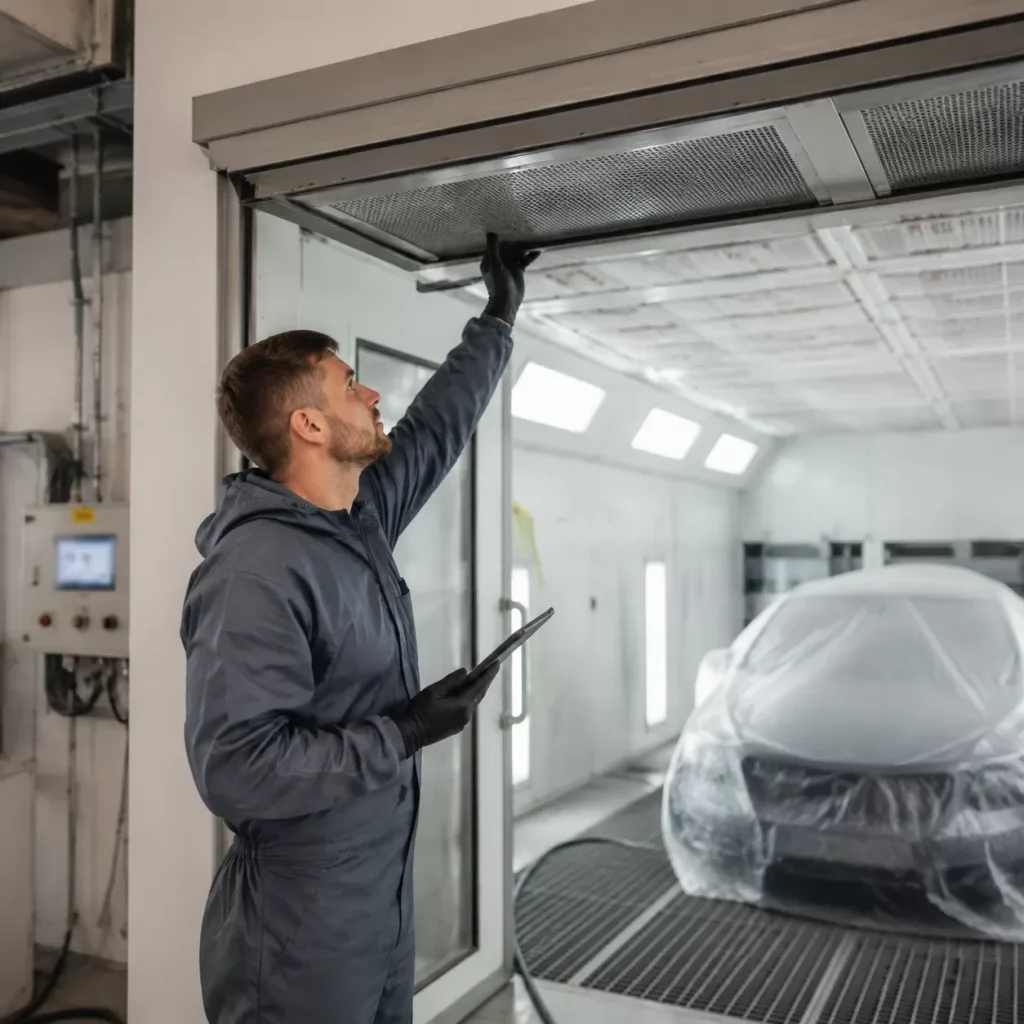
If you’re working with spray painting or finishing, understanding the role of a paint booth exhaust fan is absolutely critical. These fans don’t just move air—they remove hazardous vapors and overspray, safeguard worker health, and keep you compliant with safety regulations. Choosing the right exhaust fan means considering airflow capacity, pressure requirements, and specialized features like explosion-proof motors and spark-resistant construction. Whether you’re in automotive refinishing, industrial coating, or woodworking, getting this component right makes your entire operation safer and more efficient. Let’s break down what you need to know to pick the perfect paint booth exhaust fan for your setup.
What Is a Paint Booth Exhaust Fan and Why Is It Essential?
Promoting Airflow and Worker Safety
A paint booth exhaust fan is a crucial component designed to maintain continuous airflow within spray booth environments. By drawing contaminated air away from the workspace, it ensures a consistent supply of fresh air, significantly reducing the risk of worker exposure to hazardous fumes and airborne particles. Proper airflow promotes a safer and healthier atmosphere, protecting personnel from respiratory issues and enhancing overall workplace safety.
Removing Hazardous Overspray and Vapors
Exhaust fans effectively remove overspray, solvent vapors, and other volatile organic compounds generated during painting and coating operations. This extraction is critical to prevent accumulation of flammable and toxic substances within the booth, reducing fire hazards and minimizing environmental impact. Efficient removal of overspray also improves surface finish quality by controlling airborne contaminants.
Ensuring Compliance with Safety Regulations
Industrial paint booths must meet strict environmental and occupational safety regulations. A certified, properly designed paint booth exhaust fan helps businesses comply with standards such as NFPA codes and OSHA requirements by controlling hazardous vapor levels and ensuring adequate ventilation. This compliance protects companies from regulatory penalties while demonstrating a commitment to safe operational practices.
Key Types of Paint Booth Exhaust Fans
Tubeaxial Fans for Straight-Through Ventilation
Tubeaxial fans are designed to move large volumes of air in a straight line, making them ideal for paint booths requiring straightforward airflow paths. Their simple, efficient design supports high CFM airflow with lower energy consumption, perfect for standard downdraft automotive paint booths sized 6m to 8m. These fans help maintain consistent ventilation, critical for removing overspray and fumes effectively.
Vaneaxial Fans for High-Pressure Systems
Vaneaxial fans add curved vanes behind the blades to increase static pressure and improve efficiency in systems with longer duct runs or multiple bends. They are well-suited for paint booths requiring balanced airflow despite complex ductwork configurations. This type is common in industrial and automotive finishing setups needing reliable fume extraction while maintaining energy efficiency.
Centrifugal Fans for Heavy-Duty Air Handling
Centrifugal fans excel in heavy-duty applications that demand higher static pressure and robust air handling. Their ability to generate strong suction and resist dust buildup makes them ideal for custom industrial paint booths and furniture finishing systems with forced ventilation and curing ovens. These fans are built to operate safely in hazardous environments, complementing explosion-proof motor options.
In-Line Duct Fans for Space-Constrained Setups
In-line duct fans serve as compact solutions for paint booths with limited space or retrofit needs. Installed directly within ductwork, they provide targeted exhaust ventilation without the footprint of traditional fans. These are common in smaller automotive paint booths or wheel repair spray booths where efficient airflow management is needed in confined areas.
For a deeper dive into high-performance automotive spray booth designs that integrate advanced ventilation solutions, refer to our automotive paint booth design guide.
Essential Features and Safety Requirements
Explosion-Proof Motor Ratings
Paint booth exhaust fans must operate safely in hazardous environments where flammable vapors are present. Explosion-proof motors are designed and certified to prevent ignition sources inside the fan housing. These motors meet strict industrial standards ensuring they contain any sparks or heat that could trigger explosions. Using explosion-proof motor ratings gives peace of mind that ventilation systems comply with safety codes and reduce risks during paint spraying operations.
Non-Sparking Fan Construction
Beyond the motor, fan components such as blades and housings should be non-sparking or made from materials like non-sparking aluminum alloys. This construction prevents accidental sparks from metal-to-metal contact inside the fan, further reducing fire risks in overspray environments. Non-sparking fan designs are essential in paint booth ventilation to maintain safety without sacrificing airflow performance.
High CFM and Static Pressure Performance
Efficient paint booth exhaust fans deliver high cubic feet per minute (CFM) airflow combined with adequate static pressure to overcome ductwork resistance. High airflow ensures rapid removal of hazardous overspray and fumes, maintaining a safe, clean workspace. Proper static pressure performance allows the fan to push or pull air through complex duct systems without loss of efficiency. Balancing CFM and static pressure is critical to meeting ventilation requirements in automotive and industrial paint applications.
| Feature | Importance |
|---|---|
| Explosion-Proof Motor | Prevents ignition inside fan housing |
| Non-Sparking Fan Construction | Eliminates spark risks from moving parts |
| High CFM Airflow | Ensures quick fume extraction |
| Adequate Static Pressure | Maintains airflow across ducting |
These core features define reliable exhaust fans suitable for paint booths, aligning with industrial safety and performance standards. For automotive application insights, refer to detailed guides on automotive paint booth types and benefits.
Common Applications Across Industries
Automotive Refinishing and Paint Spraying
Paint booth exhaust fans play a critical role in automotive refinishing by efficiently removing overspray, fumes, and volatile organic compounds (VOCs) generated during spraying. These ventilation systems support a downdraft airflow design to provide clean and safe working environments in auto body shops, reducing hazardous exposure and ensuring paint jobs dry evenly. Proper exhaust ventilation also helps meet regulatory standards for air quality and worker safety, which are essential when dealing with automotive paint materials. For more insights on automotive paint booth airflow design, explore detailed automotive paint booth plans, airflow design, and safety.
Industrial Equipment and Metal Coating
Industries specialized in metal coating and heavy machinery refinishing depend on powerful paint booth exhaust fans to handle high levels of hazardous overspray and airborne particulate. The fans must maintain strong static pressure and high CFM to ensure adequate airflow through complex ductwork in industrial-scale spray lines. This prevents accumulation of paint mist and maintains optimal air quality, protecting both workers and equipment. Customized heavy-duty booths with integrated exhaust solutions are often required for metal finishing lines to meet stringent safety certifications.
Woodworking and Furniture Finishing
In woodworking and furniture production, paint booth exhaust systems facilitate the removal of solvent fumes and paint overspray while providing a clean airflow environment crucial for finish quality. Dust and volatile chemical vapors from stains, lacquers, and paints need consistent extraction to prevent fire hazards and comply with safety regulations. Well-designed spray booth ventilation improves both product appearance and operator health, making exhaust fans indispensable in furniture finishing setups.
These diverse applications demonstrate the versatility and necessity of robust paint booth exhaust fans across multiple industries handling coatings and spray finishing processes.
How to Choose the Right Paint Booth Exhaust Fan
Calculating Airflow and Required CFM
Selecting the correct paint booth exhaust fan starts with calculating the needed airflow, measured in cubic feet per minute (CFM). Adequate CFM ensures proper removal of overspray, fumes, and vapors to maintain a safe and clean working environment. Calculate CFM based on booth volume and the recommended number of air changes per minute, typically 100-150 for automotive spray booths. Undersized fans compromise airflow, while oversized units waste energy.
Determining Static Pressure and Duct Losses
Static pressure measures resistance to airflow in the ductwork, filters, and exhaust vents. It’s critical to understand static pressure when choosing a fan, as it impacts the fan’s ability to maintain designed CFM rates. Factors like filter type, duct length, and bends increase pressure loss. Choose fans rated to overcome these losses to maintain consistent ventilation performance throughout the system.
Matching Fan Capacity to Booth Size
Fan capacity must correspond directly to your paint booth’s size and design—common booth lengths include 6m, 7m, and 8m models. Larger booths require higher capacity fans to deliver uniform airflow and effective fume extraction. For specialized setups such as downdraft booths, integration with heating systems (diesel or electric) also influences fan sizing to balance airflow and temperature control.
Evaluating Noise Levels and Efficiency
Noise output and energy efficiency are key considerations. Opt for fans with optimized blade designs and motors that minimize sound, improving the working environment. Efficient motors reduce power consumption, cutting operational costs over time. Manufacturers often balance these factors with fan durability, especially when selecting explosion-proof or non-sparking fans suitable for hazardous locations.
| Factor | Considerations |
|---|---|
| Required CFM | Based on booth volume and air changes per minute |
| Static Pressure Rating | Must overcome filter and duct resistance |
| Booth Size | Match capacity with specific booth dimensions and airflow type |
| Noise Level | Low dB fans enhance workplace comfort |
| Motor Efficiency | Energy-saving motors reduce operating expenses |
Proper sizing and selection of your paint booth exhaust fan ensures safe, compliant, and efficient operation tailored to your booth’s specific requirements. For detailed guidance on calculating CFM and airflow, consider reviewing our technical resources on how to size a paint booth fan CFM calculation and downdraft paint booth airflow designs.
Installation and Maintenance Guidelines
Proper Ducting and Exhaust Venting Setup
Ensure all ductwork for your paint booth exhaust fan is securely sealed and sized to minimize airflow restrictions. Use smooth, corrosion-resistant materials to reduce static pressure loss and maintain optimal ventilation. Proper venting should direct exhaust fumes outside away from personnel and workspace, complying with local safety standards. Integrating your exhaust system with a full downdraft automotive paint booth setup enhances airflow efficiency and overspray removal, as seen in standard 6m spray booths.
Regular Filter Maintenance and Airflow Checks
Keep intake and exhaust filters clean to preserve fan performance and maintain required CFM airflow levels. Clogged filters restrict ventilation, leading to hazardous overspray buildup and uneven paint finishes. Schedule routine inspections to measure airflow and static pressure, ensuring your exhaust fan operates within design specifications. Timely filter replacement improves air quality and reduces wear on fan motors.
Routine Cleaning and Spark Protection Audits
Regularly clean fan blades, housing, and duct interiors to prevent dust and overspray accumulation, which can reduce efficiency and pose fire risks. Confirm that spark arrestors and explosion-proof motor features remain intact and fully operational for environments with flammable vapors. Adhering to these maintenance steps guarantees safety and extends the lifespan of your paint booth exhaust fan system, key factors for heavy-duty industrial applications like those covered in heavy-duty truck spray booth solutions.