
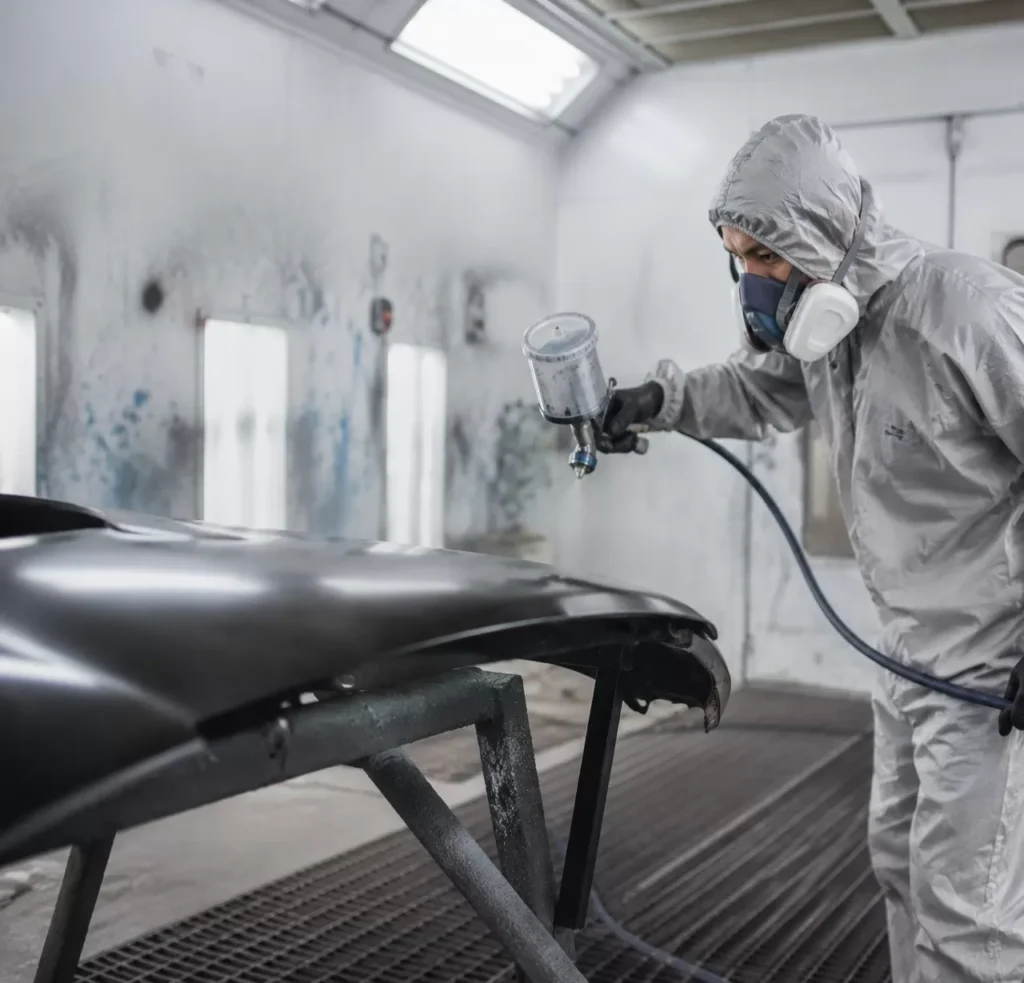
Walking into the booth and seeing paint mist drifting through the air instead of landing on the panel is one of those problems that looks simple but usually isn’t. Most painters blame the gun or the mix. Sometimes that’s right. More often, the real cause is something happening in the booth environment itself — airflow that’s out of balance, filters that are overdue, or a pressure condition that nobody has checked in weeks. This guide covers the main causes of overspray problems, how to identify which one you’re dealing with, and what it’s actually costing you when the issue gets ignored.
Page URL: https://sprayboothmanufacturer.com/product/
The Root Cause Most Shops Miss: Airflow Mismanagement
A spray booth works because it creates a controlled, predictable airflow that carries overspray away from the vehicle and the painter. When that airflow is off, the booth stops being a controlled environment and starts behaving unpredictably. Overspray that should be pulled into the exhaust pits hangs in the air, drifts back onto wet surfaces, and settles as dry spray or orange peel texture.
Positive vs. Negative Pressure
The balance between your air makeup unit and the exhaust system determines booth pressure, and both extremes cause problems.
Negative pressure happens when the exhaust pulls out more air than the intake replaces. The resulting vacuum sucks dirty shop air — dust, lint, debris — under door seals and straight onto wet paint.
Positive pressure happens when the intake pushes more air than the exhaust can handle. A slight positive pressure is actually correct and keeps contaminants out. Too much of it turns the cabin into a pressure situation where paint clouds push back toward the painter instead of clearing away.
The target range is narrow. A manometer takes the guesswork out of it entirely.
| Draft Condition | Manometer Reading | What It Does to Your Paint |
|---|---|---|
| Too high (positive) | Above 0.05″ W.C. | Bounce-back, paint clouds, adhesion problems |
| Ideal balance | 0.02″–0.04″ W.C. | Clean laminar flow, high transfer efficiency |
| Too low (negative) | Below 0.00″ W.C. | Dust and lint pulled into the cabin |
Saturated Filters and Stagnant Air
When exhaust filters are loaded past their useful life, airflow through the system slows significantly. The result is pockets of stagnant air inside the cabin — atomized paint that should be pulled down into the exhaust pits instead hangs suspended, floats around, and settles on whatever surface happens to be beneath it. Overloaded ceiling diffusion mats and floor exhaust pads are behind more overspray complaints than any other single factor.
Uneven Air Distribution
Air takes the path of least resistance. If intake plenums are dirty or filters are seated improperly, the air flows unevenly down the cabin instead of uniformly. Localized turbulence disrupts the spray pattern — atomized droplets get caught in small air currents and drift before they can reach the panel. This shows up as dry spray on one end of a large surface and wet runs on the other.
Gun Setup and Technique
If the booth environment is properly balanced and overspray is still a problem, the next place to look is the equipment and how it’s being used.
Distance and Angle
The standard working distance for most spray guns is six to eight inches from the surface. Pulling further back allows paint to partially dry in the air before it reaches the panel — the result is overspray that can’t bond properly. Holding the gun at ninety degrees to the panel matters equally; arcing the wrist at the end of a stroke directs paint past the target instead of onto it.
Trigger discipline is the other technique issue that causes unnecessary mist. Starting and stopping the trigger while the gun is over the workpiece creates heavy spots and an uncontrolled burst of atomized paint. The correct approach is to start moving the gun before pulling the trigger, enter the panel, and release the trigger after clearing the far edge.
Pressure and Equipment Setup
More air pressure at the regulator does not improve coverage — it causes bounce-back. Excessive PSI pushes paint off the surface rather than onto it, and all of that rebounded material becomes airborne overspray. For HVLP equipment, staying within the manufacturer’s specified inlet pressure range is what gives you proper atomization without the rebound effect.
Tip size also matters. Heavy primers need a larger orifice to flow correctly. Forcing thick material through a tip that’s too small requires more air pressure to compensate, which directly increases overspray. Match the fluid needle and nozzle to the viscosity of the coating being applied.
Environmental and Physical Factors
Solvent Flash-Off and Temperature
If the booth temperature or airflow is off, solvents evaporate at the wrong rate. When they evaporate too quickly, paint particles dry partially in the air before reaching the surface, creating dry spray that can’t adhere. Managing flash-off times starts with having the booth at the right temperature and the airflow within the correct range for the coating being applied.
Static Electricity and Grounding
An ungrounded booth allows static charges to build up on the vehicle, the operator, and the booth walls. Static-charged surfaces repel atomized paint rather than attracting it, which pushes overspray away from the target and into the air. Testing the booth grounding system regularly and installing ionizers or anti-static air lines on spray guns addresses this directly.
Leaks in Doors and Intake Plenums
Structural leaks undermine the pressure balance and laminar airflow that the entire system depends on. A gap at the door seal draws in unfiltered shop air and creates a dead zone where overspray hangs rather than clears. An intake plenum leak bypasses the ceiling diffusion filters and introduces turbulent cross-currents that push paint off-target. Checking door gaskets and plenum seams at regular intervals keeps these problems from developing gradually into chronic overspray issues.
What Overspray Is Actually Costing You
Filter Life and Operating Costs
Every ounce of paint that doesn’t land on the vehicle lands in the exhaust filtration system instead. Heavy overspray loads filters far faster than normal, which means more frequent filter changes and higher annual filter spend. Clogged filters also reduce airflow, which puts additional strain on the AMU and fan motors — costs that aren’t visible on any single day but accumulate over time.
Rework and Lost Production Time
Overspray that settles back onto a wet surface creates orange peel texture and dry spray that requires color sanding, buffing, and sometimes a full re-spray. That’s labor and material spent correcting a problem that shouldn’t have occurred. Every hour spent on rework is an hour the booth isn’t running a new job, which slows daily throughput and puts pressure on the production schedule.
VOC Emissions and Regulatory Risk
Applying more coating than necessary to get coverage pushes VOC output higher. In the US, that has real regulatory implications — excess emissions can move a shop closer to permit limits, and poor overspray containment can create issues during EPA or OSHA inspections. Keeping transfer efficiency high is both a financial and a compliance issue.
A Practical Maintenance Routine
Most chronic overspray problems come down to maintenance that’s falling behind. A consistent schedule prevents the gradual drift in booth conditions that leads to these issues.
Daily: Check manometer readings before the first spray. A spike or drop from baseline means airflow is compromised. Visually inspect exhaust filters for heavy paint loading.
Weekly: Clean the booth interior, check door seals and intake plenum seams for gaps, and inspect spray guns for proper calibration and cleanliness.
Monthly: Inspect the AMU, check fan belt tension, and test booth grounding to confirm static isn’t building up on surfaces.
Filter selection matters as much as the schedule. High-efficiency ceiling filters with a tighter density weave diffuse incoming air more evenly and capture finer particles before they can settle on fresh coats. Progressive-density exhaust media maintains stable static pressure longer before needing replacement. Upgrading filter quality in a high-volume shop often reduces overspray complaints noticeably without any other changes.
Staff training on transfer efficiency — the percentage of applied paint that actually reaches the surface — is the last piece. Proper gun distance, perpendicular angles, and consistent stroke overlap are techniques that reduce airborne paint and directly lower filter loading, cleanup time, and material waste.
FAQ
Why does overspray hang in the cabin instead of clearing? Usually because airflow has dropped below where it should be. Saturated exhaust filters are the most common cause — once they’re loaded past their useful life, the system can’t move enough air to pull overspray down into the exhaust pits. Check your manometer reading and inspect the filters before looking at anything else.
Can incorrect gun pressure cause overspray? Yes. Running too much air pressure causes paint to bounce off the surface rather than adhere to it. All of that rebounded material becomes airborne. Stay within the recommended inlet pressure range for your equipment and match the tip size to the viscosity of the coating.
How do I know if my booth pressure is off? A manometer gives you the most reliable answer. The ideal range for most booths is 0.02 to 0.04 inches of water column. Above that, you’re getting bounce-back from excess positive pressure. Below zero, the booth is pulling in unfiltered shop air. Neither condition is obvious to the eye until the finish is already showing the effects.
Does grounding actually affect overspray? It does. Static buildup on an ungrounded vehicle or booth surface repels atomized paint away from the target, which increases airborne overspray and reduces how much material actually bonds. Testing grounding continuity monthly and using anti-static air lines on guns addresses this reliably.
Tell Us What You’re Working With
Share your booth configuration, coating types, and the specific overspray symptoms you’re seeing. We’ll help identify the cause and recommend the right fix — usually within 48 hours.
Related Pages
- Bus Spray Booth Design Guide → https://sprayboothmanufacturer.com/transit-coach-spray-booth-requirements/
- Truck Paint Booth Guide → https://sprayboothmanufacturer.com/truck-paint-booth-semi-truck-spray-booth-specifications-buying-guide/
- Other related products → https://www.autokemanufacture.com/product
- Contact our sales Team → https://sprayboothmanufacturer.com/contact-us/
✅ CE Certified | ✅ ISO 9001:2015 | ✅ Factory Direct | ✅ Ships to 60+ Countries | ✅ 1-Year Warranty | 🔒 HTTPS Secured