
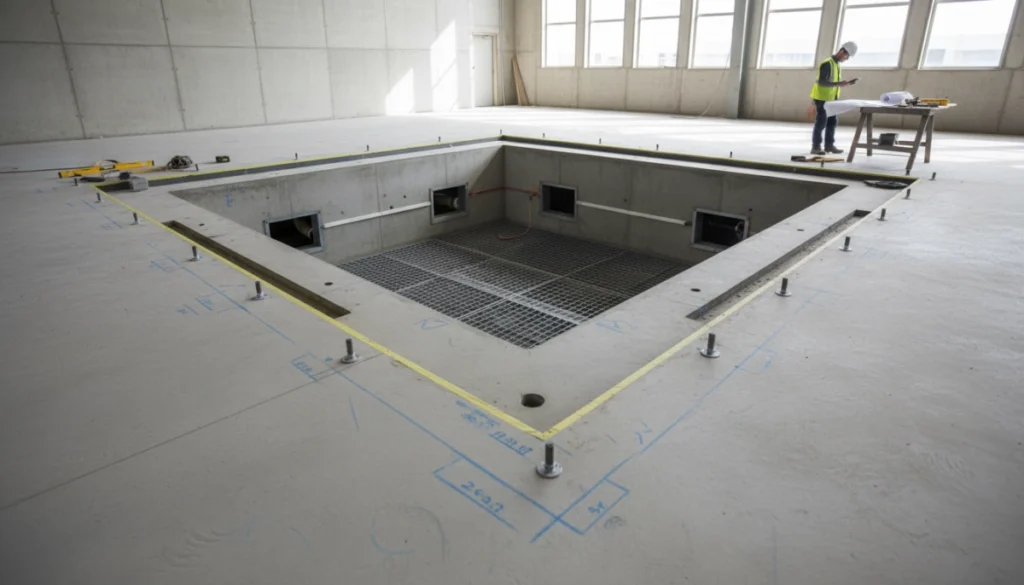
Most shop owners focus on the booth itself — the airflow, the filtration, the heating system. The foundation gets treated as an afterthought until something goes wrong. A slab that settles unevenly shifts the whole booth structure. Walls go out of alignment. Doors stop sealing properly. Pit grates that don’t sit flush create airflow problems that no amount of fan adjustment will fix. Getting the foundation and pit right before the booth goes in is what prevents all of that. This guide covers site assessment, concrete specifications, pit design, utility integration, and the compliance requirements that apply at every stage.
Page URL: https://sprayboothmanufacturer.com/product/
Site Assessment Before Breaking Ground
A thorough site assessment before excavation starts is what separates a smooth installation from an expensive retrofit. There are three areas worth going through carefully.
Soil and Load-Bearing Capacity
The ground beneath the slab needs to handle the combined weight of the booth structure, the Air Makeup Unit, and the heaviest vehicles you’ll ever bring in. Soil density testing verifies that the sub-grade can handle the required PSI without shifting or settling over time. Mechanical compaction of the base layer before the pour is required — the pit structure in particular needs a stable, well-compacted base to prevent movement.
It’s also worth calculating the AMU footprint specifically. These units are heavy and often concentrated in one area. If the sub-grade hasn’t been assessed and compacted with that weight in mind, that’s typically where uneven settling shows up first.
Space Clearances for Mechanical Systems
Plan the layout around the physical requirements of the equipment, not just the booth footprint. The AMU needs adequate overhead and side clearance to pull fresh air without obstruction. Exhaust ductwork needs a clear route to the exterior that avoids structural beams and existing utilities — mapping this before excavation prevents expensive on-site redirects during assembly. Maintain clearance around the booth perimeter for routine maintenance access: filter changes, motor inspections, and door seal checks all require room to work.
Permits and Zoning
Compliance starts before any equipment arrives. Confirm the facility is properly zoned for industrial coating and finishing operations. Coordinate with the local fire marshal on fire suppression integration and any hazardous material storage requirements. Verify that the site plan satisfies local emissions regulations and waste management requirements. These approvals can take time, and discovering a zoning or permitting issue mid-installation is far more disruptive than confirming everything upfront.
Concrete Specifications
The slab is the foundation of everything that follows. If the concrete doesn’t meet the right specifications, the problems that develop — shifting walls, misaligned doors, moisture intrusion — are expensive and difficult to fix after the fact.
Core Requirements
| Feature | Requirement | Why It Matters |
|---|---|---|
| Compressive Strength | 3,000–4,000 PSI | Handles the static weight of booth structure and AMU without cracking |
| Slab Thickness | 6-inch minimum | Provides structural mass for heavy industrial loads |
| Levelness Tolerance | 1/8 inch over 10 feet | Required for door alignment and proper airflow seals |
| Reinforcement | #4 rebar on 12-inch centers | Prevents slab separation under vibration and point loads |
| Vapor Barrier | 10 to 15 mil polyethylene | Blocks ground moisture from migrating up through the slab |
Rebar Reinforcement
Wire mesh is sometimes offered as a cheaper alternative, but for heavy industrial booth installations, rebar is the right specification. The AMU creates vibration during operation, and vehicles roll in and out repeatedly — rebar provides the tensile strength to keep the slab intact under this kind of sustained dynamic loading. Wire mesh is adequate for preventing surface hairline cracking but doesn’t provide the same resistance to slab separation under concentrated point loads.
In any area with concentrated heavy mechanical loads—especially beneath AMU stands and mounting points—you should increase slab thickness and reinforcement instead of applying the standard specification uniformly across the entire site.
Vapor Barrier and Moisture Control
Ground moisture working its way up through porous concrete causes three specific problems in a paint shop: it delaminates the floor coating, causes blistering in the paint finish from humidity in the booth, and promotes corrosion at the base of the booth panels. A quality vapor barrier under the slab is inexpensive insurance against all three. Don’t skip it.
Surface Finish and Leveling
Aim for a monolithic pour wherever possible. A level, smooth finish ensures the booth plenum and cabin sit square. Even a slight pitch in the floor means exhaust filters won’t seat correctly, and air leaks around the filter frame will compromise the booth’s pressure balance for its entire service life.
Designing the Downdraft Exhaust Pit
The pit isn’t just a hole in the ground — it’s a precision component of the airflow system. Dimensions that are off, a ledge that isn’t level, or drainage that doesn’t work all create problems that show up in the finished work every day the booth operates.
Pit Dimensions
The pit footprint needs to match the booth’s interior workspace exactly. A pit that’s too narrow creates dead zones at the sides where air velocity drops and overspray can linger rather than being drawn cleanly downward.
| Component | Standard Specification | Purpose |
|---|---|---|
| Pit Depth | 24–36 inches | Provides adequate air volume and plenum space below the filters |
| Pit Width | Matches booth interior | Prevents dead zones at the booth walls |
| Filter Frames | Integrated steel tracks | Holds pit filter frames securely under the floor grates |
The Pit Shoulder and Grate Support Ledge
The ledge where the floor grates sit — sometimes called the shoulder — needs to be level and reinforced. Heavy-duty steel angle iron cast directly into the concrete edge at this point prevents the ledge from crumbling under the repeated load of vehicles moving over the grates. The ledge depth, typically 1.5 to 2 inches, needs to match the thickness of the specific grates being used. Grates that sit proud of the floor are a trip hazard. Grates that sit below floor level disrupt the flush surface vehicles need to roll in smoothly.
Drainage
Standing water in the pit creates humidity control problems and accelerates rust in the lower sections of the exhaust system. Build in a 1% slope toward a collection point. A sump crock with a pump handles water from booth wash-downs or high water table conditions. Where local regulations require it, connect the drain to an oil/water separator before it reaches the municipal line — paint solvents and thinners going directly into the storm drain system is an environmental compliance issue in most US jurisdictions.
Pit Lining and Coating
Raw concrete is porous and absorbs overspray, solvents, and thinners over time. You can coat the pit interior with high-build industrial epoxy or chemical-resistant liner to stop this absorption and simplify cleaning. The non-porous surface lets you peel or scrape off dried overspray easily, so you avoid harsh cleaning methods that damage concrete. White or light-colored reflective coatings inside the pit also improve visibility during filter changes.
Integrating Utilities Into the Foundation
Running utilities through the foundation before the pour is what produces a clean, organized installation. Retrofitting electrical conduit or air lines after the slab is poured means surface-mounted runs that are exposed to physical damage and chemical spills.
Electrical Conduit and Compressed Air
Position electrical conduit to run directly to the control panel footprint, keeping the booth exterior clean. Pre-set the compressed air lines to minimize pressure drop between the supply and the spray guns, and eliminate floor-level hose runs that create trip hazards. Sub-floor integration protects both types of lines from the chemical exposure and physical wear of daily shop operations.
Exhaust Duct Anchoring and Gas Line Routing
You must position heavy-duty anchors and stack supports for exhaust ducting to bear exhaust fan weight and vibration, and avoid stressing booth walls and roof. You shall run the gas line for the AMU along a protected, direct path that meets NFPA standards, and keep it away from locations exposed to mechanical damage or high heat.
Following the mechanical blueprints precisely at this stage ensures that every utility penetration aligns with the booth frame. On-site modifications during booth assembly are expensive and disruptive. The time to resolve layout conflicts is before the pour, not during installation.
Compliance and Safety Standards
NFPA 33
NFPA 33 governs spray finishing operations using flammable materials and applies directly to the foundation and pit design. All materials in the pit and booth base must be non-combustible — reinforced concrete and steel only. The pit design must facilitate immediate movement of heavy solvent vapors toward the exhaust filtration system, with no geometry that creates pockets where vapors can accumulate. Class I, Division 1 electrical clearance distances apply around the pit opening — ignition sources cannot be permitted near where flammable vapors concentrate during spray operations.
OSHA Floor Grate Requirements
The floor grates over the pit are structural elements that OSHA requires to handle the intended loads without failure or significant deflection.
| Requirement | Specification |
|---|---|
| Static Load Capacity | Must support the heaviest vehicle or equipment using the booth |
| Slip Resistance | Serrated or high-friction surface required |
| Deflection | Minimal flex to ensure technician stability and prevent grate dislodgement |
| Maintenance Access | Removable for filter changes, secure during normal operation |
Environmental Containment
The pit is the first line of defense against chemical runoff from overspray, solvents, and thinners. A vapor barrier and chemical-resistant sealant on the pit interior prevents these materials from leaching into the surrounding soil. Where local zoning requires it, the pit drainage should connect to a hazardous waste containment tank rather than a standard floor drain. The pit also needs to be sized to house the pit filter frames required for EPA 6H NESHAP compliance on hazardous air pollutants.
Common Mistakes That Cost Money Later
Rushing the concrete cure. Standard concrete reaches its full design strength at 28 days. Installing heavy steel panels and mechanicals before that point risks structural cracking and slab shifting as the concrete finishes curing under load. The slab may look and feel solid well before 28 days — it isn’t. This is one of the easiest mistakes to avoid and one of the most common.
Misaligning the pit dimensions. Measuring from the outside of the booth walls instead of the interior workspace, or failing to account for the pit filter frame dimensions, produces a pit that doesn’t match the booth footprint. Gaps between the booth floor and pit ledge cause air leaks, weaken suction, and create overspray turbulence. You cannot fix these issues later without breaking out the concrete. Verify the mechanical blueprints against the actual pit filter frame dimensions before the pour.
Underestimating the AMU load. Many installations account carefully for the pit structure but underspec the slab area directly under the AMU. These units are heavy and create continuous vibration during operation. If the slab thickness and reinforcement in that specific area aren’t adequate for the concentrated load, uneven settling develops there first. The AMU footprint should be treated as a separate load case with appropriate reinforcement, not assumed to be covered by the standard slab specification.
Common Questions
How thick does the concrete need to be? For most automotive and industrial booth installations, 6 inches is the minimum. In zones with concentrated heavy‑duty equipment — especially beneath the AMU stand and other heavy mechanical loads — you should increase the slab thickness to 8 inches locally. The concrete PSI target is 3,000 to 4,000 throughout.
Does every paint booth require a pit? No. Full downdraft systems require either a concrete pit or a raised metal basement platform. Crossdraft, semi-downdraft, and side-draft designs vent exhaust through back or side walls. You can install them directly on a flat slab with no excavation required. The pit is specific to true downdraft systems.
How long before the booth can go in after the pour? 28 days. The slab may appear fully dry and solid well before that, but it hasn’t finished the internal curing process. Installing the booth before 28 days traps moisture, which compromises the vapor barrier function and causes the industrial floor coating to peel or the booth base tracks to corrode over time.
Can an existing slab be used? Yes, with verification. The existing slab needs to meet the thickness and PSI requirements, be level within the required tolerance, and be in good structural condition. If you’re moving to a downdraft system, the floor will need to be saw-cut to create the pit. Any area where heavy mechanical loads will concentrate needs to be assessed against the load requirements, not just assumed to be adequate.
What are standard pit dimensions? Most pits span 8 to 10 feet wide and 12 to 24 inches deep, based on the required exhaust fan CFM. The pit shoulder ledge, which supports the floor grates, is normally 2 inches deep. You must set the ledge depth to match the actual grate thickness so the grates sit flush with the surrounding shop floor.
Tell Us What You’re Working With
Share your facility layout, existing floor condition, booth type, and the heaviest vehicles or equipment you plan to spray. We help you check whether your existing slab is adequate and determine all necessary site preparation work. We also send you a detailed quote with layout drawings, typically within 48 hours.
Related Pages
- Bus Spray Booth Design Guide → https://sprayboothmanufacturer.com/transit-coach-spray-booth-requirements/
- Truck Paint Booth Guide → https://sprayboothmanufacturer.com/truck-paint-booth-semi-truck-spray-booth-specifications-buying-guide/
- Other related products → https://www.autokemanufacture.com/product
- Contact our sales Team → https://sprayboothmanufacturer.com/contact-us/
✅ CE Certified | ✅ ISO 9001:2015 | ✅ Factory Direct | ✅ Ships to 60+ Countries | ✅ 1-Year Warranty | 🔒 HTTPS Secured