
If you’re aiming for a flawless paint finish and a safer work environment, understanding why a paint booth air filtration system is essential can’t be overlooked. This system not only protects operator health and controls overspray but also ensures compliance with critical air filtration and safety standards. Whether you need to maintain optimal booth airflow, balance filtration efficiency with costs, or identify when it’s time to replace filters, knowing the core components and best practices will make all the difference. Ready to dive into everything you need to know about choosing and maintaining the perfect paint booth air filtration system? Let’s get started.
Why a Paint Booth Air Filtration System Is Essential
Ensuring Flawless Paint Finish Quality
A high-performance paint booth air filtration system is critical for delivering consistent, flawless paint finishes. By effectively removing airborne particles and dust, these systems prevent surface imperfections such as specks and uneven textures. Proper filtration also controls paint overspray, helping to maintain a clean environment that supports precise coating application and superior visual results.
Protecting Operator Health and Air Safety
Air filtration in paint booths safeguards operator health by capturing volatile organic compounds (VOCs), paint mist, and harmful airborne particulates that can cause respiratory and skin irritation. Ensuring clean, filtered air reduces exposure risks, maintaining a safer workspace that complies with occupational health standards and protects personnel from hazardous paint fumes.
Controlling Overspray and Environmental Hazards
An effective air filtration system manages paint overspray and contaminants, minimizing their release into the environment. This containment prevents environmental pollution and reduces fire hazards associated with combustible paint residues. Proper exhaust filtration also aids compliance with environmental regulations, promoting responsible and sustainable spray booth operations.
Key Components of a Paint Booth Air Filtration System
Intake Air Pre-Filters
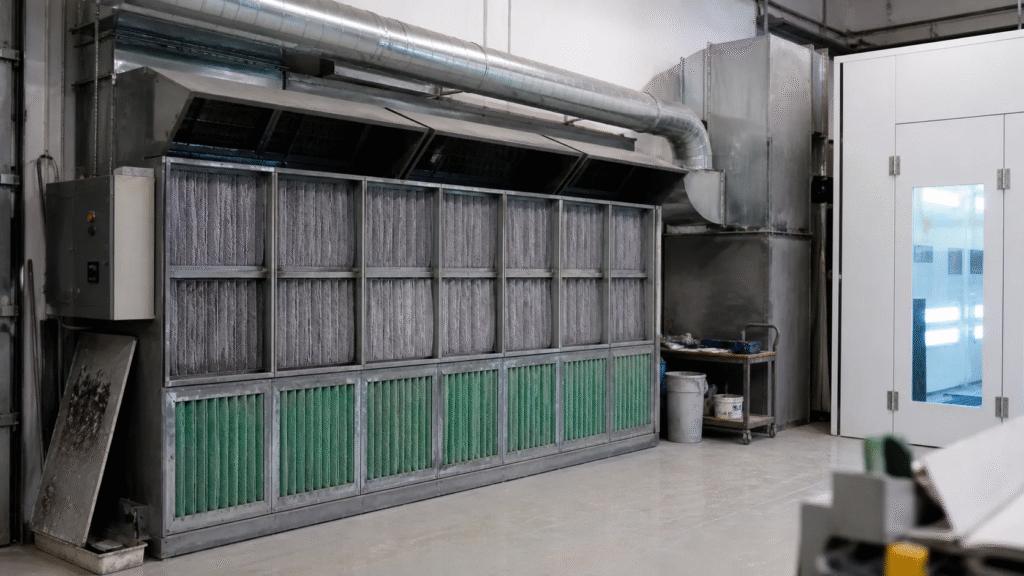
Intake air pre-filters are the first line of defense in a paint booth air filtration system. They capture large airborne particles such as dust and debris before the air enters the booth, preventing contaminants from affecting the paint finish. Proper pre-filtering extends the life of downstream filters and maintains clean airflow critical for flawless results. These filters must be regularly inspected and replaced to keep air quality optimal and protect sensitive spray booth components.
Ceiling Diffusion Filters
Ceiling diffusion filters play a crucial role by evenly distributing clean, filtered air across the workspace. These filters ensure smooth airflow while capturing fine overspray particles and volatile organic compounds before they settle on surfaces. Ceiling filters contribute significantly to maintaining consistent booth pressure and airflow, essential for minimizing paint defects. For detailed guidance on choosing and replacing ceiling filters, the spray booth filter replacement guide offers valuable insights.
Exhaust Filters and Paint Mist Arrestors
Exhaust filters and paint mist arrestors capture overspray particles and hazardous paint mist from the booth’s outgoing air. This prevents pollution both inside the facility and in the external environment. These filters protect ventilation systems and comply with environmental regulations by efficiently trapping particulate matter and volatile chemicals. High-quality exhaust filtration ensures a safer, cleaner workplace and supports compliance with air quality standards tailored for automotive and industrial spray booths. For information on airflow design that maximizes filtration performance, the industrial paint booth airflow types and components overview is highly recommended.
Air Filtration Standards and Safety Compliance
ISO 16890 and Air Filter Efficiency Standards
Paint booth air filtration systems must meet rigorous standards like ISO 16890, which classifies filters based on their ability to capture airborne particles of various sizes. Complying with such standards ensures the filtration system effectively traps overspray, dust, and volatile organic compounds, maintaining a clean environment for flawless paint application. Efficient filters reduce contamination risks while promoting consistent airflow—critical for meeting quality and safety expectations in automotive and industrial paint booths.
Maintaining Optimal Booth Airflow and Pressure
Consistent airflow and balanced booth pressure are vital for controlling overspray and preventing harmful fumes from escaping into the workspace. Properly designed filtration systems maintain negative pressure in the booth, pulling contaminated air through a series of intake, ceiling, and exhaust filters. This airflow regulation protects both the painted surface and operator health by channeling pollutants away and ensuring fresh air circulation. Maintaining these parameters also optimizes drying and curing times, enhancing overall productivity.
Fire Safety and Environmental Compliance
Air filtration systems in paint booths must conform to fire safety guidelines, minimizing the risk of ignition from flammable paint solvents and vapors. Components such as spark arrestors and fire-resistant filter media are often integrated to meet these standards. Additionally, environmental regulations require exhaust filtration to reduce the release of harmful particulates and volatile organic compounds into the atmosphere. Achieving full CE certification reflects commitment to international safety and environmental compliance, a priority for operators serving the US and global markets.
For detailed technical standards on automotive paint booth designs, including air handling and filtration, see our comprehensive guide on automotive paint booth types and features.
Paint Booth Filter Maintenance and Replacement
Signs Your Paint Booth Filters Need Replacing
Filters in a paint booth air filtration system show clear signs when it’s time for replacement. Look for reduced airflow, visible buildup of paint overspray or dust on the filter surface, and uneven air pressure inside the booth. If paint jobs start showing texture imperfections or contamination, clogged filters may be the culprit. Increased energy consumption by booth fans also signals filters are obstructed and need timely change to maintain optimal performance.
Recommended Filter Replacement Intervals
Filter replacement intervals vary based on usage intensity, paint types, and booth environment. Typically, intake pre-filters should be checked monthly and replaced every 3 to 6 months. Ceiling diffusion and exhaust filters often require replacement every 6 to 12 months, depending on paint volume and overspray levels. Industrial applications with heavy-duty spraying may necessitate more frequent changes. Following manufacturer guidelines and scheduling routine inspections ensures consistent booth airflow and air quality compliance.
Best Practices for Filter Maintenance
Regular filter maintenance maximizes equipment lifespan and protects operator health. Always replace filters before they become overloaded to prevent airflow loss. Use only manufacturer-approved filter types designed for your booth model and application. Keep a maintenance log to track filter changes and system performance. Periodically inspect booth seals and ductwork for air leaks that can reduce filtration efficiency. For detailed guidance, reference spray booth filter replacement procedures and a downdraft paint booth maintenance checklist to ensure your filtration system runs at peak safety and efficiency.
These steps maintain your paint booth air filtration system’s effectiveness, safeguard air quality, and minimize operational downtime.
How to Choose the Right Paint Booth Air Filtration System
Assessing Booth Type and Airflow Configuration
Selecting the proper air filtration system starts with understanding your paint booth’s design — whether it’s a downdraft, crossdraft, or side-draft configuration. Downdraft booths, common in automotive painting, require filtration systems that manage air from ceiling to floor efficiently, capturing overspray and contaminants. Preparation rooms and mixing rooms demand tailored airflow control to maintain clean environments and prevent cross-contamination. Match the filtration setup to your booth’s specific airflow pattern to optimize contaminant removal and maintain consistent paint finish quality.
Selecting Filter Efficiency for Your Application
Filter efficiency depends on the type of paint process and particles generated. For fine mist and volatile organic compounds, higher-efficiency filters are needed to trap microscopic airborne particles. For heavier overspray, robust pre-filters and exhaust filters designed for particulate reclamation are essential. Since Autoke offers CE-certified booths with diverse configurations, you can customize filtration media and system components based on the application’s cleanliness requirements and local regulations. Always prioritize filtration that balances performance without hampering airflow.
Balancing Filtration Quality and Operational Costs
Achieving the right balance between filtration performance and running expenses is key. High-efficiency filters improve air quality but may increase energy consumption due to airflow resistance and require more frequent replacements. A cost-effective filtration system maintains booth efficiency while keeping maintenance and energy costs manageable. Use container shipping logistics wisely when ordering multiple units to reduce costs, and consider OEM customization options to get tailored filtration solutions suited to your budget and operational needs. For comprehensive booth and air system options that support your application, refer to reliable automotive paint booth guides like these detailed resources on automotive paint booth solutions and types and buying guides.