Critical Dimensional Math: Sizing for Oversized Enclosures
Sizing industrial spray booths for oversized vehicle painting requires precise engineering. Guessing leads to code violations, failed inspections, and unusable workspaces. We calculate the footprint based on maximum physical dimensions, operator clearance, and material handling workflows.
Page URL: https://sprayboothmanufacturer.com/product/
The “Largest Asset” Rule
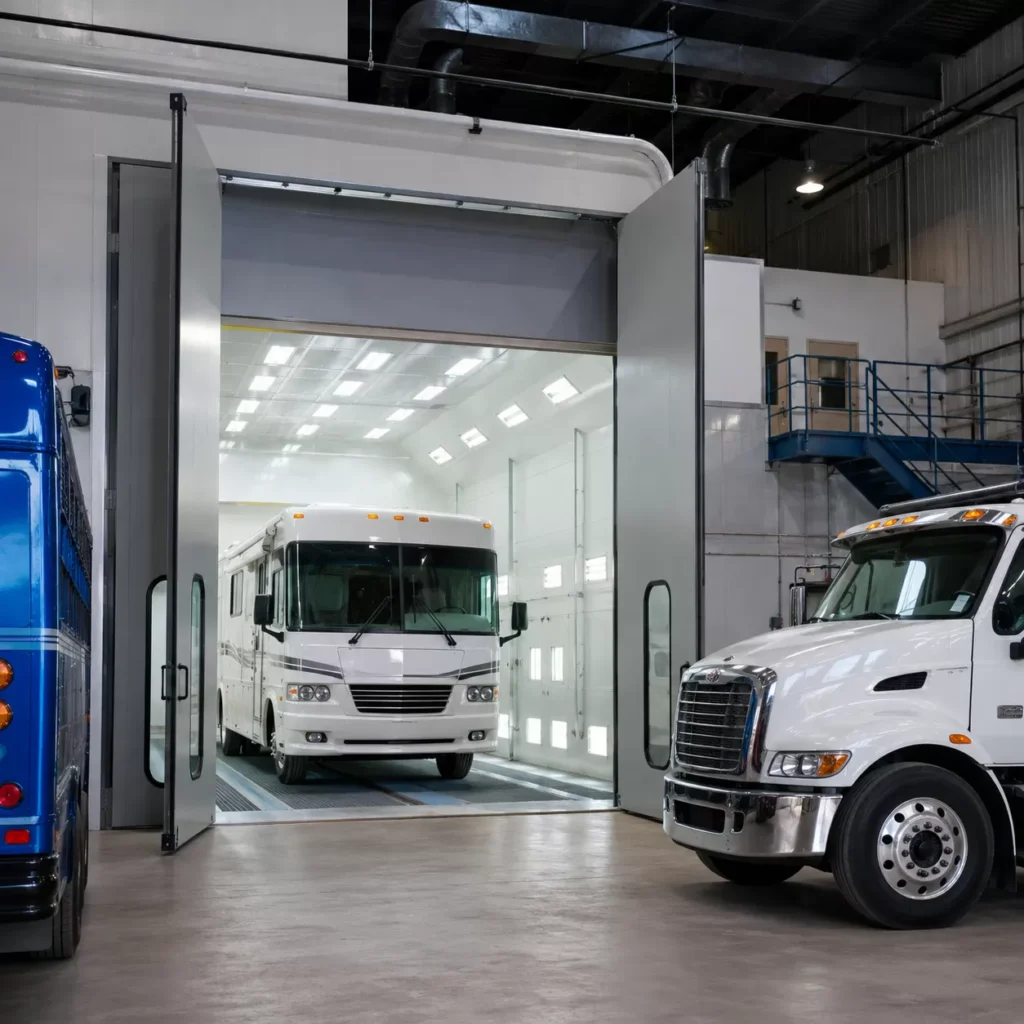
We design every fleet paint system around the absolute largest asset your facility will ever finish. Whether it is a 45-foot articulated transit bus, a commercial heavy-duty truck with a sleeper cab, or a class-A RV, your booth must accommodate this vehicle comfortably.
Never calculate dimensions using average fleet sizes. Identify the maximum length, width, and height of your largest vehicle—including extended side mirrors, exhaust stacks, and specialized towing attachments—and use those numbers as your absolute baseline.
Clearance Tolerances for Operators
Proper clearance dimensions math ensures both coating quality and worker safety. Painters require adequate space to maintain the correct spray gun distance and angle without bumping into the vehicle or the booth walls.
- Side Clearance: We maintain a minimum of 3 to 4 feet of clear space on each side of the vehicle. This accommodates human operators and allows for the integration of pneumatic 3D painter lifts for high-reach areas.
- Front and Rear Clearance: We require 4 to 5 feet at both ends. This ensures proper airflow wrap-around and gives technicians room to move cross-draft equipment or open vehicle hoods and utility doors.
- Overhead Clearance: We add at least 3 feet of headspace above the highest point of the vehicle to prevent overspray pocketing and ensure proper laminar airflow velocity.
| Vehicle Type | Standard Length | Recommended Booth Length | Recommended Booth Width | Recommended Booth Height |
|---|---|---|---|---|
| Heavy-Duty Truck (Sleeper) | 30 ft | 40 ft | 16 ft | 16 ft |
| Transit Bus | 40 ft | 50 ft | 16 ft | 16 ft |
| Class A RV / Motorhome | 45 ft | 55 ft | 18 ft | 18 ft |
Accommodating Material Handling Equipment
Oversized vehicle painting often requires heavy support machinery inside the enclosure. If your facility utilizes tugs, forklifts, or specialized dollies to position disabled vehicles, your booth dimensions must account for their turning radii and staging areas.
Furthermore, high-roof fleet paint systems frequently incorporate heavy track systems or mobile staging scaffolds. We factor these physical footprints into the initial layout to prevent tight bottlenecks that restrict airflow or endanger your crew.
Airflow Dynamics for Heavy-Duty Fleet Finishing
Managing airflow in industrial spray booths for oversized vehicles isn’t just about moving air—it’s about controlling overspray and ensuring flawless finishes on massive surfaces. When coating heavy trucks, buses, or RVs, the right aerodynamic setup keeps operators safe and prevents costly rework.
Laminar Air Movement vs. Turbulent Dead Zones
Achieving laminar airflow velocity is the goal. Laminar airflow moves in a smooth, predictable path, pulling overspray away from the vehicle and directly into the dry filter exhaust systems.
If your booth design is flawed, you get turbulent dead zones. Eddies and pockets of stagnant air trap paint mist, allowing it to settle back onto the wet finish of your heavy duty truck refinishing job. This creates a grainy texture, runs, or cloudiness that requires hours of buffing or a complete respray.
Airflow Configuration Comparison
Choosing the right layout for your fleet paint systems dictates how air travels around these massive vehicles. Here is how the three main styles stack up for oversized assets:
| Airflow Configuration | Air Movement Direction | Pros for Oversized Vehicles | Cons for Oversized Vehicles |
|---|---|---|---|
| Downdraft Airflow Configuration | From the ceiling straight down to floor pits. | Best finish quality; pulls overspray away from the painter instantly. | Highest installation cost; requires concrete excavation for pits. |
| Semi-Downdraft | From the ceiling corner diagonally down to the rear wall. | Good balance of performance and price; no pit required. | Can create small dead zones at the front bumper or rear bumper. |
| Crossdraft | From the front doors straight back to the exhaust wall. | Lowest initial cost; easy to set up in existing bays. | Overspray travels across the entire length of the long vehicle. |
Calculating CFM Requirements
To maintain a safe, clean environment during oversized vehicle painting, your booth must meet specific cubic feet per minute (CFM) targets. Most US regulations require a minimum cross-sectional air velocity of 100 feet per minute (FPM).
To find your required CFM, use this quick math:
- For Crossdraft: $text{Width of Booth} times text{Height of Booth} times 100text{ FPM} = text{Required CFM}$
- For Downdraft: $text{Width of Booth} times text{Length of Booth} times 100text{ FPM} = text{Required CFM}$
Example: A standard $16′ times 16′ times 60’$ downdraft booth requires a massive $96,000text{ CFM}$ to maintain proper velocity. This high volume is exactly why pairing your exhaust system with a properly matched Air Makeup Unit (AMU) is non-negotiable.
Thermal Management for Oversized Vehicle Paint Booths
Managing temperatures in a massive spray booth requires heavy-duty climate control. When baking a finish onto a commercial bus, heavy truck, or RV, standard HVAC units won’t cut it. You need specialized commercial vehicle curing ovens and heating systems designed to handle immense volumes of air.
The Necessity of High-Volume Air Makeup Units (AMUs)
An Air Makeup Unit (AMU) is non-negotiable for large fleet paint systems. Because industrial spray booths exhaust thousands of cubic feet of air per minute to remove overspray, that air must be replaced.
- Pressure Balance: AMUs pull fresh air from outside, heat it to the exact temperature needed, and introduce it into the booth to maintain proper building pressure.
- Contamination Control: Without a dedicated AMU, the booth will suck dirty, unconditioned air from your shop floor, ruining your paint job with dust and debris.
Direct Gas-Fired Heating vs. Recirculating Systems
Choosing the right heating configuration impacts both your utility bills and your cycle times.
| Heating Type | Best For | Efficiency | Air Movement |
|---|---|---|---|
| Direct Gas-Fired Systems | Spray & Flash Phases | 100% Fuel Efficient | Delivers 100% fresh, heated outdoor air directly into the booth. |
| Recirculating Systems | Curing & Baking Phases | Highly Cost-Effective | Reheats and recirculates up to 80% of the air during the bake cycle, saving massive amounts of energy. |
Pro Tip: For oversized vehicle painting, a combination system that switches from direct-fired during spraying to recirculating during the cure cycle offers the fastest throughput and lowest operating costs.
Curing Infrastructure for Large Surfaces
Curing a heavy-duty truck refinishing job requires consistent, high-temperature management across huge metal surfaces. Large vehicles act as giant heat sinks, absorbing thermal energy and slowing down the chemical drying process.
- Accelerated Baking: Advanced curing infrastructure raises booth temperatures up to 160°F to 180°F to bake the coating completely.
- Zoned Temperature Control: Advanced systems allow you to heat specific zones of the booth, so you aren’t wasting energy baking a short delivery truck in a booth built for a 60-foot articulated bus.
- Uniform Heat Distribution: Properly engineered ductwork ensures that the top of the vehicle cures at the exact same rate as the lower rocker panels, preventing soft spots in the clear coat.
Facility Integration and Infrastructure Constraints for Oversized Vehicle Paint Booths
Fitting a massive piece of equipment like an industrial spray booth into your existing shop floor takes precise planning. You cannot just order a booth and assume it will fit; you have to evaluate your physical footprint, utility access, and structural limits before pulling the trigger.
Physical Facility Envelope
The physical facility envelope is the actual clear space available inside your shop. When planning for oversized vehicle painting, you must look up and look around.
- Ceiling Clearances: You need at least 3 to 5 feet of clear space above the booth for exhaust ductwork, mechanical components, and proper building ventilation.
- Bay Door Mapping: Ensure the path leading into the booth is a straight shot. Drive-through paint booths require clear travel lanes on both ends of the building to maintain a smooth production flow.
- Code Obstructions: Watch out for fire sprinkler lines, structural columns, and overhead cranes that could block the booth structure.
Utility Infrastructure Audits
A heavy duty truck refinishing booth demands massive amounts of energy. A thorough utility audit prevents unexpected downtime and expensive electrical upgrades during installation.
| Utility Type | Requirements for Oversized Booths | Key Considerations |
|---|---|---|
| Electrical Power | 3-Phase power (208V, 230V, or 460V) | Needed to run high-horsepower exhaust fans and AMU motors. |
| Natural Gas / Propane | High-BTU capacity lines | Necessary for heavy duty commercial vehicle curing ovens. |
| Compressed Air | Clean, dry air at high CFM | Must support both the spray tools and pneumatic 3D painter lifts. |
AMU Structural Load Considerations
An Air Makeup Unit (AMU) is non-negotiable for large fleet paint systems, but these units are incredibly heavy. You must plan for where this weight will sit.
- Roof-Mounted AMUs: Placing the AMU on the roof saves floor space but requires a structural engineering review. You must verify if your roof trusses can handle the dead load and wind shear.
- Outdoor Pad Placement: If the roof cannot support it, mounting the AMU on an exterior concrete pad is the best alternative. This requires dedicated ground space and insulated ductwork running through the shop wall.
- Indoor Stand Mounting: Placing the AMU on a steel stand next to the booth saves outdoor space but eats into your usable shop floor footprint.
Regulatory Compliance for an Oversized Vehicle Paint Booth
When you are installing an oversized vehicle paint booth for buses, RVs, and heavy trucks, staying compliant isn’t just about avoiding fines—it’s about protecting your crew and your investment. Industrial spray booths face strict oversight in the United States, and getting your setup coded correctly from day one is non-negotiable.
National Fire Protection Association Standards
The baseline for fire safety in fleet paint systems is NFPA 33. This code dictates how flammable materials are handled and how your booth must contain potential hazards.
- Sprinkler Integration: Oversized booths require dedicated fire suppression systems integrated directly into the cabin and exhaust ducts.
- Clearance Zones: You must maintain a strict 3-foot clear space around the exterior of the booth, free of storage or electrical hazards.
- Airflow Interlocks: If your exhaust fan cuts out, your spray guns must automatically lose power to prevent chemical buildup.
Worker Safety and OSHA Spray Booth Regulations
Protecting your painters inside a massive enclosure requires specialized safety infrastructure. OSHA spray booth regulations focus heavily on respiratory health and physical safety during heavy duty truck refinishing.
- Laminar Airflow Velocity: Air must move across the finishing zone at a minimum speed (typically 100 feet per minute) to continuously pull overspray away from the operator’s breathing zone.
- Hazardous Location Lighting: All light fixtures and electrical components inside the booth must be Class I, Division 1 rated to eliminate ignition sources.
- Fall Protection: Since servicing the upper sections of transit buses or commercial trailers requires height, any integrated pneumatic 3D painter lifts must comply with OSHA fall protection rules.
The Importance of Third-Party Validation
Never buy a booth that hasn’t been vetted by an independent testing laboratory. Local inspectors will look for certification marks immediately.
| Validation Type | What It Covers | Why It Matters |
|---|---|---|
| ETL-Listed Spray Booths | Complete assembly safety testing | Guarantees the entire mechanical system works safely as a unit. |
| UL / CSA Components | Individual electrical parts | Prevents electrical fires and ensures component longevity under heavy use. |
Engaging the AHJ (Authority Having Jurisdiction)
The AHJ—which includes your local fire marshal, building inspector, and environmental agency—has the final say on your installation.
Pro Tip: Bring your booth manufacturer’s blue prints and ETL certifications to the AHJ before pouring concrete or ordering equipment. Getting their stamp of approval early prevents costly retrofits during the final inspection.
Maximizing ROI and Future-Proofing Your Fleet Paint Booth
Investing in a paint booth for oversized vehicles like buses, RVs, and heavy trucks is a major capital expense. To ensure this system delivers long-term profitability and adapts to your growing fleet operations, you need to plan for flexibility, manage ongoing operational costs, and streamline your buying process.
Modular Customization Options
Your fleet mix will change over time. Choosing a modular design ensures your industrial spray booths can expand or reconfigure as your business grows.
- Length Extensions: Modular panels allow you to add sections later if you start servicing longer articulated buses or extended commercial trailers.
- Drive-Through Conversions: Ordering a booth with a front and rear door setup improves shop flow, minimizing the time spent maneuvering heavy duty trucks.
- Dual-Compartment Dividers: Internal vapor-barrier doors can split a 60-foot booth into two independent 30-foot bays, letting you paint a small utility truck in one side while prepping an RV in the other to save on utility costs.
Filtration Lifespans and Preventive Maintenance Schedules
Oversized vehicle painting generates massive volumes of overspray. Neglecting filters destroys your finishes and burns out your Air Makeup Unit (AMU). Tracking filter lifecycle stages keeps your fleet paint systems running efficiently.
| Filter Type | Typical Lifespan | Impact on System & Finished Quality |
|---|---|---|
| Pre-Filters (Intake) | 80 – 100 Operating Hours | Protects the AMU burners; ensures clean, laminar airflow velocity entering the cabin. |
| Exhaust Filters (Dry Filter Exhaust Systems) | 40 – 60 Operating Hours | Traps heavy overspray; prevents static pressure buildup and compliance violations. |
| Secondary/HEPA Filtration | 200 – 300 Operating Hours | Catches fine particulates; prevents code enforcement issues with local environmental authorities. |
The AUTOKE Procurement Checklist
Before finalizing your heavy duty truck refinishing booth order, use this streamlined procurement checklist to verify your shop is fully prepared for installation.
- Clearance Verification: Confirm the physical building envelope allows for the booth footprint plus required clearance space for painters and mechanical equipment.
- Utility Capacity: Ensure your facility has the electrical code capacity (three-phase power) and gas pressure required to run high-volume thermal curing ovens.
- Equipment Integration: Verify structural support for specialized material handling equipment, such as pneumatic 3D painter lifts or heavy-duty overhead cranes.
- Compliance Sign-Off: Review engineering prints against NFPA 33 compliance and OSHA spray booth regulations with your local Authority Having Jurisdiction (AHJ) before manufacturing begins.
Frequently Asked Questions (FAQs)
What is the ideal airflow setup for a heavy truck paint booth?
A downdraft airflow configuration is the gold standard for heavy duty truck refinishing. It pulls overspray and contaminants straight down, keeping the finish flawless and the painter safe. However, if digging a pit isn’t an option, a semi-downdraft or side-downdraft setup is an excellent, cost-effective alternative for industrial spray booths.
Do I really need a pit for an oversized vehicle spray booth?
No, you don’t strictly need a concrete pit. While a pitted downdraft system offers the best laminar airflow velocity, you can opt for a pitless side-downdraft design or a raised exhaust plenum. This saves you from expensive concrete excavation while still delivering a professional fleet paint system finish.
How much clearance space do painters need inside a bus paint booth?
When mapping out your clearance dimensions math, painters need at least 3 to 5 feet of working space on all sides of the vehicle. For oversized vehicle painting like buses and RVs, you also need to account for tools, ladders, or pneumatic 3D painter lifts so operators can move safely and comfortably.
What electrical power requirements do industrial spray booths need?
Oversized booth systems require serious power. You are typically looking at a three-phase power supply (208V, 230V, or 460V) to run the high-volume Air Makeup Unit (AMU), exhaust fans, and specialized lighting. Always run a utility infrastructure audit early on to ensure your facility can handle the load and meet NFPA 33 compliance and OSHA spray booth regulations.
Related Pages
- Bus Spray Booth Design Guide → https://sprayboothmanufacturer.com/transit-coach-spray-booth-requirements/
- Truck Paint Booth Guide → https://sprayboothmanufacturer.com/truck-paint-booth-semi-truck-spray-booth-specifications-buying-guide/
- Other related products → https://www.autokemanufacture.com/product
- Contact our sales Team → https://sprayboothmanufacturer.com/contact-us/
✅ CE Certified | ✅ ISO 9001:2015 | ✅ Factory Direct | ✅ Ships to 60+ Countries | ✅ 1-Year Warranty | 🔒 HTTPS Secured