
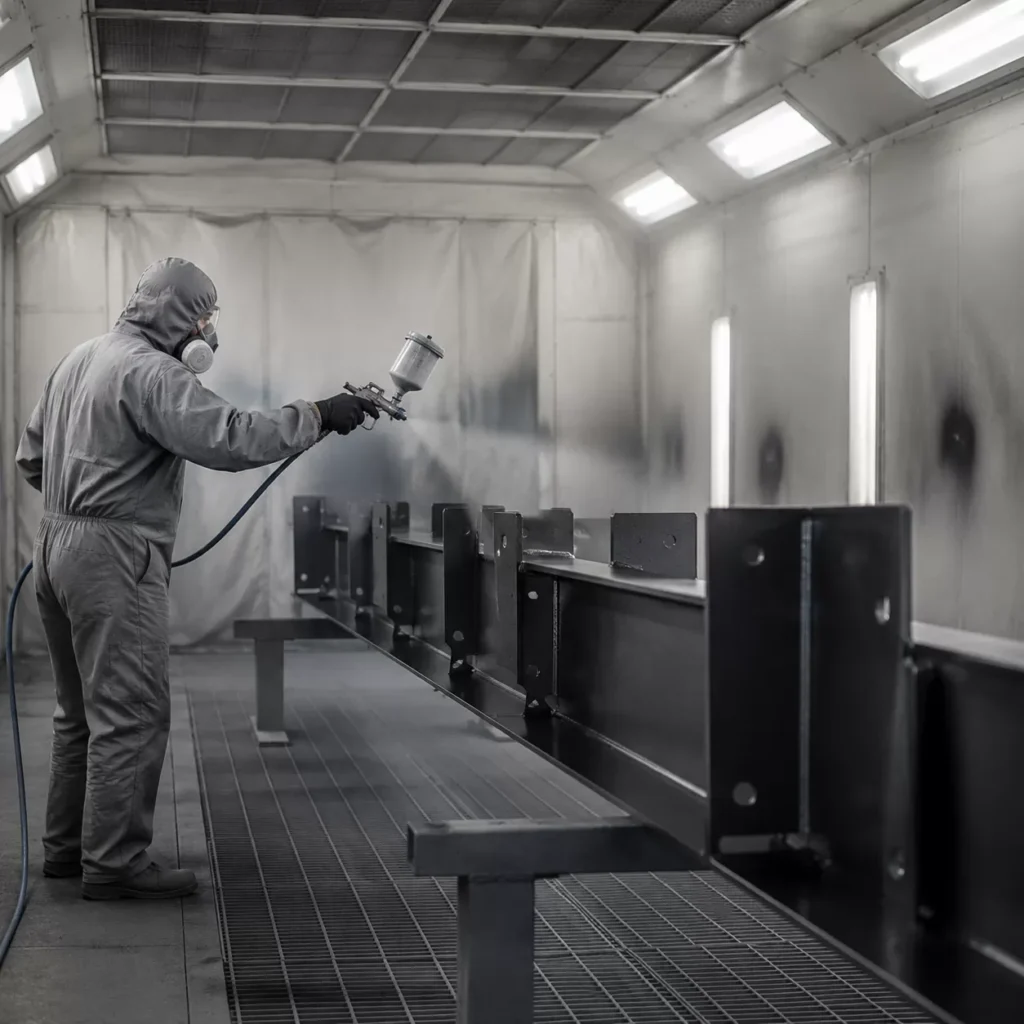
Finishing steel in an open shop is a constant fight against dust, temperature swings, and overspray that never quite goes where you want it. For fabrication shops doing serious coating work — whether that’s structural beams, industrial frames, or high-volume parts runs — the spray booth is what separates a professional finish from one that fails six months into service. This guide covers what makes a metal fabrication spray booth different from standard setups, how to choose the right configuration, and how to keep it running without it becoming a source of downtime.
Page URL: https://sprayboothmanufacturer.com/product/
What an Industrial Spray Booth Actually Does
A spray booth is a ventilated enclosure that isolates your coating process from everything else happening in the shop. That isolation serves three practical purposes: it keeps dust and debris off wet coatings, it removes flammable vapors from the area where painters are working, and it traps hazardous particulates before they exhaust into the atmosphere.
The core components that make this work are the enclosure panels, the ventilation system, exhaust filters, and an air makeup unit (AMU). The AMU is what most people overlook — it replaces the air being exhausted with fresh, tempered air so the booth stays properly pressurized and the temperature stays stable. Without it, a large industrial booth will pull in unfiltered shop air through any gap it can find, which defeats the point of having a controlled environment.
Airflow is what separates a good booth from a frustrating one. The goal is laminar flow — smooth, single-direction air movement that carries overspray away from the surface without bouncing it back. Too fast and you waste material; too slow and overspray settles back onto the part. Getting the CFM rating right for your booth size and coating type is one of the most important decisions in the whole setup.
Coating Large Steel Structures: What Makes It Different
The Scale Problem
Structural steel creates challenges that smaller parts don’t. A large I-beam or fabricated frame has real thermal mass — it heats up and cools down slowly, which affects how coatings bond to the surface. Getting even coverage on a 40-foot beam requires a well-ventilated space with enough room to move around the workpiece properly. And without proper airflow, overspray from one pass settles on the area you just finished.
Open-shop coating on large steel is also a contamination problem. Metal shavings and grinding dust are present in most fabrication environments, and they land on wet paint. A proper enclosure with filtered intake air is the only reliable way to manage this.
Wet Spray vs. Powder Coating
The choice between wet spray and powder coating depends on the project and your shop setup.
| Feature | Wet Spray | Powder Coating |
|---|---|---|
| Application | Practical for large, on-site structures | Requires a curing oven; best for parts |
| Finish | High gloss, smooth textures | Very durable, chip-resistant |
| VOC Output | Higher — requires proper ventilation | Near zero VOCs |
| Thickness Control | Easier to apply thin, controlled layers | Naturally builds a thicker protective skin |
For structural steel that can’t go into an oven, wet spray is the practical choice. For high-volume parts that go through a production line, powder coating offers durability and environmental advantages.
Temperature and Humidity Control
If the booth environment isn’t right, the coating will fail regardless of what product you’re using. High humidity causes flash rust on bare steel before the primer even dries. Low temperatures prevent coatings from curing properly, which leads to early adhesion failure.
Modern industrial booths address this with integrated heating to maintain a consistent working temperature and air management systems that keep humidity in check. Consistent CFM settings also ensure that solvent vapors clear properly, preventing solvent pop and cloudiness in the finished coat.
Choosing the Right Booth Configuration
Airflow Types Compared
The airflow design is the most important structural decision for a metal fabrication booth. Three common configurations cover most industrial applications:
| Booth Type | Airflow Direction | Best Use Case |
|---|---|---|
| Downdraft | Top to bottom | Premium finishes, heavy equipment coating |
| Crossdraft | Front to back | Large steel beams, budget-friendly installs |
| Semi-Downdraft | Diagonal, top-front to rear | Industrial parts, general fabrication |
Downdraft gives the cleanest results because it pulls overspray away from the surface immediately. Crossdraft is more affordable and easier to install in existing buildings because it doesn’t require floor pits. Semi-downdraft is a practical middle ground — better finish quality than crossdraft without the civil work.
Explosion-Proof and Energy-Efficient Options
For shops using solvent-based coatings, explosion-proof electrical components are a code requirement, not an option. Spray booths handling flammable materials need spark-resistant fans and Class I, Division 1 rated lighting throughout. Standard industrial electrical components are not acceptable in this environment.
Variable Frequency Drives (VFDs) are worth considering for high-volume operations where the booth runs for long shifts. VFDs adjust fan motor speed based on actual load rather than running at full capacity all day, which cuts electricity consumption meaningfully over time. Recirculation modes during cure cycles reduce the energy needed to maintain booth temperature — relevant for large industrial spaces where heating costs add up.
Custom Configurations for Oversized Work
Standard booth sizes don’t work for every fabrication application. Bridge components, large crane structures, and custom industrial frames often need pass-through systems, crane rail slots, or extended bay lengths that have to be engineered for the specific facility. Modular booth designs allow for length additions as project scope grows, which protects the investment over time.
The Coating Process Step by Step
Getting a finish that holds up in industrial service requires following the process in the right order. Skipping or rushing any stage shows up later as peeling, bubbling, or early corrosion.
Surface preparation comes first — removing oils, mill scale, and rust through abrasive blasting or chemical washing. This is where most coating failures start. If the surface isn’t clean and properly profiled, nothing applied on top of it will bond the way it should.
Primer goes on next, providing corrosion resistance and filling minor surface irregularities. For steel that will be exposed to harsh environments, the primer coat is as important as the topcoat.
Topcoat application requires consistent gun distance, overlapping strokes, and regulated spray pressure. These aren’t suggestions — they’re what separates a uniform finish from one with tiger striping, dry spray, or runs.
Flash-off and curing close out the process. Solvents need to evaporate from the wet film before heat is applied, and the cure temperature needs to be maintained long enough for the coating to cross-link properly. Rushing either step produces a finish that looks fine in the booth and fails in the field.
| Stage | Primary Goal | Key Factor |
|---|---|---|
| Surface Prep | Adhesion | Abrasive profile and cleanliness |
| Priming | Corrosion resistance | Film thickness and coverage |
| Topcoat | Protection and appearance | Consistent application technique |
| Curing | Hardness and durability | Controlled temperature and time |
Compliance and Safety
OSHA and EPA Requirements
Industrial spray booths handling solvent-based coatings operate in a regulated environment. OSHA requires a minimum of 100 linear feet per minute of airflow across the work area for manual spraying — this keeps solvent vapors out of the painter’s breathing zone. EPA standards govern VOC emissions and require that exhaust filters capture particulates before air leaves the building.
Filter maintenance is directly tied to compliance. Clogged exhaust filters don’t just affect finish quality — they reduce the airflow rate below what regulations require and can push emissions beyond permitted limits. Keeping a usage log for your coatings and tracking filter changes helps maintain the documentation needed for air quality permits.
Hazardous waste from filters, solvent-soaked rags, and paint sludge has to be disposed of through a licensed hazardous waste contractor. Treating it as ordinary waste is one of the faster ways to attract an EPA inspection.
Fire Safety
All spray booths handling flammable materials must meet NFPA 33 requirements. This covers construction materials, ventilation rates, electrical classifications, and fire suppression systems. An integrated suppression system — dry chemical or gaseous — is required, and it needs to be tied into the building’s main alarm system. Grounding all equipment properly to prevent static discharge is a basic requirement that sometimes gets overlooked during setup.
Keeping the Booth Running
Daily and Weekly Maintenance
Consistent maintenance prevents the kind of gradual performance decline that’s easy to miss until a job is already ruined.
Daily tasks: check manometer readings to confirm airflow is within range, inspect floor filters for heavy buildup, clean spray gun nozzles, and sweep the booth floor to prevent dust migration.
Weekly tasks: wipe down interior walls, check door seals and gaskets for air leaks, inspect exhaust fan blades for coating accumulation, and test intake filters.
| Task | Frequency | Why It Matters |
|---|---|---|
| Manometer Check | Daily | Catches filter and airflow problems early |
| Floor Filter Inspection | Daily | Prevents airflow restriction |
| Door Seal Check | Weekly | Stops unfiltered air from entering |
| Exhaust Fan Inspection | Weekly | Catches buildup before it affects performance |
| Motor and Belt Inspection | Monthly | Prevents unexpected fan failure |
| Full System Audit | Bi-annually | Keeps equipment within compliance specs |
Filter Management
Filters should be changed based on pressure readings, not on a fixed calendar schedule. Once the static pressure hits the manufacturer’s specified limit, the filter needs to come out. Running past that point forces the fan motor to work harder than it should and reduces airflow below safe operating levels.
Use filters rated for wet spray applications — generic industrial filters aren’t designed for the paint solids load that a production booth generates. Pre-filters on the intake extend the life of primary filters and reduce overall replacement frequency in dusty fabrication environments.
Buying Guide: What to Sort Out Before You Commit
Matching the Booth to Your Work
The most common mistake in booth selection is sizing for current projects rather than the largest work you’re likely to handle. If a custom frame job or an oversized structure comes in and the booth can’t accommodate it, that job either goes somewhere else or gets done in poor conditions. Size for your ceiling, not your floor.
Key questions to work through before purchasing:
Is the booth NFPA 33 certified and OSHA compliant out of the box, or will it require modifications to pass inspection? What is the true long-term cost of replacement filters — some systems use proprietary media that’s significantly more expensive than standard alternatives? Does the CFM rating match the VOC output of the coatings you’re actually using? Can the booth be extended or modified later if your production volume grows?
Off-the-Shelf vs. Cust om
Standard configurations work well for most fabrication shops handling parts and smaller structural components. Custom engineering becomes necessary when the work involves pass-through conveyor systems, overhead crane clearance, heavy-duty floor track systems, or integration with automated spray equipment. If you’re running a high-volume production line, a custom design typically pays back faster through throughput efficiency than a standard unit that requires workarounds.
FAQ
What’s the difference between a wet spray booth and a powder coating booth? Wet spray booths are designed to handle liquid paint vapors and flammable solvents, using high-velocity ventilation and exhaust filters to capture liquid overspray. Powder coating booths manage dry powder and focus on containment and reclamation without the solvent vapor concerns. The two systems have different airflow requirements and filtration approaches and aren’t interchangeable.
How often do filters need to be changed in an industrial booth? Follow the pressure gauge, not the calendar. When static pressure hits the manufacturer’s limit, the filter gets replaced. As a general guide, exhaust filters in production environments typically need replacement every 50 to 100 operating hours. Intake filters last two to four months depending on how much dust the fabrication floor generates. Running past these points costs more in rework and motor wear than the filters themselves.
Can a crossdraft booth handle large steel structures? Yes, with trade-offs. Crossdraft is cost-effective and easy to install, but a large structure in the booth can block horizontal airflow and create dead zones on the downstream side. For complex geometries or premium finish requirements, a semi-downdraft or full downdraft configuration gives more consistent results. For budget-constrained setups coating simpler profiles, crossdraft is a workable solution.
What are the OSHA minimum requirements for an industrial spray booth? A minimum of 100 linear feet per minute of airflow for manual spraying operations, an integrated fire suppression system, explosion-proof electrical components throughout, a three-foot minimum clearance around the booth exterior, and proper PPE including respirators for all operators. These are minimums — local regulations and specific coating types may require more.
Tell Us What You’re Working With
Share the types of structures or parts you’re coating, your facility dimensions, and your production volume. We’ll put together a booth recommendation suited to your application and send a detailed quote — usually within 48 hours.
Related Pages
- Bus Spray Booth Design Guide → https://sprayboothmanufacturer.com/transit-coach-spray-booth-requirements/
- Truck Paint Booth Guide → https://sprayboothmanufacturer.com/truck-paint-booth-semi-truck-spray-booth-specifications-buying-guide/
- Other related products → https://www.autokemanufacture.com/product
- Contact our sales Team → https://sprayboothmanufacturer.com/contact-us/
✅ CE Certified | ✅ ISO 9001:2015 | ✅ Factory Direct | ✅ Ships to 60+ Countries | ✅ 1-Year Warranty | 🔒 HTTPS Secured