
Industrial Paint Booth Safety Rules Every Operator Must Follow
Before you even think about pulling the trigger on your spray gun, safety starts with a solid pre-operation routine. Skipping these steps isn’t just a compliance issue—it puts your health and your shop at immediate risk. Here are the non-negotiable protocols we enforce before any painting begins.
Page URL: https://sprayboothmanufacturer.com/product/
Hazard Assessment & Reading the SDS
Every successful coating job starts with knowing exactly what you are spraying. Never load a material into your system without thoroughly reviewing its Safety Data Sheet (SDS).
- Chemical Reactivities & Flashpoints: Check the SDS to identify the exact temperature at which the paint vapors can ignite.
- Volatile Organic Compounds (VOCs): High VOC levels mean heavy vapor accumulation. You need to know these numbers to manage booth ventilation effectively.
- Isocyanates: Commonly found in polyurethane coatings, these highly toxic compounds can cause severe respiratory issues and require specialized PPE.
The Pre-Start Inspection Checklist
A standard spray booth maintenance checklist requires a full equipment inspection before staging any parts inside the cabin. Run through these three critical checks every single shift:
| Checkpoint | Target Standard | Action Required |
|---|---|---|
| Exhaust Ventilation System | Fully Active | Turn on the system and verify continuous pull before bringing parts inside. |
| Magnehelic Pressure Gauge | Balanced Static Pressure | Confirm the airflow velocity maintains the minimum standard of 100 linear feet per minute. |
| Intake & Exhaust Filters | Clean & Clear | Inspect filter rolls for heavy overspray accumulation or clogging; replace immediately if loaded. |
Ensuring Proper Grounding and Bonding
Static electricity is the invisible killer in a spray booth. The friction generated by paint flowing through a hose can easily create a static charge. If that charge jumps to an ungrounded object, it creates an electrostatic spark capable of igniting airborne solvent vapors instantly.
To prevent catastrophic fires, grounding and bonding must be verified before every job. Ensure full earth grounding for all metal surfaces, spray guns and workpieces throughout painting operations. Clean off any overspray buildup on your grounding clamps to guarantee a true metal-to-metal connection.
Personal Protective Equipment (PPE) Standards
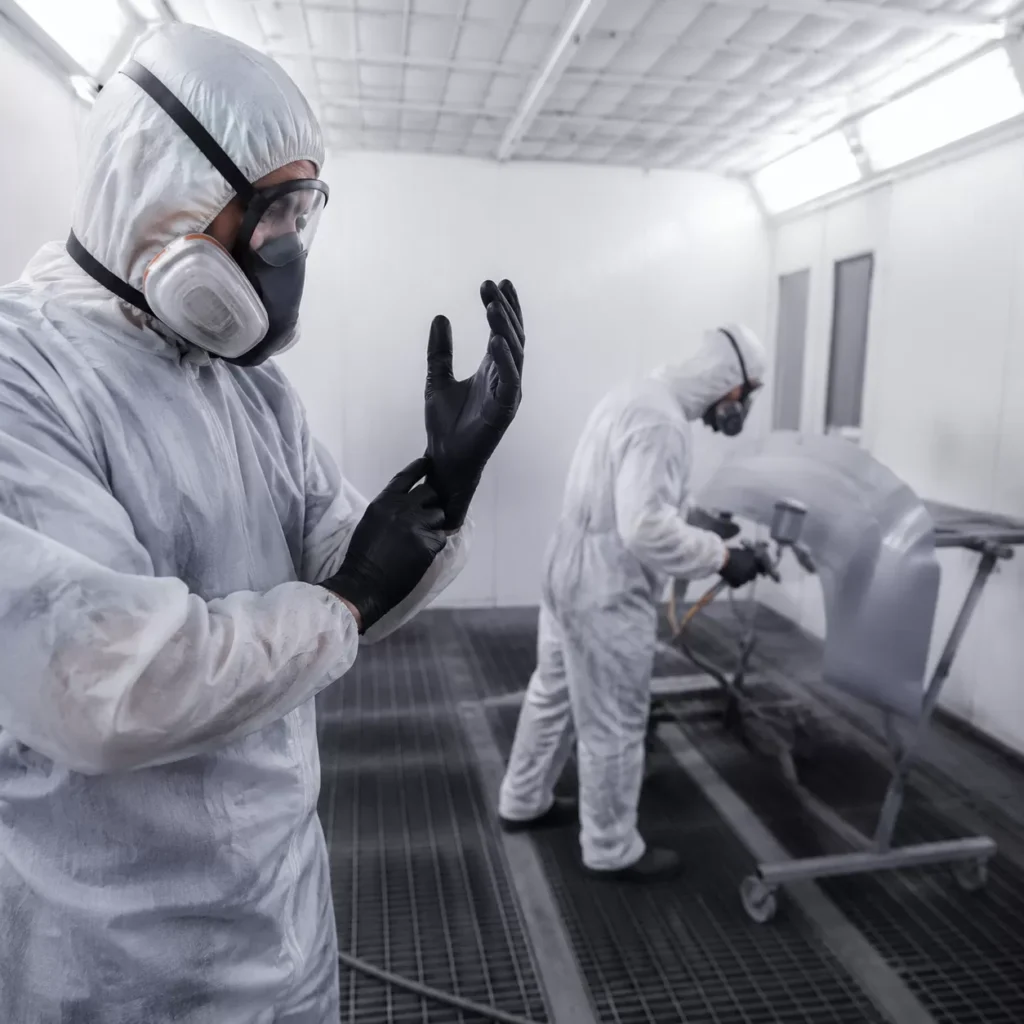
When you are inside the bay, your gear is your last line of defense. Skipping out on the right Personal Protective Equipment (PPE) is not an option if you want to keep your lungs and skin intact.
Respiratory Protection Is Non-Negotiable
Breathing in Volatile Organic Compounds (VOCs), dangerous particulates, and organic vapors will wreck your health over time. You need the right mask for the specific chemistry you are spraying.
- Half-Mask Cartridge Respirators: These are fine for standard solvent-based paints, provided you change the organic vapor cartridges regularly.
- Supplied-Air Respirators (SAR): A positive-pressure supplied-air respirator (SAR) is strictly required when spraying isocyanate-based coatings. Isocyanates can sensitize your lungs after a single bad exposure, and standard charcoal filters won’t cut it.
- Compliance Checks: OSHA requires annual fit testing and medical evaluations for every operator to ensure a proper mask seal and verify you are healthy enough to wear one.
Full-Body Skin and Eye Defense
Over-the-counter clothes do not protect you from chemical absorption or static buildup. Complete your protective layout with these essentials:
| Equipment | Type Required | Purpose |
|---|---|---|
| Paint Suit | Anti-static, lint-free chemical-resistant coveralls | Blocks chemical overspray and prevents static sparks. |
| Gloves | Heavy-duty nitrile gloves | Resists chemical breakthrough better than standard latex. |
| Eye Protection | Full-face respirator lenses or impact-resistant safety goggles | Prevents airborne mist and accidental splashes from hitting your eyes. |
Pro Tip: Always choose full-face respirator lenses over standalone goggles when spraying high-pressure systems. It provides a complete seal and keeps overspray entirely off your face.
Inside the Booth: Handling Flammable and Combustible Liquids
The spraying zone is a high-risk environment where a single spark can lead to disaster. Controlling ignition sources and managing your chemical footprint are the most critical industrial paint booth safety rules every operator must follow.
Eliminating All Potential Ignition Sources
Vapors from flammable and combustible liquids mix with air to create an invisible, highly explosive atmosphere. Because of this, we enforce strict boundary rules and equipment standards inside the spray zone.
- 50-Foot Rule: We maintain a strict, zero-tolerance “No Smoking or Open Flame” zone within 50 feet of the spray area.
- Class I, Division 1 Hazardous Locations: Every piece of electrical equipment inside the booth—including explosion-proof lighting, switches, and fan motors—must be rated for Class I, Division 1 environments.
- No Temporary Wiring: Ban standard extension cords and portable non-explosion-proof work lamps from the booth. Keep all non-hardwired, non-certified equipment out of hazardous areas.
Strict Chemical Storage Limits
Too much fuel in the workspace invites unnecessary danger. We limit what enters the floor to keep our team safe and maintain OSHA compliance.
| Storage Standard | Actionable Rule |
|---|---|
| The “One-Day Supply” Rule | Per OSHA 1910.106, only bring in the exact amount of paint, thinners, and solvents needed for the immediate shift. |
| Approved Containers Only | All solvents and paints must be transported and held exclusively in approved, self-closing safety cans. Never leave open-top cans or unsealed mixing cups unattended. |
Post-Operation: Industrial Paint Booth Safety Rules Every Operator Must Follow
Managing Hazardous Waste Safely
Once the spraying is done, the danger isn’t gone. In fact, post-operation cleanup is when many shop fires actually start. Solvent-soaked rags and overspray debris must go immediately into dedicated, water-filled metal waste cans with self-closing lids. Leaving these rags piled up on a workbench or tossed in a regular trash bin invites disaster. The trapped chemicals undergo an exothermic reaction as they dry, causing heat to build up. This leads directly to spontaneous combustion—a fire that starts entirely on its own while your shop is locked up for the night.
Cleanliness Practices for Booth Longevity
A dirty booth is both a fire hazard and a nightmare for your finish quality. Dried paint buildup on walls and baffle plates flakes off, gets airborne, and ruins your next clear coat.
- Use non-sparking scraping tools: Never use standard steel scrapers or wire brushes that can generate a spark against metal booth surfaces. Stick to brass, aluminum, or plastic tools.
- Protect your investment: Regular cleaning directly protects your AUTOKE equipment infrastructure, ensuring your exhaust ventilation system and fans run efficiently for years without burning out.
Fire Suppression Readiness
If a fire does spark, your suppression systems need to work instantly. Paint overspray accumulation can easily crust over automatic sprinkler heads, sealing them shut and delaying or completely blocking their deployment during an emergency.
| Fire Safety Element | Maintenance Rule |
|---|---|
| Automatic Sprinklers | Keep heads completely free of paint crusting. Protect them by wrapping them in lightweight cellophane or thin paper bags that will melt instantly in a fire without obstructing water deployment. |
| Portable Fire Extinguishers | Must be fully charged, inspected, and positioned within an accessible 30-foot radius of the booth. |
Regulatory Compliance: Keeping Your Shop Audit-Ready
Staying on top of compliance isn’t just about avoiding a headache during a surprise inspection—it is the backbone of your entire operation. Following the primary industrial paint booth safety rules every operator must follow keeps your crew safe, your insurance premiums manageable, and your shop doors open.
OSHA 29 CFR 1910.107 and NFPA 33 Compliance
Operating a commercial spray shop means answering to two main authorities: OSHA and the National Fire Protection Association. Striking the right balance between OSHA 29 CFR 1910.107 and NFPA 33 compliance is the easiest way to lower worker’s compensation claims and eliminate budget-crushing fines.
- OSHA 29 CFR 1910.107: Focuses heavily on employee health, proper ventilation, and general spray booth construction.
- NFPA 33: Sets the standard for fire safety, automated suppression systems, and strict electrical safety zones.
Keeping Detailed Maintenance Logs
If it isn’t documented, it didn’t happen. Inspectors want to see a paper trail proving that your booth runs safely day in and day out. A solid spray booth maintenance checklist must be updated regularly to keep your shop audit-ready.
| Inspection Type | Frequency | Required Action |
|---|---|---|
| Airflow Velocity Test | Daily | Measure with a Magnehelic pressure gauge to ensure proper linear feet per minute. |
| Filter Change Cycles | Weekly / As Needed | Track and log the replacement of intake and exhaust filter rolls to prevent overspray accumulation. |
| Safety System Check | Semi-Annually | Inspect and test automatic fire suppression, grounding systems, and emergency shut-offs. |
Industrial Paint Booth Safety Rules Every Operator Must Follow: FAQs
What are the primary OSHA rules for spray booths?
OSHA enforces strict standards to protect workers from fire hazards and toxic fumes. Under OSHA 29 CFR 1910.107, shop owners must meet several core requirements:
- Mechanical Ventilation: The exhaust ventilation system must run continuously during spraying and for a set period afterward to clear out dangerous vapors.
- Airflow Velocity: The system must maintain a minimum airflow velocity of 100 linear feet per minute across the open face of the booth to properly capture overspray.
- Combustible Control: Spray areas must be kept clear of open flames, sparks, and regular electrical appliances.
- Automatic Suppression: Booths require built-in fire extinguishing systems, like automatic sprinklers, to halt flash fires instantly.
How often should you change paint booth filters?
Filter lifespans depend entirely on your shop’s production volume, but a reliable spray booth maintenance checklist relies on physical indicators rather than a calendar.
| Filter Type | When to Replace | Key Indicator |
|---|---|---|
| Intake Filters | Every 2 to 3 months (or 100 operating hours) | Visual dust loading or a drop in cabin pressure |
| Exhaust Filters | Every 1 to 2 weeks (or 40 operating hours) | Heavy overspray accumulation or discoloration |
Pro Tip: Don’t guess. Check your Magnehelic pressure gauge daily. When the pressure reading hits the manufacturer’s maximum recommended limit, change the filters immediately to prevent airflow restrictions.
What electronics are allowed inside a Class I, Division 1 location?
Inside the spraying zone—classified as a Class I, Division 1 hazardous location—the air contains high concentrations of flammable gases and Volatile Organic Compounds (VOCs). Only specialized, certified equipment is allowed:
- Explosion-proof lighting fixtures sealed to prevent vapors from reaching the bulbs.
- Intrinsically safe, spark-resistant communication radios.
- Enclosed, explosion-proof ventilation motors.
Regular cell phones, standard extension cords, laptops, and non-certified power tools are strictly banned. They create tiny electrical arcs that can instantly ignite airborne solvents.
Why must you ground a spray gun during operation?
Proper grounding and bonding is your primary defense against static electricity, which is a silent killer in a finishing shop.
As liquid paint flows through the hoses and exits the nozzle at high speeds, it generates static friction. Without a clear path to the earth, this static charge builds up on the spray gun metal and the operator.
If you touch an ungrounded metal part, that built-up charge will jump, creating an electrostatic spark. In an environment filled with flammable atomized paint, that tiny spark can trigger a catastrophic explosion. Grounding the gun, the part, and the booth structure eliminates this risk entirely.
Related Pages
- Bus Spray Booth Design Guide → https://sprayboothmanufacturer.com/transit-coach-spray-booth-requirements/
- Truck Paint Booth Guide → https://sprayboothmanufacturer.com/truck-paint-booth-semi-truck-spray-booth-specifications-buying-guide/
- Other related products → https://www.autokemanufacture.com/product
- Contact our sales Team → https://sprayboothmanufacturer.com/contact-us/
✅ CE Certified | ✅ ISO 9001:2015 | ✅ Factory Direct | ✅ Ships to 60+ Countries | ✅ 1-Year Warranty | 🔒 HTTPS Secured