
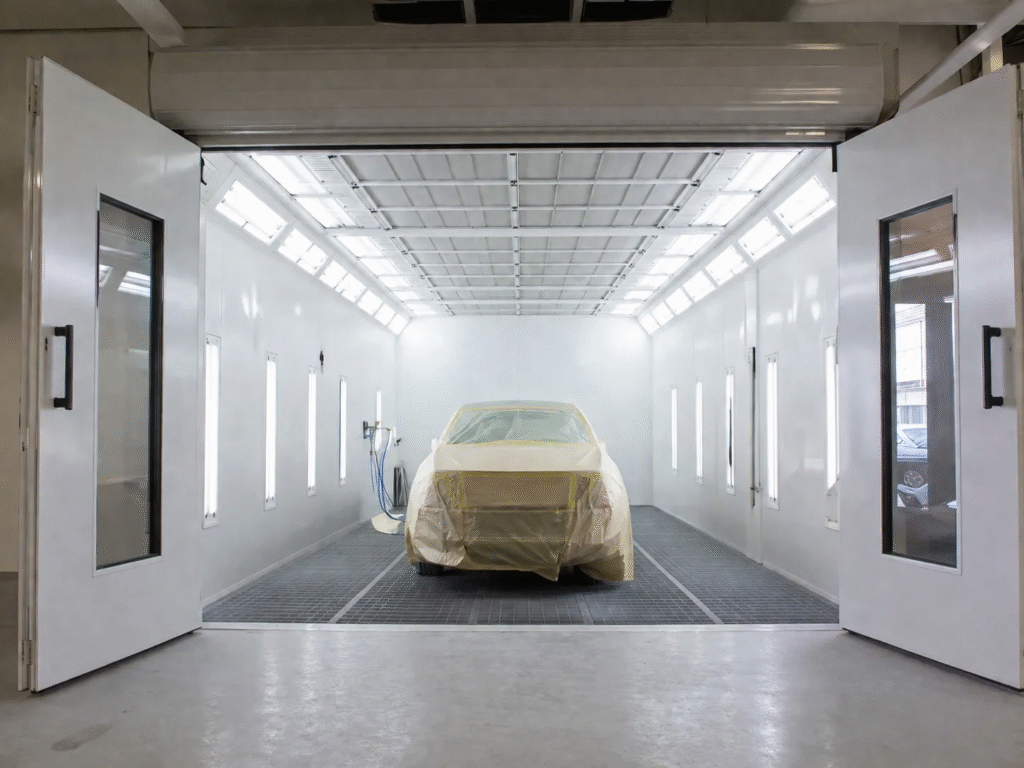
If you’re searching for the most effective way to control overspray, dust, and fumes in your painting operations, understanding the downdraft spray booth is essential. Whether you’re in automotive refinishing, industrial manufacturing, or aerospace, mastering how a downdraft paint booth works can elevate your finish quality and improve workplace safety. In this guide, you’ll get a clear overview of downdraft spray booths, how their superior airflow patterns outperform alternatives, and what makes them the go-to choice for precision painting. Ready to learn why this spray booth design might be the key upgrade your shop needs? Let’s dive in.
What Is a Downdraft Spray Booth?
Definition and Overview
A downdraft spray booth is a specialized enclosure designed to optimize paint application by directing airflow vertically from the ceiling down toward the floor. This controlled airflow system captures overspray and dust particles, preventing contamination and ensuring a cleaner painting environment. Downdraft booths are widely used in automotive refinishing, industrial coating, and other precision painting applications due to their proven efficiency and superior finish quality.
How a Downdraft Paint Booth Works
In a downdraft spray booth, fresh air enters through a ceiling plenum, flowing downward in a uniform vertical pattern. The air then exits through exhaust vents located at floor level, carrying away overspray particles and fumes. This vertical airflow minimizes turbulence inside the booth, reducing dust settlement and enhancing operator safety by efficiently removing hazardous vapor. The design maintains a clean environment, critical for achieving flawless paint finishes and complying with environmental standards.
Advantages of Using a Downdraft Spray Booth
Superior Airflow and Dust Control
Downdraft spray booths excel in directing airflow from the ceiling down to the floor exhaust, effectively removing airborne dust and contaminants from the work area. This vertical airflow design minimizes the risk of dust settling on freshly painted surfaces, ensuring a cleaner environment and reducing defects caused by contamination. Precise ventilation and pressure control keep overspray and harmful particles away from the operator and workspace, enhancing overall cleanliness.
Enhanced Safety and Over-Spray Management
The controlled air movement in a downdraft spray booth reduces the buildup of flammable paint vapors by channeling them efficiently towards filtration and exhaust units. This airflow pattern improves worker safety by maintaining a cleaner breathing atmosphere and lowering fire risks. The booth’s design also limits overspray dispersion, preventing waste and environmental contamination, which supports regulatory compliance and operational efficiency.
Improved Paint Finish Quality
By systematically managing airflow and eliminating dust and overspray, downdraft spray booths promote consistent drying and curing conditions. The controlled environment helps paint layers adhere evenly, reducing imperfections and producing a smoother, high-quality finish. This makes downdraft booths highly suitable for delicate automotive refinishing and other industries where finish quality is critical, complementing advanced liquid coating systems. For more on airflow design and safety, consult detailed insights on automotive paint booth ventilation engineering.
Downdraft vs. Other Spray Booth Airflow Patterns
Full Downdraft Spray Booths
Full downdraft spray booths direct airflow from the ceiling straight down to the floor exhaust, creating a vertical airflow pattern that efficiently pulls overspray and dust particles away from the vehicle. This design delivers superior contamination prevention and consistently enhances finish quality. With a roof air unit and floor exhaust system working in unison, these booths provide optimal control over airflow and overspray management, making them the preferred choice for high-end automotive refinishing and industrial coating applications.
Semi-Downdraft Spray Booths
Semi-downdraft booths combine elements of both downdraft and crossdraft systems. Typically, airflow moves diagonally—from the ceiling at the front toward the rear exhaust near the floor. This setup offers balanced airflow and dust control, reducing turbulence while providing a more economical footprint compared to full downdraft designs. Semi-downdraft booths are a practical option for shops needing effective airflow with moderate installation space and budget constraints.
Crossdraft and Cross-Flow Spray Booths
Crossdraft booths utilize horizontal airflow that enters from one sidewall and exits the opposing sidewall. While simpler and often less costly, this airflow pattern is more prone to carrying overspray particles across the painted surface, which can compromise finish quality. Cross-flow booths share these characteristics and are commonly used in lighter painting tasks or where budget limits outweigh the demand for the highest finish precision.
For detailed insights on airflow types and how each pattern impacts paint quality and efficiency, referencing our in-depth guide on the comparison of airflow types in spray booths is recommended. This resource can help tailor your choice to your specific operational needs.
Key Applications and Industry Uses
Automotive Refinishing and Painting
Downdraft spray booths are essential in automotive refinishing for delivering consistent, high-quality paint jobs. Their vertical airflow directs airborne particles and overspray downward and out of the booth, minimizing contamination and ensuring smooth, flawless finishes on cars, trucks, and motorcycles. These booths support precise control of temperature and airflow, critical for liquid coating systems used in automotive paint applications. The reliable dust and overspray management reduces rework and improves productivity in body shops and automotive manufacturing plants. For businesses focused on automotive paint booths, selecting a CE certified downdraft spray booth guarantees compliance with global safety and environmental standards, reinforcing trust in the final finish quality.
Industrial Manufacturing and Aerospace
In industrial manufacturing and aerospace sectors, downdraft spray booths play a pivotal role in coating sensitive components, machinery parts, and aerospace equipment. The thorough airflow design efficiently extracts contaminants and volatile vapors, creating a clean environment critical for applying protective and decorative coatings. This precision airflow control enhances worker safety by managing overspray and harmful emissions effectively. Furthermore, customized heavy-duty downdraft booths accommodate various industrial sizes and complex parts, supporting long production runs without quality compromise. Meanwhile, aerospace applications with demanding finish specifications benefit greatly from the controlled environment these booths provide, thus ensuring coatings meet stringent durability and appearance requirements.
For more details on automotive paint booth types and benefits that complement downdraft spray booths, see our comprehensive automotive paint booth guide.
Technical Specifications and Core Functions
Roof Air Units and Filtration Systems
Autoke downdraft spray booths employ high-efficiency roof air units designed to deliver consistent vertical airflow. These units pull fresh, filtered air through a multi-stage filtration system to remove contaminants before entering the booth. Filters include:
– Pre-filters to capture large particles
– Secondary filters for fine dust and overspray
– Activated carbon or HEPA options for enhanced air purity
This filtration setup prevents dust and debris from settling on surfaces, maintaining a clean environment essential for superior paint quality. The roof plenum design also optimizes uniform air distribution, minimizing turbulence inside the booth.
Exhaust and Ventilation Technology
Exhaust systems in Autoke downdraft spray booths use powerful, adjustable fans that pull air downward and out through floor-level exhaust ducts. This vertical airflow pattern efficiently removes overspray, fumes, and airborne particles, reducing contamination risks. Key features include:
– Variable speed fan controls for airflow adjustment based on spray process needs
– Sealed ductwork designed for minimal leakage and noise reduction
– Pressure sensors integrated to maintain balanced airflow and optimize booth performance
This precise ventilation system plays a critical role in worker safety and environmental compliance, fully aligning with CE certification standards. Together, the roof air intake and exhaust ventilation provide unmatched control over airflow dynamics and surface finish quality in downdraft spray booths.
For more details on selecting and maintaining an automotive paint booth with advanced airflow engineering, see Autoke’s comprehensive automotive paint booth guide.
Choosing the Right Spray Booth for Your Shop
Factors to Consider Before Purchasing
Selecting the ideal spray booth hinges on several key factors tailored to your shop’s needs:
- Space and Size Requirements: Measure your workspace carefully. Booths typically come in 6m, 7m, and 8m sizes to fit small to large operations efficiently.
- Airflow Pattern: Downdraft booths excel at directing contaminant-free air downward for the cleanest finish. Consider if a full downdraft, semi-downdraft, or other airflow design suits your workflow.
- Heating System Options: Determine whether diesel heating, electric heating, or fully electric systems fit your climate and energy preferences.
- Regulatory Compliance: Opt for CE-certified booths to ensure safety, efficiency, and legal conformity across global markets.
- Budget and ROI: Factor in not only upfront costs but also shipping, installation, and operational expenses. Bulk shipping offers notable savings when ordering multiple units.
- Customization Needs: For specialized production or heavy-duty applications, factory OEM/ODM options enable tailored booth designs.
Taking the time to align these elements with your production goals and compliance requirements ensures a smooth investment with long-term productivity gains.
Pros and Cons of Each Airflow Design
- Full Downdraft Spray Booth:
- Pros: Superior dust control and paint finish quality by pulling air vertically from ceiling to floor. Ideal for automotive refinishing and high-precision coatings.
- Cons: Requires more vertical space and a robust exhaust system. Slightly higher installation complexity.
- Semi-Downdraft Spray Booth:
- Pros: Balanced airflow reduces overhead ductwork needs while still controlling overspray effectively.
- Cons: Slightly less efficient than full downdraft in dust removal; better for medium-sized operations.
- Crossdraft/Cross-Flow Spray Booth:
- Pros: Lower upfront cost and simpler installation. Suitable for basic paint applications or limited space environments.
- Cons: Increased risk of contamination and overspray due to horizontal airflow. Not preferred for premium finishes.
Understanding these airflow designs helps you pick a spray booth that optimizes both operational efficiency and paint quality. You can also explore detailed guidance on automotive paint booth layouts to enhance your decision-making.