
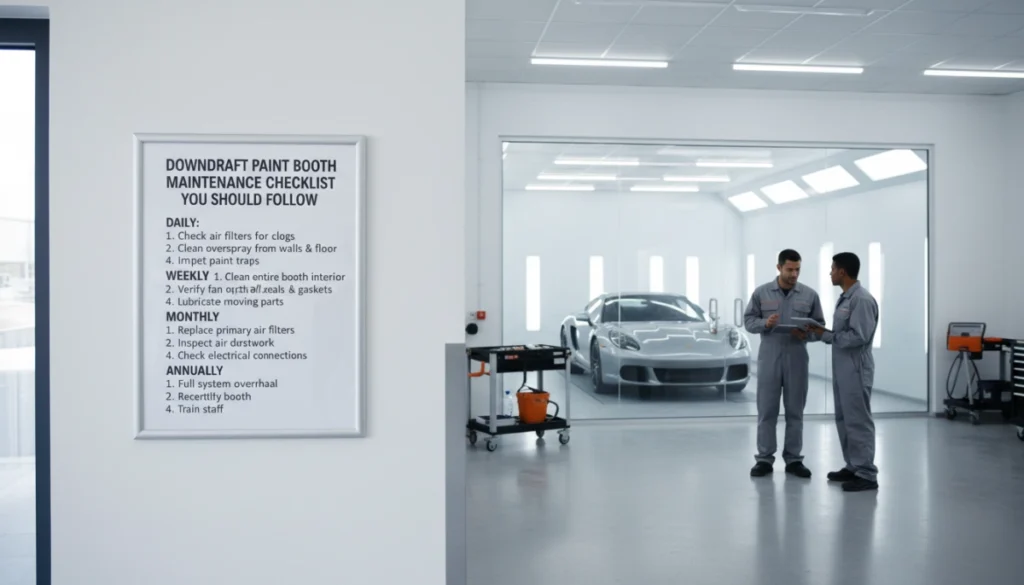
Skipping maintenance on a downdraft paint booth doesn’t just affect finish quality — it burns out motors, invites compliance violations, and costs far more to fix than it would have cost to prevent. This checklist covers what to check daily, weekly, monthly, and annually to keep your booth running cleanly and your shop running profitably.
Page URL: https://sprayboothmanufacturer.com/product/
Why Maintenance Can’t Be an Afterthought
A downdraft booth works because air moves in one controlled direction — straight down from the ceiling to the floor pit. The moment filters load up, seals crack, or the pit gets blocked, that airflow pattern breaks down. And when airflow breaks down, everything else follows.
Clogged filters kill your airflow velocity, which throws off the pressure balance inside the booth. Instead of pulling overspray cleanly downward, turbulence kicks dried particles back up off the walls and floor — straight into your fresh clear coat. The finish you spent hours on comes out needing another hour of buffing.
Beyond finish quality, there are safety and compliance reasons that make a maintenance schedule non-negotiable. Dry overspray and paint fumes are combustible. Letting them accumulate in your pit, ductwork, or on your walls is a fire hazard that NFPA, OSHA, and EPA all have regulations around. Staying on top of filter changes and cleaning isn’t just about clean paint — it’s what keeps your shop insurable and legally operating.
Then there’s the cost angle. A booth with choked filters forces the air handling unit to work harder than it was designed to, which drives up energy bills and wears out motors faster. Routine maintenance is what protects that mechanical investment.
Daily Checks: Before the First Trigger Pull
A quick walk-around before spraying takes five minutes and catches the problems that ruin a job before it starts.
Start with a visual sweep of the booth interior. Look for heavy overspray buildup on the walls and floor. If the walls are loaded with dry fallout, clean or refresh the booth coating before that material ends up in your basecoat.
Check the manometer. This pressure gauge tells you whether the booth is sitting in the right operating range. If the reading is already drifting before you’ve started, the filters are loading up or something is restricting airflow. Catching this before you spray saves the job.
Walk the door perimeter and check the rubber seals. A small crack or gap in a door gasket is enough to pull dusty shop air into a clean painting environment. It doesn’t take a big leak to contaminate a clear coat.
Look at the floor grating. Dropped masking paper, cardboard scraps, or anything else sitting on the grates blocks the downward air path that the whole system depends on. The floor needs to be clear.
Finally, check your compressed air supply. Drain the moisture separators and look for any sign of oil in the lines. Water or compressor oil getting into your paint is a different kind of contamination problem, but it shows up the same way — a ruined finish.
Weekly Maintenance: Deep Cleaning and System Check
Once a week, the booth needs more than a visual check. This is when you address buildup before it becomes a real problem.
Go over the wall coatings. If the peelable film or booth coating is heavily loaded with overspray, strip it down and apply a fresh layer. Clean, bright walls also make it easier to see what’s happening in the booth while you’re spraying.
Wipe down the light fixture glass. Even a thin layer of overspray on the covers changes how colors read under the lights, which affects your color matching accuracy. It takes two minutes and makes a real difference.
Pull and inspect the intake pre-filters. If they’re packed with dust and debris, they’re already restricting incoming air and pushing the pressure balance off. Replace them if they’re heavily loaded.
Check the exhaust filters in the pit. These take the heaviest hit from overspray. If they’re stiff, saturated, or visibly clogged, replace them immediately. Letting them stay in past the point of saturation is what causes the pressure spikes that show up on your manometer.
Run the system and listen to the fan and motor. Grinding, squealing, or unusual vibration coming from the air handling unit means something needs attention — a loose drive belt, a worn bearing, or something else that’s cheaper to fix now than after it fails mid-job.
Monthly and Quarterly: Core Mechanical Components
Ceiling Filter Replacement
The ceiling diffusion filters are what produce smooth, even laminar airflow over the vehicle. They filter particles down to 5 microns, which is why a fresh set produces a glass-like clear coat and a worn set produces one that needs heavy correction work. Replace them on a schedule based on operating hours — don’t wait until they look visibly dirty, because by then they’ve already been affecting your finish quality.
Drive Belt Inspection
The fan motors move a large volume of air under constant load. Drive belts stretch and wear over time. Check the tension on each belt and look for any signs of fraying or cracking. A loose belt reduces airflow velocity and strains the motor. A belt that breaks mid-job shuts down the whole booth. This is one of the easier preventive checks with one of the more disruptive failure modes if skipped.
Burner and Heat Exchanger Service
If your booth runs bake cycles, the burner system needs regular attention. Soot or debris buildup in the burner wastes fuel, increases utility costs, and creates a fire risk. Inspect the burner and heat exchanger at each quarterly service and clean out any buildup.
Solenoid and Interlock Testing
Safety interlocks only protect you if they’re actually working. Test them monthly. Open the cabin doors while the system is running — compressed air to the guns should cut off immediately. Check that the spray gun won’t trigger with the exhaust fan down. These tests take a few minutes and confirm that your safety systems are functional, not just present.
Pit Cleaning
The exhaust pit collects everything the airflow brings down. Over time, sludge and dry overspray accumulate at the bottom of the extraction area. Lift the floor grates and clean it out regularly. Built-up dry overspray in the pit is a combustion risk, and heavy accumulation restricts the air path that the whole downward airflow system depends on.
Filter Reference Guide
Filters are the core of any downdraft booth maintenance schedule. Here’s what each type does and why it matters:
| Filter Type | Location | Primary Function |
|---|---|---|
| Intake / Pre-Filters | Air intake | Blocks large dust and debris from reaching the air handling unit |
| Ceiling Diffusion Filters | Ceiling plenum | Produces laminar airflow and 5-micron particle filtration |
| Exhaust / Floor Filters | Pit under floor grating | Captures wet overspray before it reaches the exhaust fans |
On filter replacement intervals: There’s no single timeline that works for every shop. Production volume and coating type both affect how fast filters load. A reasonable starting point for exhaust filters is every two to four weeks, with weekly changes for high-volume operations or heavy solids. The more reliable guide is your manometer — when the reading climbs out of the green zone, the exhaust filters are saturated and need replacing. Don’t go by how they look; go by what the gauge tells you.
On reusing ceiling filters: Don’t. Ceiling diffusion filters are made with a specific fiber density and a tackifier treatment that traps microscopic particles. Washing them destroys both. Reinstalling washed filters eliminates the laminar airflow effect and guarantees contamination in your finish.
Annual Professional Audit
Even with consistent daily and monthly upkeep, an annual inspection by a qualified technician catches what routine maintenance misses. This includes full recalibration of the air handling unit, airflow velocity balancing across the full booth, and a check of every mechanical component against original performance specs. Hidden wear in bearings, fan blades, or control systems shows up here before it becomes an unplanned shutdown.
The fire suppression system requires a semi-annual inspection to stay current with fire codes. Verify that all service tags are signed off, check that discharge nozzles inside the cabin are clear of overspray, and confirm that heat sensors are clean and functional.
Inspect the exhaust ductwork annually for paint residue buildup. Dry overspray accumulation inside ducts is a fire hazard, and heavy buildup restricts exhaust flow enough to affect booth pressure and VOC compliance.
Troubleshooting Common Problems
Booth over-pressurization (doors pushing outward, overspray swirling back): The most common cause is saturated exhaust filters blocking the exit path. Check the pit filters first. If they’re clear, check whether the exhaust fan belts are slipping, or whether the exhaust dampers are stuck partially closed from overspray accumulation.
Slow airflow or dead spots: If the air feels sluggish and overspray isn’t pulling cleanly downward, start with the intake pre-filters — if they’re clogged, the system can’t pull enough volume into the cabin. Also check the pit for heavy buildup blocking the floor grate. If filters and pit are clear, check the air handling unit for motor or VFD issues.
Dust contamination in fresh clear coat: If you’ve recently replaced the ceiling filters and still have contamination, the source is usually environmental. Check door gaskets for cracks or gaps that are pulling unfiltered shop air into the booth. If the walls aren’t coated with peelable film, dried overspray flaking off the surface is another common source. Also check your moisture separators — oil or water in the compressed air lines produces contamination that looks similar to dust.
| Symptom | Most Likely Cause | First Step |
|---|---|---|
| Manometer reading climbing | Saturated exhaust filters | Replace pit/floor filters |
| Low CFM throughout booth | Clogged intake or ceiling filters | Inspect and replace loaded filters |
| Overspray clouds visible | Pressure imbalance | Check exhaust fan belts and dampers |
| Dust seeds in clear coat | Door seal failure or dirty walls | Inspect gaskets, apply fresh booth coating |
Common Questions
How do I know when exhaust filters actually need replacing? Stop going by time intervals alone and start trusting your manometer. When the reading climbs out of the normal operating range, the filters are saturated. Running the booth past that point strains your motors and ruins finishes. For most shops, that works out to every two to four weeks, but high-volume operations may need weekly changes.
What’s the right way to clean booth walls? Use peelable film or a booth coating rather than trying to clean bare walls. When the surface is loaded, peel it off and apply a fresh coat. If you’re cleaning bare metal panels, use a mild booth-safe solvent and a soft cloth — aggressive scraping scratches the surface and creates grooves that hold paint dust permanently.
Can ceiling diffusion filters be washed and reused? No. The filtration performance comes from a specific fiber structure and a chemical tackifier treatment. Washing destroys both. Reinstalling washed filters removes the laminar airflow effect entirely and leads directly to contamination in the finish. They’re not reusable — budget for regular replacements as a fixed operating cost.
What does a sudden spike into the red zone on the manometer mean? It means the exhaust path is completely restricted and air can’t exit the booth fast enough. The nearly universal cause is severely clogged floor filters. Stop spraying immediately — continuing under those conditions ruins the finish and puts serious strain on the fan motors. Replace the filters before running the booth again.
Tell Us What You’re Working With
Share your booth model, production volume, and the types of coatings you’re running. We’ll put together the right maintenance schedule and filter replacement plan for your operation — usually within 48 hours.
Related Pages
- Bus Spray Booth Design Guide → https://sprayboothmanufacturer.com/transit-coach-spray-booth-requirements/
- Large Vehicle Paint Booth Size Guide → https://sprayboothmanufacturer.com/large-vehicle-paint-booth-sizing-guide/
- Other related products → https://www.autokemanufacture.com/product
- Contact our sales Team → https://sprayboothmanufacturer.com/contact-us/
✅ CE Certified | ✅ ISO 9001:2015 | ✅ Factory Direct | ✅ Ships to 60+ Countries | ✅ 1-Year Warranty | 🔒 HTTPS Secured