
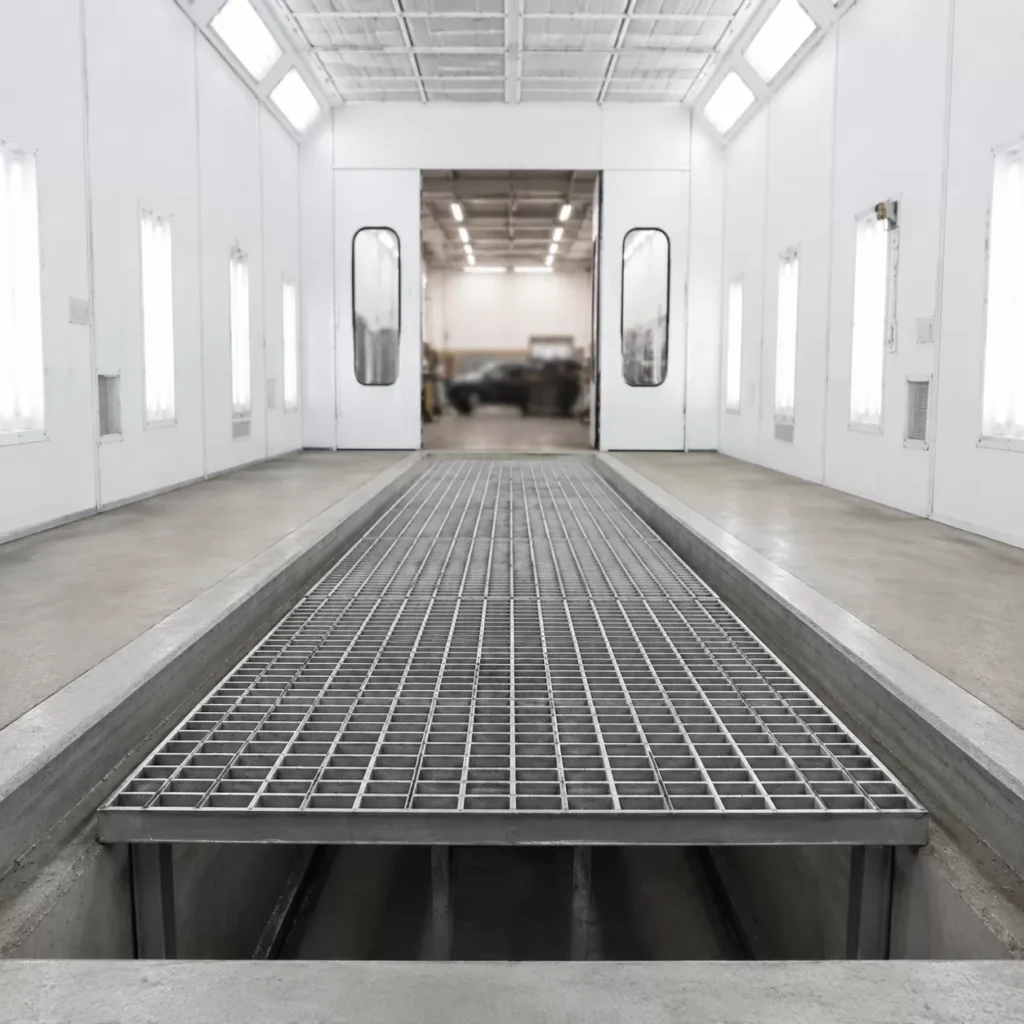
The pit is the part of a downdraft booth installation that gets the least attention during the planning phase and causes the most problems when it’s done wrong. A pit that’s undersized, poorly reinforced, or inadequately waterproofed affects airflow, structural integrity, and long-term maintenance from the first day the booth operates. This guide covers the construction specifications that matter, how to select and engineer the right grating for your vehicle types, and what maintenance keeps the system performing over time.
Page URL: https://sprayboothmanufacturer.com/product/
Pit Construction: Getting the Foundation Right
Sizing and Dimensions
Operators must match the pit footprint to the active spraying zone. They align the pit’s length and width with the vehicle positioning area during spray work to capture overspray across the entire vehicle surface. An overly narrow pit creates side dead zones, lowers airflow velocity, and lets overspray linger instead of drawing it fully downward.
Our standard pit depth specification is 300mm, engineered to provide adequate plenum volume beneath the grating for smooth, consistent exhaust extraction without creating excessive resistance in the airflow path. Depth requirements can vary depending on the specific exhaust fan CFM and ductwork configuration, but 300mm represents the baseline for most standard automotive booth applications.
Concrete Specifications
Industrial shop floors carry significant static and dynamic loads, and the concrete around the pit needs to handle both. The minimum specification is 3,000 to 4,000 PSI compressive strength. Below that threshold, the concrete risks cracking under the point loads generated by vehicles rolling across the pit edges repeatedly over years of operation.
Rebar reinforcement is required — not optional. Heavy-duty rebar tied into the surrounding slab prevents the pit from settling or shifting as loads change over time. At the trench edges specifically, embedded structural steel angle iron is the right specification. The edges of the pit take concentrated impact every time a vehicle rolls in and out, and concrete without embedded steel support will eventually chip and crack at those points, creating gaps that compromise the grate seating and the seal between the pit and the booth floor.
Waterproofing and Drainage
Groundwater infiltration into the pit creates two problems: it contributes to humidity inside the booth environment, and it accelerates corrosion of the grating and any steel components in the pit. Industrial-grade vapor barriers and waterproofing membranes applied before the concrete is poured are the standard protection against groundwater seepage.
Drainage also needs to be designed in from the start. A 1% to 2% floor slope toward dedicated drain points handles cleaning runoff and accidental fluid spills without allowing water to pool in the pit. In jurisdictions where automotive waste fluids require containment before entering the drain system, this drainage should connect to a separator rather than a direct floor drain.
| Construction Element | Specification | Purpose |
|---|---|---|
| Concrete Strength | 3,000–4,000 PSI | Supports heavy vehicle loads |
| Pit Depth | 300mm standard | Ensures optimal exhaust extraction |
| Edge Framing | Embedded steel angle iron | Prevents concrete edge failure |
| Floor Slope | 1–2% toward drain | Eliminates standing water |
| Waterproofing | Industrial vapor membrane | Blocks groundwater seepage |
Selecting the Right Galvanized Grating
Why Galvanized Steel Is the Right Material
Hot-dipped galvanized steel is the industry standard for pit grating in automotive finishing environments, and the reason comes down to the chemical exposure these surfaces face daily. Paint thinners, automotive fluids, cleaning solvents, and constant moisture from booth wash-downs would degrade uncoated or lightly coated steel within a few years. Hot-dip galvanization creates a protective zinc layer that bonds to the base steel and resists all of these exposures without requiring ongoing treatment or recoating.
The longevity argument matters for total cost of ownership. Grating that needs to be replaced every few years because the coating has failed adds up over the life of the booth. Properly galvanized grating holds up for the full service life of the installation under normal use.
Grate Spacing and Airflow
The spacing between grate bars directly affects how well the pit performs its primary function — exhausting air downward through the floor. Spacing that’s too tight restricts the airflow path and reduces the effective CFM the exhaust system can maintain. Spacing that’s too wide reduces structural support and allows overspray to fall into the pit rather than being carried by airflow to the filters.
Proper spacing meets two key needs. Gaps must be wide enough for even airflow. Air flows fully across the pit to the exhaust filters under the grating. Gaps must also be narrow enough for structural strength. The grating withstands rolling vehicle loads. It stops dried overspray from dropping onto lower filter media. Overspray on the grating must stay easy to maintain. Overly narrow gaps trap paint easily. Frequent cleaning is then needed to keep exhaust working efficiently.
Engineering for Load Capacity
The 5-Ton Load Rating
Our standard galvanized grating specification carries a 5-ton (5,000 kg) load rating, which covers the static and dynamic loads of most standard passenger vehicles, light commercial vehicles, and standard pickup trucks. The grating designer and tester set this rating to withstand loads without exceeding deflection limits. Excessive deflection would weaken the grating’s structural integrity and impair its fit inside the pit.
It’s important to understand the distinction between static and dynamic loads when applying this rating. Static load is the weight of a parked vehicle sitting on the grating — a predictable, steady force. Dynamic load is what happens when a vehicle rolls across the pit edge and onto the grating — the impact and rolling weight creates momentary forces that can significantly exceed the static vehicle weight. The 5-ton rating accounts for both conditions under normal operational use.
Some facilities routinely serve heavy commercial vehicles. These include large trucks, transit buses and heavy industrial equipment. They must match grating specs to real axle loads, not total vehicle weight. Axle load concentrations can be higher than total weight indicates. This is especially true for single-axle setups. Extra pit structural support solves this issue. Options include steel I-beams and center support columns across the trench. They shorten effective span length and raise safe load capacity.
Deflection Limits and Structural Support
Grating that sags or deflects visibly under load is a safety problem before it becomes a structural failure. Strict deflection limits are what keep the floor surface stable under rolling loads and prevent the grating from working loose from its seating over time.
The span length of the pit is the primary structural variable. Wider pits need extra support. This keeps deflection within allowable ranges. Grating bar sizes suitable for narrow trenches often fail over wider spans. If pit width demands more stability, install intermediate support columns or I-beams in the pit structure. This is a better solution than merely using heavier grating.
Bar thickness and depth are the dimensional variables within the grating itself. Deeper bearing bars deliver greater load capacity. They also resist deflection better over the same span. This compares to shallower bars with equal material weight. When choosing grating for a set pit width and load demand, do not pick standard sizes randomly. Check all dimensions against calculated load values instead.
Matching Grating to Vehicle Class
| Vehicle Class | Common Examples | Engineering Consideration |
|---|---|---|
| Standard Passenger | Sedans, crossovers, light SUVs | Standard 5-ton rating with optimized airflow spacing |
| Light Commercial | Standard pickups, vans | Verify axle loads against static rating |
| Heavy-Duty Commercial | Large trucks, buses, industrial equipment | Evaluate axle loads specifically; may require pit support columns |
Compliance Requirements
Every element of the pit construction and grating specification needs to meet OSHA and NFPA 33 requirements for spray finishing operations. For the flooring specifically, this means structural integrity under the expected loads, slip-resistant grating surfaces to prevent falls, and maintenance access that allows filter inspection and replacement without tools or specialized equipment.
NFPA 33 also governs the materials used in the pit environment. Everything in the spray zone needs to be non-combustible — which galvanized steel satisfies — and the drainage system needs to handle hazardous fluids appropriately rather than routing them directly to standard floor drains without containment or separation.
Before installation begins, verify the local fire marshal’s specific requirements for pit construction in your jurisdiction. National standards set the baseline, but local enforcement can add requirements that affect both the construction specifications and the permitting process.
Maintenance: Protecting the Investment
Cleaning the Grating
Overspray accumulates on the grating surface over time, progressively narrowing the effective open area and restricting airflow through the pit. The rate of accumulation depends on spray volume, coating type, and airflow velocity, but regular cleaning is part of maintaining the booth’s designed CFM performance. Check the grating for overspray buildup first if the manometer shows rising static pressure that filter loading cannot explain.
You should base cleaning frequency on how quickly overspray accumulates in your operation, not rigid scheduled intervals. Inspect the grating surface every time you replace filters; clean the grating once overspray buildup visibly narrows the gaps.
Clearing the Pit Interior
Dried overspray, dust, and debris accumulate in the pit below the grating over time. This accumulation restricts the airflow path between the grating and the exhaust filters and, if it builds to the point where dried paint is present in quantity, creates a combustion risk. Vacuum the pit interior on a regular schedule — quarterly at minimum in high-production operations — to keep the exhaust pathway clear.
Structural Inspection
The grating and the pit edges should both be inspected periodically for signs of wear. On the grating, look for sagging or bent bars at center spans — this is where dynamic loads from vehicles rolling across concentrate stress. Any visible deflection that wasn’t present at installation warrants grating replacement before it progresses to failure.
On the concrete pit edges, check for chipping or cracking at the lip where vehicles roll across. Damage here creates gaps between the grating and the concrete surface that allow unfiltered air to bypass the pit entirely and enter the exhaust system. The embedded steel edge framing prevents most of this, but regular inspection confirms the edge condition remains sound.
If the underlying structural supports within the pit — I-beams or support columns where applicable — show any signs of corrosion or physical damage, address them before they affect the load capacity of the grating system above.
Common Questions
What is the standard pit depth for a downdraft booth? Our standard specification is 300mm, which provides adequate plenum volume for smooth exhaust extraction in most standard automotive booth applications. Specific requirements can vary based on exhaust fan capacity and ductwork configuration — confirm against your booth’s engineering drawings before excavation begins.
What load capacity does the standard galvanized grating need to support? Our standard grating specification carries a 5-ton (5,000 kg) rating covering both static and dynamic loads from standard passenger and light commercial vehicles. Before finalizing installation, you must specifically evaluate how heavy-duty commercial vehicle axle loads impact the grating and pit support structure.
Why is embedded steel angle iron required at the pit edges? The pit edges take concentrated impact every time a vehicle rolls into and out of the booth. Concrete without steel reinforcement at these points will chip and crack over time, creating gaps that compromise the grating seating and allow air to bypass the pit. Embedded angle iron distributes these loads and protects the concrete lip for the full service life of the installation.
How often should the pit be cleaned? Workers in production environments inspect the grating every time they replace filters and vacuum the pit interior at least quarterly. High-volume operations may clean the pit more often based on how quickly overspray accumulates. If filter buildup cannot explain rising static pressure, pit airflow restriction may cause the problem.
Tell Us What You’re Working With
Share your facility layout, typical vehicle types, and planned booth configuration. We’ll help confirm the right pit specifications and grating load rating for your specific operation and send a detailed quote with construction drawings — usually within 48 hours.
Related Pages
- Bus Spray Booth Design Guide → https://sprayboothmanufacturer.com/transit-coach-spray-booth-requirements/
- Truck Paint Booth Guide → https://sprayboothmanufacturer.com/truck-paint-booth-semi-truck-spray-booth-specifications-buying-guide/
- Other related products → https://www.autokemanufacture.com/product
- Contact our sales Team → https://sprayboothmanufacturer.com/contact-us/
✅ CE Certified | ✅ ISO 9001:2015 | ✅ Factory Direct | ✅ Ships to 60+ Countries | ✅ 1-Year Warranty | 🔒 HTTPS Secured