
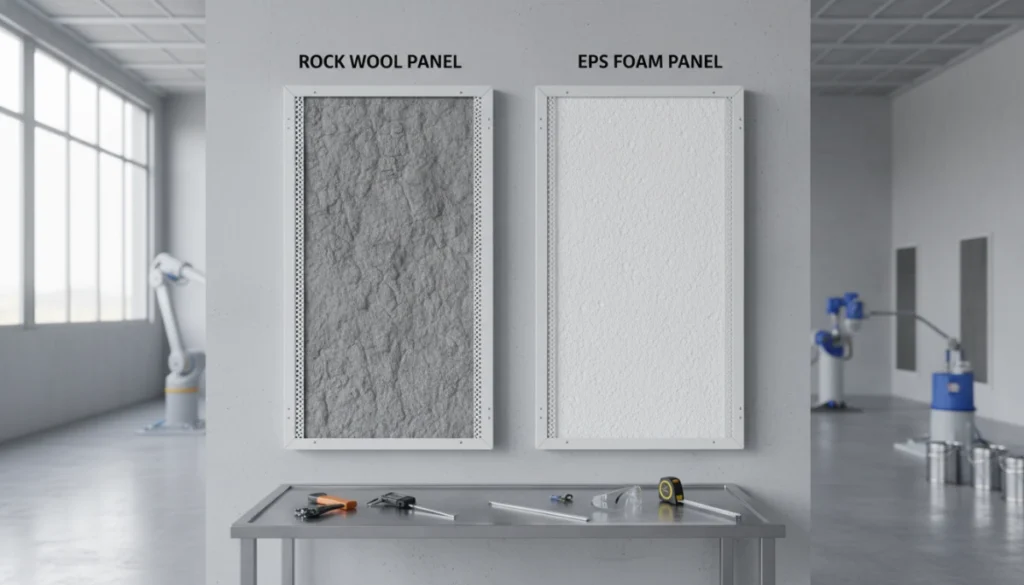
The insulation panels in your paint booth do more than keep the heat in. They determine how fast you reach curing temperature, how much fuel you burn per cycle, whether you pass a fire marshal inspection, and how long the booth holds up to daily production. This guide covers how EPS and rock wool panels work, where each one makes sense, and how to think through the cost comparison honestly before you commit.
Page URL: https://sprayboothmanufacturer.com/product/
EPS Foam Panels: The Budget-Conscious Starting Point
EPS panels — expanded polystyrene — use a sandwich construction: a lightweight foam core bonded between two galvanized steel skins. It’s the most common panel type in entry-level and startup booth builds for one straightforward reason: it costs less upfront and goes together quickly.
Where EPS Makes Sense
The weight difference between EPS and rock wool is significant. Lighter panels mean smaller installation crews can handle the job, lower freight costs across the country, and a faster setup overall. For a shop getting off the ground, that matters. Money saved on the booth structure can go toward spray equipment, paint inventory, or the other startup costs that add up fast.
EPS also handles moisture well. The closed-cell foam structure doesn’t absorb water, which protects the interior galvanized skin from rusting from the inside out and prevents mold growth in humid shop environments or facilities with regular wash-down cycles.
For low-volume operations, hobbyist setups, and shops that primarily do air-dry finishes rather than high-heat bake cycles, EPS provides adequate insulation and a clean working environment at the lowest possible entry cost.
The Limitations You Need to Know
EPS starts to deform at around 165°F to 200°F. For a shop running high-heat bake cycles repeatedly throughout the day, that’s a real operational limit. Over time, thermal expansion and contraction in a booth that regularly pushes those temperatures can cause the panels to shift, creating gaps that affect both airflow balance and insulation performance.
The bigger concern for many shops is fire compliance. EPS is a petroleum-derived foam and it’s combustible. NFPA 33 sets the fire safety standards for spray finishing operations in the United States, and many jurisdictions require a Class A fire rating for booth construction — which EPS can’t achieve. Some areas will allow EPS with enhanced fire suppression systems, but that adds cost that partly offsets the initial savings. Before choosing EPS, verify what your local fire marshal requires. Finding out after installation that you need to upgrade is a far more expensive lesson.
Rock Wool Mineral Wool Panels: Built for High-Heat Production
Rock wool panels use a core made from natural basalt rock and recycled steel slag, melted and spun into dense mineral fibers. That core is sandwiched between galvanized steel skins the same way EPS is, but the performance characteristics are completely different.
Fire Resistance and Thermal Stability
The defining advantage of rock wool is that it’s non-combustible. The mineral fiber core withstands temperatures exceeding 2,000°F without melting, releasing toxic smoke, or losing structural integrity. This is what gives rock wool a Class A fire rating under ASTM E84 and makes it the default choice for meeting NFPA 33 compliance in high-production facilities across the United States.
For shops running back-to-back bake cycles, this matters beyond just passing inspection. A panel that maintains its physical structure under repeated high-heat exposure keeps the booth sealed and the airflow consistent cycle after cycle. There’s no softening, no dimensional creep, no developing gaps from thermal cycling.
The dense fiber structure also absorbs sound more effectively than foam. In a production environment with high-powered exhaust fans and HVAC equipment running constantly, that acoustic dampening makes a real difference to working conditions on the shop floor.
The Trade-offs
Rock wool panels are heavier than EPS, and that weight requires a more robust structural frame to support them properly. The installation takes more labor and the upfront cost — both for the panels and for the frame they need — is higher than an EPS build. For a startup watching every dollar of initial investment, that difference is real.
The question is whether the upfront difference is actually a cost when you look at the full operational picture.
Direct Comparison: What the Numbers Look Like
| Feature | EPS Foam Panels | Rock Wool Panels |
|---|---|---|
| Fire Rating | Class B/C — combustible | Class A — non-combustible |
| Melting/Softening Point | ~165°F – 200°F | Over 2,000°F |
| Thermal Performance | Good at room temperature | Excellent under sustained heat |
| Sound Dampening | Minimal | Superior |
| Compliance | Limited in some US jurisdictions | Universally accepted for high-heat |
| Initial Cost | Lower | Higher |
| Long-Term Maintenance | Higher | Lower |
How Panel Choice Affects Your Bake Cycle and Energy Bills
This is where the operational cost difference between the two materials shows up most clearly.
A rock wool panel holds heat the way a well-insulated thermos does. Once the booth reaches the target temperature, the walls retain that heat rather than bleeding it into the surrounding building. The Air Makeup Unit doesn’t have to cycle on and off repeatedly to compensate for wall loss, which means less fuel burned per cycle. In cold climates, that difference is particularly pronounced.
EPS provides adequate insulation for lower-temperature applications, but its thermal resistance degrades over time under repeated high-heat exposure. As the foam softens slightly through repeated bake cycles, its insulating properties decrease — meaning the AMU works progressively harder over the life of the booth to maintain the same target temperature.
For a shop running five or more bake cycles per day, the energy difference between a well-insulated rock wool booth and an EPS booth compounds across weeks and months into real operating cost. Less fuel consumption per cycle, faster stabilization to the target temperature, and consistent wall temperatures that eliminate cold spots across the vehicle — all of these affect both your utility bills and the quality of every cure.
The Full Cost Comparison: Upfront vs. Over Time
The upfront cost gap between EPS and rock wool is real. But looking only at the purchase price is how shops end up paying more over the long run.
| Expense Category | EPS Foam Panels | Rock Wool Panels |
|---|---|---|
| Initial Investment | Low — budget-friendly | Moderate to high |
| Energy Efficiency | Standard | High — lower monthly bills |
| Insurance Cost | Potentially higher | Generally lower |
| Fire Compliance Risk | Higher — may require upgrades | Universally accepted |
| Long-Term Value | Depreciates faster | Strong asset retention |
Insurance and Compliance
Insurance underwriters in the United States increasingly price combustible booth construction at a higher risk level. A booth built with non-combustible rock wool panels often qualifies for better insurance rates than an equivalent EPS build. Over several years, the premium difference can be meaningful.
On the permitting side, rock wool’s Class A fire rating simplifies the inspection process in strictly regulated urban and industrial areas. EPS may require additional fire suppression investment to satisfy the same fire marshal in the same jurisdiction — adding cost that partially or fully erases the initial savings.
Resale Value
A booth is a significant asset. If you sell the business, relocate, or upgrade the equipment in the future, buyers in the secondary market consistently favor fire-rated construction. A rock wool booth maintains more of its value than an EPS equivalent, which matters if you’re thinking about the equipment as a long-term investment rather than a disposable asset.
Which Panel Is Right for Your Operation
Choose EPS if your shop is just getting started, you’re primarily doing air-dry finishes or low-temperature applications, and keeping the initial investment as low as possible is the priority. Verify your local fire codes first — but for low-volume operations where bake cycles aren’t the daily rhythm, EPS provides a functional, affordable starting point.
Choose rock wool if you’re running a high-production shop with regular bake cycles, operating in a jurisdiction with strict NFPA 33 enforcement, spraying industrial or aerospace coatings, or building a booth you intend to run hard for years. The higher upfront cost pays back through lower energy consumption, lower insurance premiums, and a booth that holds its performance and resale value over the long term.
For most professional shops that plan to scale up or focus on high-end work requiring consistent heat, rock wool is the material that actually costs less over five to ten years of operation.
Common Questions
Can I mix EPS and rock wool panels in the same booth? No — and it’s worth being direct about why. Beyond the structural challenges of joining panels with different thicknesses and locking mechanisms, mixing materials typically fails a fire compliance inspection. NFPA 33 compliance requires a uniform fire rating across the full structure. Mixing materials also creates inconsistent thermal expansion behavior, which leads to gaps and air leaks at the joins during bake cycles. Build the whole booth with one material.
Which panel is better for noise reduction? Rock wool is significantly better. The dense mineral fiber structure absorbs sound waves rather than reflecting them. In a booth running high-powered exhaust fans and HVAC equipment, that acoustic performance makes a meaningful difference to working conditions. EPS foam is rigid and lightweight, which means it tends to reflect sound rather than dampen it.
Does rock wool require more maintenance? Not in daily operation — it’s actually lower maintenance than EPS over the long run because it doesn’t degrade under high-heat cycling. The important consideration at installation is that the frame needs to be properly engineered for the additional weight. The galvanized steel skins also need to stay sealed to prevent moisture from being trapped inside the mineral fiber core. Get the installation right upfront and rock wool needs very little ongoing attention.
Is EPS ever acceptable under NFPA 33? It depends on your jurisdiction and the specific requirements your local fire marshal applies. Some areas permit EPS with enhanced fire suppression systems in place. Others require a non-combustible core outright. The right answer is to check with your local fire authority before ordering panels, not after the booth is installed. The cost of verifying upfront is nothing compared to the cost of a failed inspection.
Tell Us What You’re Working With
Share your production volume, facility location, ceiling height, and what type of coatings you’re running. We’ll match you with the right panel specification for your operation and send a detailed quote with layout drawings — usually within 48 hours.
Related Pages
- Bus Spray Booth Design Guide → https://sprayboothmanufacturer.com/transit-coach-spray-booth-requirements/
- Truck Paint Booth Guide → https://sprayboothmanufacturer.com/truck-paint-booth-semi-truck-spray-booth-specifications-buying-guide/
- Other related products → https://www.autokemanufacture.com/product
- Contact our sales Team → https://sprayboothmanufacturer.com/contact-us/
✅ CE Certified | ✅ ISO 9001:2015 | ✅ Factory Direct | ✅ Ships to 60+ Countries | ✅ 1-Year Warranty | 🔒 HTTPS Secured