Why Pre-Job Prep Matters for Commercial Vehicle Finish Quality
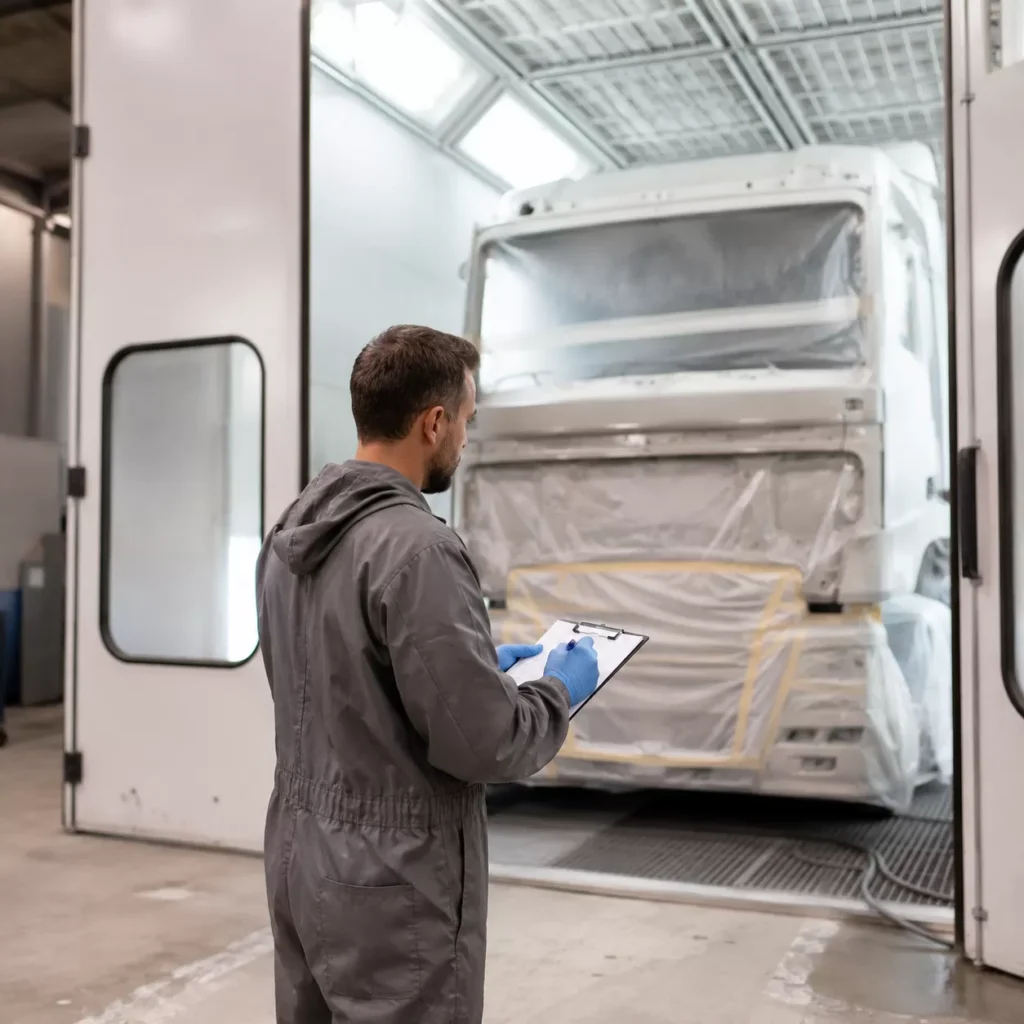
When you are spraying a 53-foot trailer or a heavy-duty commercial truck, the stakes are incredibly high. A single mistake doesn’t just ruin a small panel; it wastes gallons of expensive product and locks up your shop’s production schedule. Achieving a flawless commercial vehicle finish quality requires absolute control over your environment before the gun ever hooks up to the air line.
Page URL: https://sprayboothmanufacturer.com/product/
The Cost of Neglect: Defects and Rework
Skipping your pre-flight inspection opens the door for tiny environmental factors to completely derail your finish.
- Dust and Dirt Nibs: Microscopic airborne particles and loose overspray accumulation settle into fresh clear coat, forcing hours of wet sanding and buffing.
- Bad Air Pressure: Fluctuations in your pneumatic lines disrupt your spray gun atomization testing, leading to a mismatched texture or inconsistent metallic flake orientation.
- Worn Seals: Aging cab door rubber gaskets allow turbulent shop air to pull dirt directly into the cabin during the bake cycle.
Left unchecked, these variables trigger catastrophic surface defects that force expensive, time-consuming reworks:
| Surface Defect | Primary Root Cause | Operational Impact |
|---|---|---|
| Fish-Eyes | Silicone, oil, or moisture contamination in air lines | Complete strip-down and respray required |
| Orange Peel | Poor atomization due to improper air pressure or AMU temperature drop | Extensive color sanding and polishing |
| Dirt Nibs | Failed intake filtration or poor booth housekeeping | Heavy compounding or localized spot repair |
The Financial Impact of a Daily Routine
We treat pre-job prep as a non-negotiable insurance policy. Developing a quick, disciplined inspection routine before every single job keeps your booth operating at peak efficiency and directly protects your bottom line.
- Material Savings: Eliminating reworks saves thousands of dollars annually in wasted primers, basecoats, and clear coats.
- Maximized Throughput: Keeping your booth cleanly dialed in prevents unplanned downtime, keeping your heavy-duty cycle times predictable.
- Equipment Longevity: Spotting a clogged filter or a slipping fan belt early prevents severe strain on your air makeup unit (AMU) and exhaust motors.
Investing fifteen minutes into a standardized checklist ensures that when the technician pulls the trigger, the environment is completely optimized for a factory-quality finish.
Phase 1: Checking the Box and Walls (Static Assessment)
Before turning on the fans or mixing any paint, a visual walkthrough of the cabin structure is required. Ensuring high commercial vehicle finish quality starts with a clean, sealed environment. Dirt and air leaks are the primary causes of costly rework.
Cabin Housekeeping & Contamination Control
- Inspect Walls and Ceilings: Check for dry overspray accumulation management issues. Flaking paint on the structure will break loose during a job and land right in your clear coat.
- Clean the Floors Correctly: Never sweep a dry booth floor. Always use a damp mop or a specialized booth floor compound to trap dust without kicking fine particles into the air.
- Evaluate Wall Films: Check the condition of your peelable protective wall films. If they are heavily coated, dark, or losing their tack, peel them off and apply a fresh layer to guarantee proper light reflection and dust control.
Seals, Latches, and Pressure Control
- Inspect Cab Door Rubber Gaskets: Examine all cab door rubber gaskets for visible cracks, gaps, or flattening. Worn gaskets allow raw shop dust to pull into the cabin, ruining your cross-contamination prevention efforts.
- Verify Positive Latch Engagement: Test every door latch to ensure it locks tight. Doors must seal completely to handle the internal air pressure during heavy-duty spray booth maintenance routines.
+————————+—————————————+—————————————+
| Inspection Point | What to Look For | Corrective Action |
+————————+—————————————+—————————————+
| Wall & Ceiling Films | Heavy overspray, tearing, darkening | Peel and replace film immediately |
| — | — | — |
| Door Gaskets | Cracks, flattening, air gaps | Replace rubber seals to prevent leaks |
| Door Latches | Loose handles, weak engagement | Tighten hardware for positive seal |
+————————+—————————————+—————————————+
Light Fixture Maintenance
- Maintain LED Light Fixture Cleanliness: Wipe down all glass panels to remove overspray haze. Dim, clouded glass distorts your view and ruins your accuracy during spray gun atomization testing.
- Replace Weak Bulbs: Swap out any dim, dead, or flickering bulbs immediately. Perfect visibility is non-negotiable for accurate color matching and spotting thin spots before baking.
Phase 2: Filters and Airflow Secrets (Dynamic Diagnostics)
Dirty filters and bad airflow ruin large-scale paint jobs faster than anything else. Before mixing any paint, we run a dynamic diagnostics check on the entire ventilation system to ensure optimal commercial vehicle finish quality.
Intake Filtration Audit
We start at the top. The ceiling and transition intake media must be clean to keep the cabin pristine for cross-contamination prevention.
- Check for heavy loading: Inspect the intake media for dirt trap issues or dark, clogged spots.
- Secure the hardware: Tighten loose filter frames and clips. Even a tiny gap allows un-filtered shop air to bypass the media and ruin a fresh coat.
Exhaust Filtration Check
The floor or pit filters handle the brunt of overspray accumulation management. If they are choked, the air bogs down, creating a dangerous and messy cloud of overspray inside the cabin.
- Inspect for saturation: Check the floor pockets or pit filters for heavy particulate buildup.
- Read the gauges: Look at the paint booth manometer readings. If the differential pressure exceeds the safe baseline limit of 0.5 inches WC, change the filters immediately.
| Metric | Target Baseline | Action If Failed |
|---|---|---|
| Manometer Differential Pressure | $le$ 0.5 inches WC | Replace exhaust filters immediately |
| Downdraft Booth Airflow Velocity | $ge$ 100 linear feet per minute | Check for system blockages or belt slippage |
Airflow Velocity Verification
Once the filters look good, we power up the system to look at the actual air movement.
- Verify the sweeping path: Ensure the downdraft booth airflow velocity pulls overspray straight down and away from the operator.
- Confirm regulatory minimums: Use an anemometer to verify the system hits the OSHA and NFPA minimum threshold of 100 linear feet per minute across the work zone.
Phase 3: Gears, Motors, and Air Lines
A flawless commercial vehicle finish quality depends entirely on the mechanical heartbeat of your system. Before mixing any paint, you need to verify that your air delivery and heating systems are running perfectly.
Air Makeup Unit (AMU) & Temperature Controls
- AMU Dampers: Visually inspect the volume and bypass air makeup unit (AMU) dampers. Ensure they modulate smoothly across their full range without binding or sticking.
- Burner & Calibration: Verify the temperature control calibration. Test the burner ignition readiness to ensure the booth hits and holds its baking cycles rapidly without fluctuating.
Exhaust Fans and Mechanical Drives
- Visual & Audio Inspection: Power up the exhaust system and listen closely. Any unusual fan bearing noise, heavy vibration, or structural rattling requires immediate shutdown and inspection.
- Fan Belt Tension and Tracking: Check the drive belts for proper alignment and tension. Look closely for signs of wear, glazing, or cracking along the belts, replacing any that show degradation.
Pneumatic Supply & Pressure Regulation
Moisture and pressure drops are the leading causes of ruined truck paint jobs. Clean air delivery is non-negotiable.
| Component | Action Required | Expected Result |
|---|---|---|
| Compressed air line moisture separators | Drain all collected water and contaminants completely. | Eliminates fish-eyes and cratering defects. |
| Multi-stage desiccant dryers | Check color indicators and replace saturated elements. | Guarantees zero oil or water vapor bypass. |
| Regulated Air Pressure | Monitor inline gauges during a simulated high-flow draw. | Constant PSI with zero delivery fluctuations at the gun. |
Before moving on to spray gun atomization testing, confirm that your air regulators hold steady under load. A sudden pressure drop mid-stroke will destroy your metallic layout and ruin your gloss.
Phase 4: Keeping the Shop Safe and Legal
Safety isn’t just about passing an inspection; it keeps your crew safe and protects your shop from catastrophic fires. Before flipping the switch on any heavy-duty spray booth maintenance routine, you must clear the area and lock down your safety protocols.
Ignition Source Control & NFPA 33 Compliance Standards
Managing your mixing and spraying zones keeps your shop running legally and safely.
- Clear the Perimeter: Maintain a strict, minimum 3-foot perimeter around the entire truck paint booth. Keep this zone completely free of combustible trash, empty boxes, and discarded rags.
- NFPA 33 Compliance Standards: Never store flammable liquids inside the spray area. Keep your extra paint, solvents, and thinners sealed in approved safety cabinets outside the booth structure.
Electrical Grounding and Spark Prevention
Static electricity is a silent hazard when spraying large commercial vehicles.
| Safety Action | Implementation | Purpose |
|---|---|---|
| Chassis Grounding | Hook up dedicated grounding clamps from the vehicle chassis directly to the booth structure. | Eliminates static buildup from fast-moving air and paint particles. |
| Maintenance Tools | Ensure all crews use strictly non-sparking scraping tools for cleanup. | Prevents accidental mechanical sparks during overspray accumulation management. |
Emergency Infrastructure & Sprinkler Care
If something goes wrong, your automated systems need to work instantly. Check these two critical points before every job:
- Interlocks and Kill-Switches: Test the door interlocks and automatic ventilation kill-switches to ensure the system immediately cuts power and airflow during an emergency.
- Sprinkler Head Inspection: Check that fire sprinkler heads inside the booth cabin and exhaust plenums are 100% free of overspray deposits. Heavy paint buildup acts as an insulator, delaying or blocking the fire suppression system when you need it most.
Phase 5: Gun Prep and the Air Flush
Before rolling a massive commercial vehicle into the cabin, the final step of your truck paint booth checklist comes down to tuning your gear and clearing the air. Skipping this phase risks immediate cross-contamination or finish defects right when the fluid hits the panel.
Pneumatic Line Setup and Spray Gun Atomization Testing
Don’t wait until you’re mid-coat to find a split in a fan pattern or a clogged fluid tip.
- Check the hardware: Inspect the fluid tips, air caps, and needle sets for dried residue or physical wear.
- Run a pattern check: Perform a quick spray gun atomization testing sequence on test paper to ensure the shape is uniform and free of heavy centers or split patterns.
- Verify dynamic pressure: Ensure your regulators hold steady under full trigger pull to prevent unexpected atomization drops.
PPE and Respiratory Safety Verification
Protecting your lungs is just as vital as protecting the commercial vehicle finish quality.
- Fresh air respirators: Inspect positive-pressure lines, look for kinks, and ensure the Grade D breathing air supply is pumping clean, oil-free air.
- High-efficiency PPE: Check full-body suits for rips, and ensure hood seals fit snugly to prevent skin exposure and keep loose hair or skin flakes from drifting into the wet paint.
The Pre-Flight Cabin Air Flush
The last defense against airborne dirt nibs is a simple, empty system purge.
Pro Tip: Run the booth completely empty for 2 to 3 minutes at full downdraft booth airflow velocity before pulling the truck inside.
This short cycle creates a sweeping path that pulls any lingering airborne particles straight into the exhaust filtration system, ensuring a clean environment for the job.
FAQs About Truck Paint Booth Inspections
How often should I change intake and exhaust filters during heavy-duty spray booth maintenance?
It depends on your shop’s volume, but a good rule of thumb for heavy-duty spray booth maintenance is to change exhaust filters every 50 to 60 spraying hours (or roughly once a week for busy shops). Intake filters last longer and typically need a swap every 200 to 300 spraying hours or every 3 to 6 months. Always replace them sooner if you notice visible loading or pressure drops.
What happens if my paint booth manometer readings are too high before a job?
High paint booth manometer readings mean your exhaust filters are clogged and loaded with overspray. This restricts airflow, stalls air movement, and creates a dangerous pressure imbalance. If you spray with a high reading, you will get overspray bouncing back onto your freshly painted surface, leading to severe finish defects like orange peel and heavy dirt nibs. Never start a job if the gauge reads above your baseline limit (typically 0.5 inches WC).
Can I use standard steel tools for cross-contamination prevention and cleaning inside the cabin?
Warning: Never use standard steel scrapers or wire brushes inside the booth.
Steel can strike a spark against the booth floor or walls and instantly ignite flammable solvent vapors. For effective cross-contamination prevention and safe cleaning, you must use non-sparking scraping tools made of brass, aluminum, or heavy-duty plastic.
Why is downdraft booth airflow velocity dropping even with brand-new filters?
If you just installed clean intake and exhaust filtration but your downdraft booth airflow velocity is still sluggish, check these three common culprits:
- Slipping Fan Belts: Check your fan belt tension and tracking; loose or glazed belts drastically reduce fan RPM.
- AMU Damper Issues: Your air makeup unit (AMU) dampers might be sticking or improperly calibrated, restricting incoming air.
- Exhaust Fan Build-up: Heavy overspray accumulation on the exhaust fan blades can severely unbalance the system and kill air movement.
Related Pages
- Bus Spray Booth Design Guide → https://sprayboothmanufacturer.com/transit-coach-spray-booth-requirements/
- Truck Paint Booth Guide → https://sprayboothmanufacturer.com/truck-paint-booth-semi-truck-spray-booth-specifications-buying-guide/
- Other related products → https://www.autokemanufacture.com/product
- Contact our sales Team → https://sprayboothmanufacturer.com/contact-us/
✅ CE Certified | ✅ ISO 9001:2015 | ✅ Factory Direct | ✅ Ships to 60+ Countries | ✅ 1-Year Warranty | 🔒 HTTPS Secured