
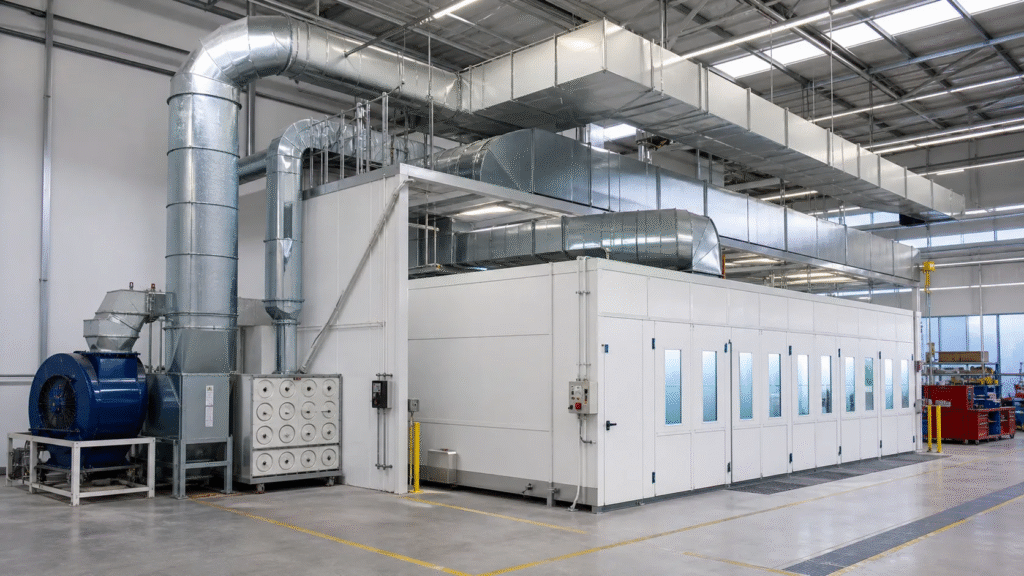
What Is a Paint Booth Ventilation System and How Does It Work?
The Role of Airflow in Spray Booths
A paint booth ventilation system is engineered to control the airflow within a spray booth, ensuring the efficient removal of overspray, fumes, and airborne contaminants generated during painting processes. Proper airflow directs paint particles away from the workpiece and operators, preventing defects like runs and uneven coatings while maintaining a clean spray environment. This controlled air movement is critical for maximizing coating adhesion and finish quality.
Why Proper Ventilation Is Essential for Safety and Finish Quality
Proper ventilation is fundamental to both operator safety and product excellence. It minimizes exposure to hazardous, flammable vapors and reduces the risk of fire or explosion within the booth. Additionally, efficient ventilation meets regulatory requirements, such as OSHA and NFPA guidelines, by maintaining safe air quality levels. From a quality standpoint, controlling airflow prevents contamination, overspray buildup, and particle settling—resulting in consistent, high-quality finishes in automotive, industrial, and commercial painting applications.
Types of Paint Booth Ventilation Systems
Crossdraft Ventilation Systems
Crossdraft ventilation systems move air horizontally across the booth, typically from one side to the other. This setup pulls overspray away from the workspace quickly, making it a cost-effective option for smaller operations or quick finishing jobs. However, it may not provide the cleanest airflow for high-detail paint work as airborne particles can swirl and contaminate surfaces.
Downdraft Ventilation Systems
Downdraft systems draw clean air from the ceiling and exhaust it through the floor, pushing contaminants downward and away from the operator and painted surfaces. This airflow pattern ensures superior overspray capture and finish quality, making downdraft booths a preferred choice for automotive and industrial applications that demand precision coating. These systems often comply with strict safety and environmental standards. You can find advanced downdraft configurations in our range of automotive paint booths designed for consistent airflow and filtration.
Semi-Downdraft Ventilation Systems
Semi-downdraft ventilation blends the principles of crossdraft and downdraft systems. The air typically flows horizontally with part of it being drawn downward. This option balances installation costs with effective airflow control, suitable for moderate production environments where space or budget limits fully downdraft-equipped booths.
Side-Downdraft Ventilation Systems
Side-downdraft booths pull air from the ceiling down toward sidewall exhaust vents. This design efficiently removes overspray while allowing flexible booth layout and can accommodate irregularly sized workpieces. Side-downdraft systems offer good airflow control and are popular in industrial or heavy-duty finishing setups where both paint quality and operational practicality matter. For detailed industrial ventilation configurations, see our dedicated industrial paint booth ventilation design page.
Key Components of a Spray Booth Ventilation System
Exhaust Fans and Ductwork
Exhaust fans are the powerhouse of any paint booth ventilation system, responsible for pulling contaminated air, overspray, and fumes out of the booth efficiently. Properly sized and high-performance fans paired with well-designed ductwork ensure consistent airflow, preventing hazardous buildup of flammable contaminants. Effective duct systems reduce turbulence and noise while maintaining balanced pressure, optimizing the booth’s overall ventilation performance. Quality exhaust components tailored to the booth size and airflow type—whether downdraft or crossdraft—are essential for both safety and finish quality.
Air Intake and Exhaust Filters
Air filtration plays a critical role in maintaining a clean, safe environment inside the spray booth. Intake filters clean incoming air to prevent dust and debris from settling on workpieces, while exhaust filters capture hazardous overspray particles before air is released outside. High-efficiency filters safeguard worker health, reduce environmental contamination, and help meet EPA air emissions guidelines. Regularly inspected and properly replaced filters improve airflow and prevent costly equipment wear, ensuring consistently reliable operation.
Air Makeup Units (AMU)
Air Makeup Units supply the fresh, temperature-controlled air needed to replace exhausted air and maintain proper booth pressure. AMUs regulate airflow volume and temperature, supporting spray processes that require consistent environmental conditions for quality finishes. Integrating heating options such as electric or diesel heating with the AMU enables temperature control during cold weather and curing stages. Well-calibrated air makeup systems complement exhaust fans and filtration to create an efficient, balanced ventilation environment that complies with OSHA and NFPA standards.
For further details on airflow design and component integration, refer to our expert guide on industrial paint booth airflow types and key components.
Calculating Paint Booth Airflow (CFM) Requirements
Determining Required Air Velocity and CFM
Accurate airflow measurement, expressed in cubic feet per minute (CFM), is essential to maintain effective paint booth ventilation. The required air velocity depends on booth size, type of paint application, and coating material characteristics. Generally, paint booths require air velocities between 100 to 150 feet per minute (FPM) at the face of the booth to ensure proper overspray capture and contaminant removal.
A simple formula for calculating booth airflow is:
CFM = Booth Cross-Sectional Area (ft²) × Target Air Velocity (FPM)
For example, a 10 ft wide by 8 ft tall booth requires:
10 ft × 8 ft = 80 ft²
80 ft² × 100 FPM = 8,000 CFM
This calculation ensures enough air volume flows through to contain hazardous overspray and volatile fumes effectively.
Factors Influencing Airflow Calculation
Several key factors impact precise airflow requirements in paint booths:
- Booth Type: Downdraft booths usually need higher airflow than crossdraft systems for thorough contaminant extraction.
- Spray Process: Higher-volume or automated spraying demands increased airflow to handle excess overspray.
- Material Flammability: Use of highly flammable coatings and solvents may require increased air changes to meet safety codes.
- Temperature Control: Heating or curing cycles can alter air density, affecting adjustments to airflow rates.
- Filtration Efficiency: Resistance from intake and exhaust filters can reduce airflow, requiring compensation.
- Local Regulations: Compliance with OSHA, NFPA 33, and EPA rules may impose minimum ventilation rates.
Properly sizing ventilation systems ensures consistent air exchange, operator safety, and superior paint finish quality. Detailed airflow guides, such as our comprehensive paint booth fan CFM calculation, provide in-depth methodologies tailored for various booth designs and workloads.
Safety Regulations and Compliance Standards
OSHA Regulations for Spray Finishing
The Occupational Safety and Health Administration (OSHA) sets strict rules for spray finishing operations to protect workers from hazardous exposures to flammable vapors, toxic chemicals, and airborne contaminants. Any paint booth ventilation system must comply with OSHA standards for proper air exchange rates, explosion prevention, and employee respiratory safety. Maintaining adequate airflow and filtration reduces fire risk and limits overspray inhalation, safeguarding the workplace environment.
NFPA 33 Safety Standards
NFPA 33 provides detailed safety requirements specifically for spray application using flammable and combustible materials. These guidelines cover design, installation, and operation of spray booth ventilation systems to prevent fire hazards and ensure proper exhaust of flammable contaminants. Compliant booths must use approved exhaust fans, ducts, and filters engineered to handle volatile emissions safely while maintaining consistent airflow patterns critical to finish quality and safety.
EPA Guidelines for Air Emissions
The Environmental Protection Agency (EPA) regulates air pollution from paint booth exhausts by setting limits on volatile organic compounds (VOCs) and other hazardous emissions. Paint booth ventilation systems must be designed to minimize pollutant release through effective filtration and controlled airflow. Compliance with EPA guidelines not only protects the environment but also aligns with regional and federal regulations to avoid penalties and maintain operational legitimacy.
Incorporating these safety standards into your paint booth ventilation system ensures reliable performance, legal compliance, and a secure working environment in every finishing project.
How to Choose the Right Paint Booth Ventilation System
Workpiece Size and Booth Design
Selecting the right paint booth ventilation system starts with understanding the size of the workpieces you need to coat and the overall booth layout. Larger vehicles or bulky industrial parts require bigger booths with high-capacity ventilation to ensure consistent airflow and efficient overspray capture. Smaller booths designed for automotive refinishing or furniture need ventilation systems sized to prevent stagnant air without wasting power or space.
| Workpiece Size | Booth Type | Ventilation Focus |
|---|---|---|
| Small to medium parts | Standard automotive booths | Precise airflow control |
| Large trucks or equipment | Heavy-duty industrial booths | High volume air exchange |
| Multiple simultaneous items | Production line booths | Continuous airflow balance |
Booth design, including airflow pattern—downdraft, crossdraft, or semi-downdraft—also influences ventilation choice. Downdraft setups are favored for their effective overspray removal and paint finish quality in automotive and industrial settings. For more on booth types and airflow, explore our automotive paint booth solutions and types.
Coating Type and Application Volume
The kind of coating materials and volume of paint application directly shape ventilation demands. High-solvent coatings or heavy-bodied paints produce more fumes and overspray, requiring robust exhaust and filtration systems to maintain air quality and safety. Waterborne paints generate less volatile fumes but still need proper ventilation to control humidity and ensure optimal drying.
- High VOC coatings: Need higher airflow capacity and specialized filtration.
- Low VOC, water-based coatings: Require humidity control integration with ventilation.
- Frequent, large-volume spraying: Demands continuous ventilation capable of handling longer run times without efficiency loss.
Matching the ventilation to coating characteristics minimizes overspray buildup and keeps airborne contaminants within regulated limits.
Budget and Installation Requirements
Balancing performance with budget is key when choosing a paint booth ventilation system. Factory-direct pricing for standard commercial paint booths typically ranges from $6,500 to $15,000, depending on size, airflow design, and heating integration. Custom designs for heavy-duty or industrial applications may exceed this range but bring tailored efficiency and compliance.
Installation considerations affect cost, including:
- Available facility space and existing ductwork
- Electrical and heating system compatibility
- Accessibility for maintenance and filter changes
Opting for modular booths with scalable ventilation options can ease installation and optimize cost-effectiveness. Ensure your supplier provides detailed manuals and technical support to simplify set-up and meet local safety regulations.
For complete guidance on booth design and ventilation tailored to automotive painting needs, visit our detailed automotive paint booth equipment guide.
Maintenance Best Practices for Paint Booth Ventilation Systems
Filter Inspection and Replacement Schedule
Regular inspection and timely replacement of air intake and exhaust filters are critical for maintaining optimal airflow and capturing overspray effectively. Filters should be checked at least monthly or more often in high-use environments. Clogged or damaged filters reduce ventilation efficiency, increase energy consumption, and compromise air quality. Replace filters immediately when buildup or wear is visible to ensure consistent performance and prevent flammable contaminant accumulation.
Exhaust Fan and Motor Care
Exhaust fans are the heart of any paint booth ventilation system. Routine maintenance includes cleaning fan blades and housings to prevent buildup, lubricating motor bearings as specified by the manufacturer, and verifying belt tension if applicable. Motors should be checked for overheating or unusual noises that can indicate potential failure. Well-maintained exhaust fans extend equipment life, keep airflow within required specifications, and ensure dependable overspray capture.
Ensuring Long-Term Safety and Compliance
Maintaining ventilation components properly safeguards worker health and ensures compliance with OSHA and NFPA 33 safety standards. Consistent equipment upkeep minimizes fire hazards by reducing flammable vapor buildup and maintains sufficient airflow to control airborne contaminants. Adhering to manufacturer maintenance guidelines and documenting servicing helps sustain system reliability and avoids costly downtime or regulatory violations. Keeping your paint booth ventilation system in top condition is key to secure, efficient operation year-round.
Related Sources
- https://www.wercsinc.com/osha-1910-1
- https://www.epa.gov/collision-repair-campaign/about-epas-auto-body-rule
- https://www.osha.gov/laws-regs/regulations/standardnumber/1910/1910.1
- https://www.nfpa.org/product/nfpa-33-standard/p0033code/nfpa-33-standard-for-spray-application-using-flammable-or-combustible-materials-2016/331
- https://www.wercsinc.com/osha-1910-107-spray-finishing