Choosing between a downdraft, cross draft, or side draft paint booth isn’t just a budget decision — it’s a decision about how your shop produces work every day. Each configuration handles airflow differently, and that difference shows up in finish quality, installation requirements, ongoing maintenance, and how much time your painters spend on correction work after every job. This guide breaks down how each system works, where each one makes the most sense, and how to think through the choice for your specific situation.
Page URL: https://sprayboothmanufacturer.com/product/
Cross Draft: The Economical Starting Point
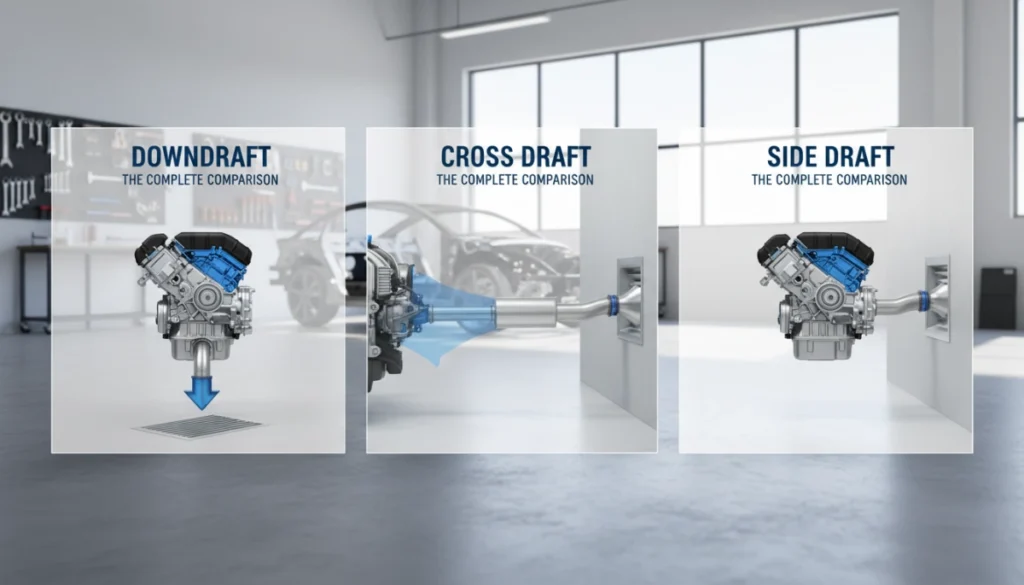
A cross draft booth moves air in a straight horizontal line from the front of the booth to the rear. Fresh air is drawn in through filtered intake at the front — typically the main doors — and pulled across the vehicle or part to an exhaust plenum at the back wall. Simple, direct, and effective for a wide range of applications.
Where Cross Draft Makes Sense
The most practical advantage of a cross draft system is that it installs on an existing flat concrete floor. No pit excavation, no raised platform, no structural changes to the building. That keeps the upfront cost lower than any other configuration and makes it realistic for shops on a tighter capital budget, businesses in leased spaces, or facilities with low ceiling heights where a ceiling intake plenum isn’t physically possible.
Setup is also fast. Without pit work, a cross draft booth can be operational in a fraction of the time a downdraft installation takes. For shops that need a compliant, functional finishing environment up and running quickly, that matters.
Day-to-day, maintenance is straightforward. The intake filters are at the front doors and the exhaust arrestors are at the rear wall — both accessible without lifting floor grates or reaching into ceiling plenums. Routine filter swaps and general cleaning are simple compared to more complex configurations.
Cross draft works well for cabinet and wood finishing, small parts coating, general industrial equipment, and automotive refinishing where a perfect show-quality result isn’t required on every cycle. For budget-conscious startups or shops scaling up from open-floor painting, it’s the most accessible entry point.
The Limitations to Know
Because air travels horizontally across the full length of the vehicle, any dust or debris picked up at the front of the booth gets carried over the entire wet surface before reaching the exhaust. On longer vehicles, that’s a significant exposure window. It’s manageable with a clean shop environment and thoughtful painter positioning, but it does require more discipline than vertical airflow systems.
Painter positioning matters more in a cross draft setup because the painter is often working between the air intake and the exhaust. Being aware of your position relative to the airflow direction is part of working this system effectively.
For very high-end automotive finishing where a single speck of contamination in the clear coat is unacceptable, a cross draft booth asks more of the painter and the surrounding environment than a downdraft system does.
Side Draft: The No-Pit Alternative for Professional Results
A side draft booth brings air in through a filtered ceiling plenum and exhausts it through plenums built into the side walls rather than through a floor pit. The result is a downward curtain of air that moves over the vehicle and immediately carries overspray and contaminants away from the center of the cabin.
Where Side Draft Makes Sense
The side draft configuration is particularly well-suited to shops that need better contamination control than a cross draft provides but can’t commit to pit excavation — either because they’re in a leased space, the building foundation doesn’t allow it, or the water table is too high. You get the benefit of ceiling-sourced, filtered air without the cost or permanence of digging into the floor.
Because air enters from the ceiling and moves downward toward the side walls, it pulls overspray away from the painted surface much faster and more cleanly than horizontal airflow does. The painter’s breathing zone stays cleaner as well, since fumes are drawn down and to the sides rather than passing through the work area.
For high-volume collision centers pushing multiple cycles per day, shops operating out of leased industrial spaces, or custom painters who want a cleaner environment without a permanent facility commitment, side draft is often the most practical fit.
The Trade-offs
The side exhaust chambers require more floor space than a rear-exhaust cross draft setup. In a narrow bay, the side plenums can feel like they’re eating into working room. The ductwork also requires more planning and materials than a basic rear-exhaust configuration to maintain proper airflow balance across the full length of the booth.
Downdraft: The Highest-Quality Finish Environment
A downdraft booth draws air in through a full-length ceiling filter bank and moves it vertically downward over the vehicle. The air exits through a filtered floor grate system — either a concrete pit or a raised steel basement platform — and is vented outside. This creates a consistent curtain of clean air that envelopes the entire vehicle from top to bottom.
Where Downdraft Makes Sense
The downdraft configuration produces the cleanest finishing environment of the three because gravity works with the airflow. Overspray and dust are pulled straight down and away from every surface of the vehicle the moment they leave the gun — not across it, not diagonally through it. The result is fewer contaminants in the clear coat, less time spent on post-paint buffing and polishing, and a more consistent finish across every panel.
For premium collision centers handling high-value insurance work, custom paint shops where show-quality results are the standard, or aerospace and industrial applications where a cleanroom-level environment is required, downdraft is the right configuration. The investment is justified by the finish quality and the labor hours saved on correction work over the long run.
Maximum painter safety is another genuine advantage. Pulling air straight down keeps fumes and overspray moving away from the painter’s breathing zone consistently throughout the job, which is why downdraft is technically the safest configuration for the person behind the gun.
The Investment Reality
Downdraft requires either a concrete pit excavation or a raised steel basement platform with drive-up ramps. Either way, it’s a more significant installation — both in cost and in permanence. A concrete pit is not something you relocate if you move shops or change your lease situation.
Ongoing maintenance is also more involved. You’re managing both ceiling intake filters and floor pit exhaust filters, plus periodic cleaning of the pit itself to prevent overspray accumulation. The system uses more filter media and typically requires a larger Air Makeup Unit to maintain proper airflow velocity, which translates to higher operating costs than a cross draft setup.
Semi-Downdraft: The Practical Middle Ground
For shops that want better finish quality than a cross draft provides but aren’t ready for the cost and permanence of a full pit installation, the semi-downdraft configuration sits in the middle.
Air enters through a filtered plenum at the front section of the ceiling and follows a diagonal path — down over the vehicle and toward exhaust filters at the rear wall. It’s not the straight vertical drop of a true downdraft, but it’s a significant improvement over horizontal airflow. Introduce fresh filtered air directly over the main painting area to lower the risk of floor dust stirring into wet paint finishes.
The trade-off is that diagonal airflow can produce slightly lower velocity zones at the very front and very back of the booth, and overspray still travels some horizontal distance before reaching the exhaust. For shops working in leased spaces where floor modification is off the table, or for large parts and heavy equipment where a full pit would be cost-prohibitive, semi-downdraft is often the most practical high-performance option available.
Side-by-Side Comparison
| Feature | Cross Draft | Side Draft | Semi-Downdraft | Downdraft |
|---|---|---|---|---|
| Airflow Direction | Front to Back | Ceiling to Sides | Diagonal | Ceiling to Floor |
| Installation | Very Low (no pit) | Moderate | Low to Moderate | High (pit required) |
| Finish Quality | Good | Great | Very Good | Best |
| Operating Costs | Lowest | Moderate | Moderate | Highest |
| Best For | Budget shops, industrial, wood finishing | Leased spaces, high-volume collision | Large parts, leased spaces | Premium automotive, aerospace, custom |
How to Think Through the Decision
Your building sets the boundaries first. Before deciding what you want, check what’s actually possible. Ceiling height determines whether a ceiling intake plenum is viable. Floor construction and lease terms determine whether a pit is an option. If you lease a space with an uncuttable post-tension slab, you cannot install a true downdraft booth, so choose side draft or semi-downdraft instead.
Match the configuration to your actual work. A shop doing everyday collision repair and general refinishing doesn’t need to carry the operating costs of a full downdraft system if a side draft or quality cross draft setup produces acceptable results. A shop doing high-end custom paint or aerospace coatings doesn’t have the option of cutting corners on contamination control. Be honest about what your work actually requires.
Look at total cost, not just purchase price. A cross draft booth has the lowest upfront cost, but if your painters spend four hours buffing contamination out of every vehicle, the labor cost erodes the savings quickly. The cheaper booth can end up costing more in practice if it generates significant rework. On the other side, a downdraft installation in a facility where the workload doesn’t justify it is capital sitting in the floor.
Production volume is a real factor. For a shop running one or two cycles a day on general work, a cross draft or semi-downdraft is usually sufficient. For a shop running five or more vehicles per day where throughput depends on fast cycles and minimal rework, the superior overspray management of a downdraft system justifies the higher operating cost through time saved on every single job.
Maintenance Across Configurations
Every booth configuration requires consistent filter management to maintain airflow velocity and finish quality. The specifics differ by type.
| Filter Type | Function | Typical Replacement Interval |
|---|---|---|
| Intake Filters | Removes dust from incoming air | Every 2–4 months or 250–300 operating hours |
| Exhaust Filters | Captures paint overspray | Every 50–100 operating hours |
| Ceiling Diffusion Filters | Ensures uniform airflow distribution | Annually or when static pressure rises |
Downdraft pit maintenance is the most involved of the three. Floor grates need to be lifted periodically to clear overspray accumulation from the pit. If the system uses a water-wash setup, sludge management is a regular task.
Side and cross draft plenum maintenance focuses on the exhaust chambers. Vacuuming these out prevents the buildup that causes blowback and turbulence inside the cabin.
For all configurations: monitor your manometer. When static pressure rises, filters are loading up and the fan is working harder than it should. A pressure spike is the signal to check filters, not a fixed calendar date. Use booth wrap or peelable coatings on the walls and clean light fixture glass regularly to maintain visibility and keep dried overspray from flaking into wet paint.
Common Questions
Which configuration is best for a tight budget?
Cross draft is the lowest-cost entry point — least material, no floor work, fastest installation. Start with it for wood shops, small parts coating, general industrial work, and automotive shops that don’t need a showroom finish every cycle.
Do I always need a concrete pit for a downdraft booth?
Not always. A raised steel basement with drive-up ramps delivers the same vertical airflow performance without touching the floor. The trade-off is that it requires more ceiling clearance and vehicles need to drive up the ramps to enter. For shops where a flush floor entry matters, the concrete pit is the better option.
Can I convert a cross draft to a side draft later?
Technically possible but rarely worth doing. The enclosure design and exhaust plenum locations are fundamentally different between configurations, and the structural modifications needed to convert typically cost more than starting with the right setup from the beginning. It’s always better to analyze your long-term production requirements before making the initial purchase.
How does airflow direction affect the painter’s safety?
All three configurations are designed to meet OSHA and NFPA 33 standards. The practical difference is that downdraft pulls fumes and overspray straight down and away from the painter’s breathing zone most effectively. Cross draft moves air across the painter’s working area, which requires more attention to positioning. Side draft falls in between — better than cross draft, not quite as clean as downdraft.
How much does airflow quality affect buffing time?
Significantly. Better airflow means fewer contamination particles reaching the wet paint surface, which means fewer nibs to buff out after the bake cycle. For a busy shop, the labor saved on post-paint correction with a cleaner airflow configuration often offsets a meaningful portion of the higher system cost over time.
Tell Us What You’re Working With
Share your facility dimensions, ceiling height, floor situation, production volume, and the type of work you’re finishing. We’ll match you with the right booth configuration and send a detailed quote with layout drawings — usually within 48 hours.
Related Pages
- Bus Spray Booth Design Guide → https://sprayboothmanufacturer.com/transit-coach-spray-booth-requirements/
- Truck Paint Booth Guide → https://sprayboothmanufacturer.com/truck-paint-booth-semi-truck-spray-booth-specifications-buying-guide/
- Other related products → https://www.autokemanufacture.com/product
- Contact our sales Team → https://sprayboothmanufacturer.com/contact-us/
✅ CE Certified | ✅ ISO 9001:2015 | ✅ Factory Direct | ✅ Ships to 60+ Countries | ✅ 1-Year Warranty | 🔒 HTTPS Secured