
What is a Paint Booth Fire Suppression System and How Does It Work?
How Fire Suppression Systems Function in Spray Booths
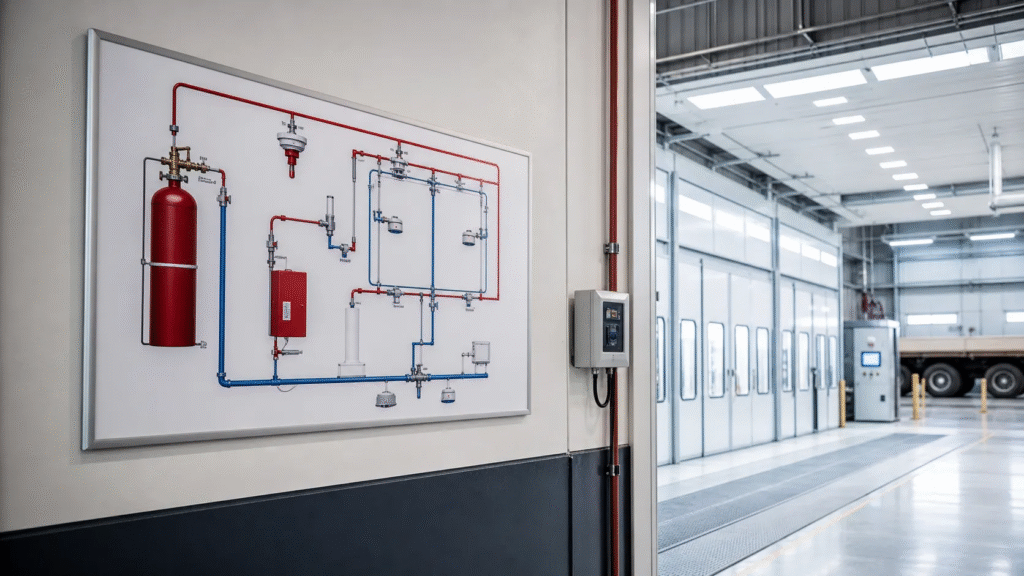
A paint booth fire suppression system is a specialized safety solution designed to detect and extinguish fires in automotive and industrial spray booths. These systems are engineered to respond instantly to the presence of flames or excessive heat caused by flammable vapors and debris common in painting environments. The system operates by:
- Detecting fire or heat through sensors and actuation devices.
- Releasing a suppression agent that quickly suppresses flames and prevents fire spread.
- Automatically activating alarms and ventilation controls to ensure safety and prompt response.
This rapid, automatic intervention is crucial in minimizing property damage, protecting personnel, and avoiding costly downtime.
Key Benefits of Automatic Fire Protection
Implementing an automatic paint booth fire suppression system offers several vital benefits:
| Benefit | Description |
|---|---|
| Fast Response Time | Immediate detection and suppression reduce fire growth and damage severity. |
| Enhanced Personnel Safety | Protects workers by controlling fire hazards before flames spread. |
| Compliance Assurance | Meets key safety codes and regulations, including NFPA 33, improving facility compliance. |
| Reduced Insurance Costs | Lower risk exposure can lead to decreased insurance premiums for facilities. |
| Minimized Downtime | Limits operational interruptions by controlling fires quickly and effectively. |
| Integration Flexibility | Compatible with various booth sizes, heating types, and ventilation systems for broad use. |
A well-designed fire suppression system is essential for maintaining a safe, compliant, and efficient paint booth operation.
Essential Components of Paint Booth Fire Suppression Systems
Fire Detection and Actuation Systems
A reliable fire suppression system starts with advanced fire detection technology. These systems use heat and smoke sensors strategically placed inside the spray booth to quickly identify a fire’s presence. Once detected, the actuation system triggers the release of the suppression agent without delay, minimizing risk and damage. This automatic response is critical in controlling flammable vapors common in paint booths and preventing fire escalation.
Control Panels and Alarm Integration
Control panels serve as the system’s command center, monitoring sensors and managing fire suppression activation. Integrated alarms alert personnel immediately upon fire detection, providing critical time for evacuation or manual intervention. These control panels often connect with facility-wide safety systems to ensure compliance with industry standards and NFPA 33 regulations.
Suppression Agent Cylinders and Piping
The core of the suppression system includes cylinders filled with the fire suppression agent—commonly clean agents or dry chemicals—designed to extinguish fires quickly and safely without harmful residue. Pressurized piping networks distribute the agent throughout the paint booth, ensuring rapid and even coverage across all critical areas.
Discharge Nozzles and Spray Heads
Discharge nozzles and spray heads are engineered to deliver the suppression agent precisely where it’s needed. Proper placement and design ensure an effective spray pattern that covers the combustion source swiftly, maximizing fire suppression efficiency while protecting sensitive equipment. These components are essential for maintaining safety in automotive and industrial paint booths with configurations such as 6m, 7m, and 8m models, compatible with various heating and airflow systems.
For more technical details and system integration options, explore our comprehensive automotive paint booth guide.
NFPA 33 Compliance and Safety Standards for Spray Booths
Key NFPA 33 Requirements for Fire Safety
NFPA 33 sets the national benchmark for fire safety in spray booths, ensuring safe handling of flammable vapors and materials. Key requirements include:
- Use of listed or approved fire suppression systems tailored to booth size and type
- Installation of automatic detection and actuation controls for rapid fire response
- Proper separation and fireproof construction around spray and mixing rooms
- Regular inspection and maintenance protocols to keep suppression systems operational
Complying with NFPA 33 is essential for meeting insurance and regulatory standards nationwide, particularly for automotive and industrial paint booths.
Ventilation and Airflow Regulations
Adequate ventilation plays a crucial role in reducing fire risk by controlling flammable vapor accumulation. NFPA 33 mandates:
| Requirement | Explanation |
|---|---|
| Continuous air circulation | Maintains airflow to dilute vapors |
| Downdraft or crossdraft systems | Preferred to direct airflow away from ignition sources |
| Minimum air changes per hour | To prevent vapor buildup |
Proper airflow not only protects workers but enhances paint quality. Autoke’s paint booth designs incorporate compliant airflow solutions that meet these critical safety regulations. See more about automotive paint booth airflow design and safety.
Electrical and Ignition Control Mandates
Electrical installations inside spray booths contribute heavily to fire risk if not properly controlled. NFPA 33 requires:
- All electrical components must be explosion proof or rated for hazardous locations
- Ignition sources such as switches, motors, and lights must prevent sparks
- Interlocks or lockout systems to disable equipment during spray operations
- Grounding and bonding to avoid static discharge
Meeting these mandates reduces ignition risks drastically and ensures the paint booth’s fire suppression system works effectively whenever activated. Taking these steps is a fundamental part of safety compliance for paint booths under US regulations.
How to Maintain Your Paint Booth Fire Suppression System
Routine Visual Inspections and Cleaning
Regular visual inspections are critical to keep your paint booth fire suppression system fully operational. Check all visible components for signs of dust, dirt buildup, corrosion, or physical damage. Clean spray heads, nozzles, and piping gently to prevent blockages that could impair the discharge of suppression agents during an emergency. Maintaining a clean environment around the fire suppression equipment reduces false alarms and ensures quick response.
Inspecting Pressure Gauges and Cylinder Storage
Pressure gauges on suppression agent cylinders must be monitored consistently. Ensure gauges display pressure within the normal operating range; any drop could indicate leaks or system failure. Cylinders should be stored securely in a dry, accessible area free from extreme temperatures or direct sunlight. Proper storage helps preserve the integrity of suppression agents and guarantees readiness when needed.
Scheduling Semi-Annual Professional Inspections
Beyond routine checks, schedule comprehensive professional inspections at least twice a year. Certified technicians will test the system’s actuation, alarm integration, and agent discharge, confirming compliance with NFPA 33 standards. These inspections also include verifying control panels, sensors, and mechanical parts function flawlessly. Timely professional maintenance avoids costly repairs and safeguards your paint booth’s fire safety compliance.
For additional insights on optimizing your paint booth operations, consider reviewing our detailed automotive paint booth solutions.
Signs Your Paint Booth Fire Suppression System Needs Repair
Pressure Gauge Drops and Cylinder Leakage
A sudden or continuous drop in pressure gauge readings can signal a leak or failure in the suppression agent cylinder. Low pressure compromises system readiness and must be addressed immediately to ensure reliable fire protection.
Clogged Discharge Nozzles and Damaged Lines
Restricted or blocked discharge nozzles reduce the effectiveness of suppressant distribution during activation. Damaged or corroded piping can cause leaks or ineffective spray coverage, both critical issues that require prompt repair.
System Fault Warnings on the Control Panel
Modern paint booth fire suppression systems include control panels that monitor system integrity. Any fault warnings, error codes, or abnormal alerts displayed should be treated seriously, indicating potential sensor malfunctions or electrical problems that impede proper fire detection and actuation. Immediate troubleshooting is essential to maintain safety compliance.
Professional Paint Booth Fire Suppression Services
Custom System Design and Installation
Our team specializes in designing fire suppression systems tailored specifically for paint booths, ensuring seamless integration with various booth sizes, including standard diesel spray booths like our 7m and 8m models. Each design complies with NFPA 33 and CE safety standards, matching the airflow and heating configurations to optimize fire protection. We handle full installation, from mounting suppression agent cylinders and piping to configuring control panels and discharge nozzles, guaranteeing a turnkey solution that enhances overall safety without disrupting booth performance.
Routine Inspection and Testing Services
Regular inspections and functional testing are critical to maintaining the reliability of your paint booth fire suppression system. Our routine services include verifying pressure gauges, examining actuation heads, checking alarm connectivity, and cleaning discharge nozzles to prevent clogs. These proactive measures help detect potential issues early and ensure the system activates promptly in case of fire, keeping your operations compliant and protected.
Emergency Repair and Recertification
In the event of system faults, damage, or after discharge activation, our emergency repair services provide rapid response to restore safety and compliance. We replace leaking cylinders, repair damaged piping, clear blockages, and recalibrate control panels. Additionally, we conduct thorough recertification to meet insurance and regulatory requirements, giving you peace of mind that your paint booth remains secure and operational.
For detailed booth options compatible with advanced safety systems, review our 7m Standard Diesel Spray Booth or 8m Standard Diesel Spray Booth product pages.