
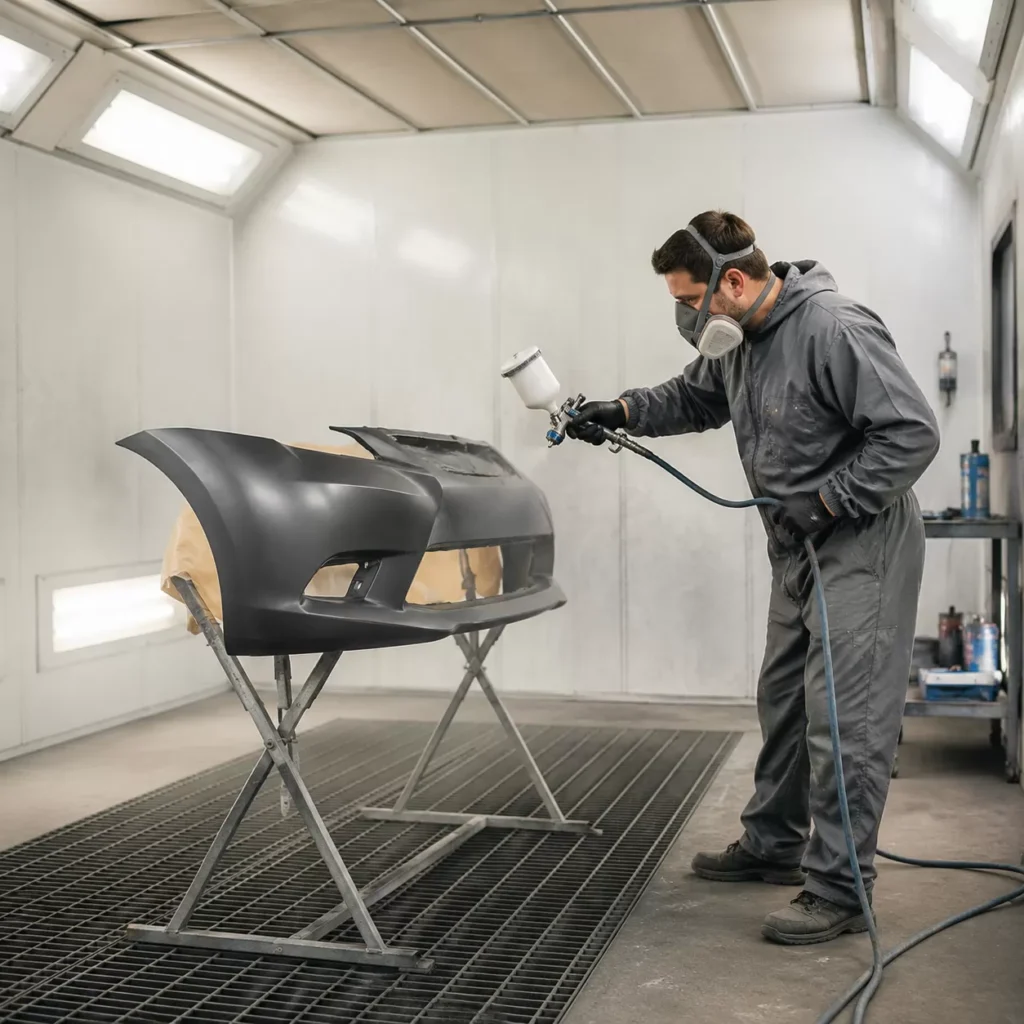
Physics of Downdraft Airflow: The Balance of Supply and Exhaust
Achieving a flawless, mirror-like finish depends entirely on how air moves through your cabin. In a premium downdraft spray booth, top-tier performance relies on a delicate mechanical balance: pulling fresh air from the ceiling straight down through the floor pits. If your supply and exhaust systems are out of sync, you risk airborne dust contamination, lingering paint mist, and costly prep rework.
Laminar Flow Defined
Laminar airflow refers to air moving smoothly in a single, downward direction without creating turbulent eddies or drafts. In our specialized booths, we engineer this steady envelope of air to wrap around the vehicle and pull overspray instantly toward the floor grates. This controlled movement keeps airborne particles from swirling back onto your wet clear coat.
The Target Velocities
Maintaining the correct laminar airflow velocity ensures overspray clears the cabin quickly without disrupting your spray pattern.
- Ideal Draft Velocity: We design our systems to maintain an optimal velocity between 0.25 m/s to 0.5 m/s (50 to 100 feet per minute) through the empty cabin.
- The Sweet Spot: Dropping below this range causes paint fog to linger, while exceeding it can trigger air turbulence, pulling dry dust off the floor and onto your fresh paint job.
Positive vs. Negative Cabin Pressure
Controlling cabin pressure is your primary defense against shop dust and structural strain.
| Cabin Pressure Type | Airflow Dynamic | Practical Impact on Painting |
|---|---|---|
| Positive Cabin Pressure | Supply CFM is slightly higher than exhaust CFM. | Our standard setting. Gently pushes air out of door seals, keeping exterior shop dust from entering. |
| Negative Cabin Pressure | Exhaust CFM exceeds the supply air volume. | Creates a vacuum. Sucks dirty shop air inside through every microscopic crack and door seal. |
We configure our booths to run on a slight positive cabin pressure (typically around 0.02 to 0.05 inches of water column). This slight positive pressure ensures that whenever a technician cracks the door, air rushes out instead of pulling contaminants in, safeguarding your paint finish every single time.
The Foundation of Consistent Airflow: Two-Stage Filtration Discipline
Maintaining uniform air movement requires strict control over your booth’s filtration system. If your filters are clogged, your balance is destroyed. We rely on a strict two-stage filtration discipline to guarantee a flawless finish every time.
Intake & Ceiling Diffusion Filters
Your upper filtration layer is the first line of defense for both air velocity and cleanliness. Ceiling diffusion media must evenly distribute incoming air from the Air Makeup Unit (AMU) across the entire cabin.
- Function: It stops legal limits of dust particles while eliminating turbulence.
- Impact on Airflow: Low-quality or overloaded intake filters restrict Cubic Feet per Minute (CFM), starving the booth of air and dropping your laminar airflow velocity.
- Best Practice: Check for sagging or gaps around the ceiling tracks weekly to prevent paint finish contamination.
Exhaust Filters & Paint Arrestors
The lower filtration stage handles overspray containment. Down in the pit or along the sub-floor, these filters pull particulate out of the airstream before the air exits the building.
- Load Management: As overspray builds up, resistance increases. This spikes the static pressure inside the cabin.
- Equipment Strain: Heavy loading forces the exhaust fan motor to work harder, altering your dialed-in draft velocity (m/s).
- Replacement Cycle: Never wait for a visual disaster. Use a differential pressure manometer to track actual resistance.
The Golden Rule of Booth Balancing
The Golden Rule: What goes in must match what goes out. You cannot achieve positive cabin pressure or consistent laminar airflow if your intake and exhaust filters are fighting each other.
| Filter Stage | Primary Role | Warning Signs of Failure |
|---|---|---|
| Intake / Ceiling | Air distribution & particle exclusion | Ghost drafts, dropped CFM, dirt in clearcoat |
| Exhaust / Floor | Overspray trapping & pressure control | Fogging, slow flash times, negative cabin pressure |
To keep your air moving straight down without turbulence, execute your exhaust filter replacement on a strict schedule dictated by your static pressure gauge, not by guesswork. Keeping these two stages in perfect harmony is the only way to maintain consistent airflow in a downdraft paint booth.
Mechanical Components to Monitor for Consistent Airflow
Keeping a downdraft paint booth running at peak performance means keeping your mechanical hardware perfectly tuned. If your fans, motors, or climate controls drift out of spec, your airflow will suffer.
Here is how we maintain and calibrate the core mechanical components to ensure an optimal spray environment.
Air Makeup Units (AMU) & Blower Calibration
The Air Makeup Unit (AMU) is the heart of your booth’s supply system. It pulls in fresh outside air, heats it to the proper temperature, and forces it into the ceiling plenum.
- Blower Calibration: We regularly check the blower wheel for paint overspray or dust buildup. Even a slight imbalance can reduce the Cubic Feet per Minute (CFM) output and cause vibration damage.
- Air Volume Balancing: We calibrate the intake blower to match the exhaust rate, maintaining that crucial slight positive cabin pressure to keep shop dust from sneaking inside.
Exhaust Fan and Motor Maintenance
Your exhaust setup does the heavy lifting by pulling overspray down through the pit and out of the building. If the exhaust fan slows down, air stagnates, creating a hazy, dangerous workspace.
| Component | Maintenance Action | Target Impact |
|---|---|---|
| Fan Belts | Inspect monthly for cracks; adjust fan belt tension. | Prevents belt slippage and loss of laminar airflow velocity. |
| Motor Bearings | Lubricate according to the manufacturer’s schedule. | Reduces friction, overheating, and premature motor failure. |
| Fan Blades | Clean off any accumulated overspray buildup. | Maintains aerodynamic efficiency and correct draft velocity (m/s). |
Leveraging Smart Controls and VFDs
Modern booths rely on smart technology rather than manual damper adjustments to balance the system.
- VFD (Variable Frequency Drive) Controls: We use VFDs to automatically adjust motor speeds based on real-time filter loading.
- Automatic Balancing: As your exhaust filter replacement cycle nears its end and static pressure rises, the VFD speeds up the exhaust fan to maintain consistent airflow.
- Static Pressure Gauge Integration: By linking your differential pressure manometer directly to smart control panels, the system makes instant, micro-adjustments to prevent paint finish contamination without operator intervention.
Monitoring Tools: How to Maintain Consistent Airflow in a Downdraft Paint Booth
We cannot manage what we do not measure. Relying on guesswork to judge your cabin airflow is a fast track to ruined clear coats and costly booth downtime. To keep your downdraft system running at peak performance, we utilize three essential diagnostic methods to monitor real-time air movement.
Reading the Differential Pressure Manometer
The differential pressure manometer—often a Magnehelic gauge mounted on your control panel—is your booth’s pulse monitor. It measures the static pressure difference between the inside of the cabin and the outside air.
- Baseline Calibration: Note the reading when you install fresh filters. This is your “clean” baseline.
- The Danger Zone: As overspray loads the exhaust filters, static pressure rises. When the needle hits the manufacturer’s recommended limit (typically around 0.5 inches of water column), it is time for an exhaust filter replacement.
- Pressure Shifts: A sudden drop below baseline usually indicates a bypassed filter or a breach in the cabin seal.
Verifying Laminar Airflow Velocity with Anemometers
While gauges show pressure, a digital vane anemometer measures actual air movement. We use this tool to verify that our laminar airflow velocity meets safety and production standards across the entire cabin.
- Target Metrics: Measure the downward air pull in the empty booth. You want to see a consistent draft velocity (m/s) or feet per minute (FPM) that aligns with local OSHA and NFPA codes—typically around 100 FPM ($0.5 text{ m/s}$).
- Grid Testing: Take readings at multiple points under the ceiling diffusion media. If you notice dead zones or high-velocity spikes, your air distribution is uneven, or your VFD controls need adjustment.
Visual Diagnostics for Overspray Containment
Tools give us data, but a quick visual test confirms how the air actually behaves around a vehicle. We use simple, non-destructive visual checks to map the air current.
- Smoke Pocket Testing: Utilize a safe smoke pen or theatrical fog generator around the vehicle’s bumpers and undercarriages. The smoke should pull straight down into the pit maintenance & floor grates without swirling or lingering.
- Thread Mapping: Hanging lightweight nylon threads from the ceiling layout lets you quickly spot any turbulent “ghost drafts” caused by unbalanced booth pressure.
Operational Best Practices in an AUTOKE Booth
Running an AUTOKE booth means you have top-tier engineering at your disposal, but day-to-day habits dictate how well you maintain consistent airflow in a downdraft paint booth. To keep air moving straight down and out without creating turbulent pockets, your team needs to follow strict operational discipline during every cycle.
Strategic Vehicle Placement
How you park the vehicle inside the cabin directly impacts your laminar airflow velocity. Misalignment forces air to bunch up, leading to overspray containment failures.
- Center the Target: Always park the vehicle dead-center over the exhaust pit. Leaving too much gap on one side pulls air unevenly across the body panels.
- Maintain Clearance: Keep a minimum of three feet of clear space between the vehicle bumpers and the booth doors. This allows the curtain of air descending from the ceiling diffusion media to clear the vehicle ends smoothly.
- Shadowing Mitigation: Avoid placing parts trees or mixing tables directly upstream or downstream of the vehicle panels being sprayed.
Pit and Floor Grate Cleanliness
The exhaust pit is the engine room of your downdraft system. If air cannot exit through the floor grates effortlessly, static pressure spikes, causing the air makeup unit (AMU) to work twice as hard.
- Daily Grate Inspection: Look for heavy buildup on the floor grates. Dried, clogged openings restrict overall cubic feet per minute (CFM) capacity.
- Regular Pit Cleanouts: Remove accumulated dry overspray dust from the bottom of the pit floor every week. Left unchecked, this dust gets kicked up by air turbulence, risking severe paint finish contamination.
- Grate Masking Rules: Never use solid plastic or heavy paper to mask off floor sections near the vehicle. Use open-mesh matrix materials specifically designed to maintain proper draft velocity (m/s) while trapping dust.
Pre-Paint Inspection Checklist
Before pulling the trigger on a premium basecoat, run through this quick physical verification to ensure your booth balancing is optimal.
| Component to Check | Target Condition | Impact on Airflow |
|---|---|---|
| Exhaust Filter Seating | Flush, no visible gaps around edges | Prevents paint bypass from coating fan blades |
| Door Seals & Latches | Completely airtight when locked | Eliminates ghost drafts that pull shop dust inside |
| Differential Manometer | Needle rests within the designated green zone | Confirms correct positive cabin pressure before spraying |
| Floor Area | Dampened or tacked down, free of loose dirt | Stops loose debris from circulating into the wet clearcoat |
Troubleshooting Common Downdraft Airflow Disruptions
When your AUTOKE booth isn’t pulling air right, it ruins your paint jobs and wastes time. If you notice the air feels off, use these quick troubleshooting steps to fix the issue and restore perfect laminar airflow velocity.
Symptom: Strong, Lingering Paint Odors or Fogging
If clear coat clouding or heavy overspray hangs in the air, your exhaust system isn’t clearing the cabin fast enough.
- Clogged Exhaust Filters: This is the most common culprit. Check your differential pressure manometer; if the static pressure gauge shows a high reading, it is time for an exhaust filter replacement to get your Cubic Feet per Minute (CFM) back up.
- Slipping Fan Belts: Check the fan belt tension on your exhaust fan motor. Loose belts reduce fan speed and tank your draft velocity.
- Blocked Pit or Floor Grates: Accumulated overspray on the grates or in the pit restricts downward air movement, causing paint fog to swirl around the vehicle.
Symptom: Ghost Drafts or Dust Entering Around Doors
If you see dirt and lint pulling into the booth through door seals or small gaps, you have lost your positive cabin pressure. The booth is acting like a vacuum, sucking in shop dust.
- Restricted Intake Airflow: Check your ceiling diffusion media. If the ceiling filters are loaded with dust, the Air Makeup Unit (AMU) cannot push enough fresh air into the cabin.
- Imbalanced VFD Controls: Your Variable Frequency Drive (VFD) controls might need adjustment. Balance the system so the supply fan pushes slightly more air than the exhaust fan pulls, keeping dirt out.
- Worn Door Seals: Inspect the rubber gaskets around the product and man doors. Damaged seals let outside air bypass the filtration system completely.
Symptom: Air Turbulence or Uneven Curing Speeds
When air swirls instead of moving straight down, it causes uneven flash times, slow curing speeds, and severe paint finish contamination.
- Uneven Ceiling Filter Loading: If one section of your ceiling filters is dirtier than the rest, air will rush through the cleaner areas faster. This creates cross-drafts and turbulent pockets.
- Improper AMU Blower Calibration: If the Air Makeup Unit is blowing too hard, it creates a chaotic environment inside the cabin. Recalibrate the blower to maintain a steady draft velocity (m/s).
- Poor Vehicle Placement: Parking the vehicle off-center or blocking too many floor grates disrupts the straight downward path of the air, causing it to bounce off the walls and floor.
Frequently Asked Questions (FAQs): How to Maintain Consistent Airflow in a Downdraft Paint Booth
How often should I change my downdraft exhaust filters?
Generally, you should replace your exhaust filters every 40 to 60 hours of spraying, or roughly every two to three weeks in a busy shop. However, relying on a calendar can be risky. The most accurate way to schedule an exhaust filter replacement is by monitoring your differential pressure manometer. When the static pressure gauge shows a resistance increase of 0.5 inches of water column (or hits the manufacturer’s marked limit), it is time for a change to prevent overspray buildup and airflow restriction.
Why is my paint booth losing positive pressure?
Losing positive cabin pressure usually comes down to unbalanced airflow or clogged filters. If your exhaust fans are pulling out more air than your Air Makeup Unit (AMU) is pushing in, the cabin will pull in dirty shop air through door seals. Common culprits include:
- Overloaded ceiling diffusion media choking the incoming air.
- Slipping exhaust fan belts causing the exhaust motor to run inefficiently.
- Improperly calibrated VFD (Variable Frequency Drive) controls that need a system re-balancing.
What is the ideal draft velocity for an automotive spray booth?
The industry standard for an automotive downdraft booth is a laminar airflow velocity of 100 feet per minute (FPM), which translates to roughly 0.5 meters per second (m/s). This specific draft velocity (m/s) ensures that overspray is pulled straight down into the floor grates instantly, keeping the vehicle clear of fog and protecting the painter. To maintain this speed, your booth must consistently deliver the required Cubic Feet per Minute (CFM) based on its cabin size.
Can a dirty ceiling filter cause paint finish contamination?
Yes, absolutely. When ceiling filters get loaded with dust and debris, they create two major problems. First, they disrupt the uniform air stream, creating turbulent pockets that swirl overspray back onto the wet clearcoat. Second, the fibers can release trapped particles directly onto the vehicle, resulting in severe paint finish contamination that requires hours of color sanding and buffing to fix. Regular pit maintenance & floor grates cleaning alongside timely intake filter swaps is the best defense against these defects.
Related Pages
- Bus Spray Booth Design Guide → https://sprayboothmanufacturer.com/transit-coach-spray-booth-requirements/
- Truck Paint Booth Guide → https://sprayboothmanufacturer.com/truck-paint-booth-semi-truck-spray-booth-specifications-buying-guide/
- Other related products → https://www.autokemanufacture.com/product
- Contact our sales Team → https://sprayboothmanufacturer.com/contact-us/
✅ CE Certified | ✅ ISO 9001:2015 | ✅ Factory Direct | ✅ Ships to 60+ Countries | ✅ 1-Year Warranty | 🔒 HTTPS Secured