Downdraft Paint Booth for High-Volume Auto Body Shops: What Specs to Prioritize
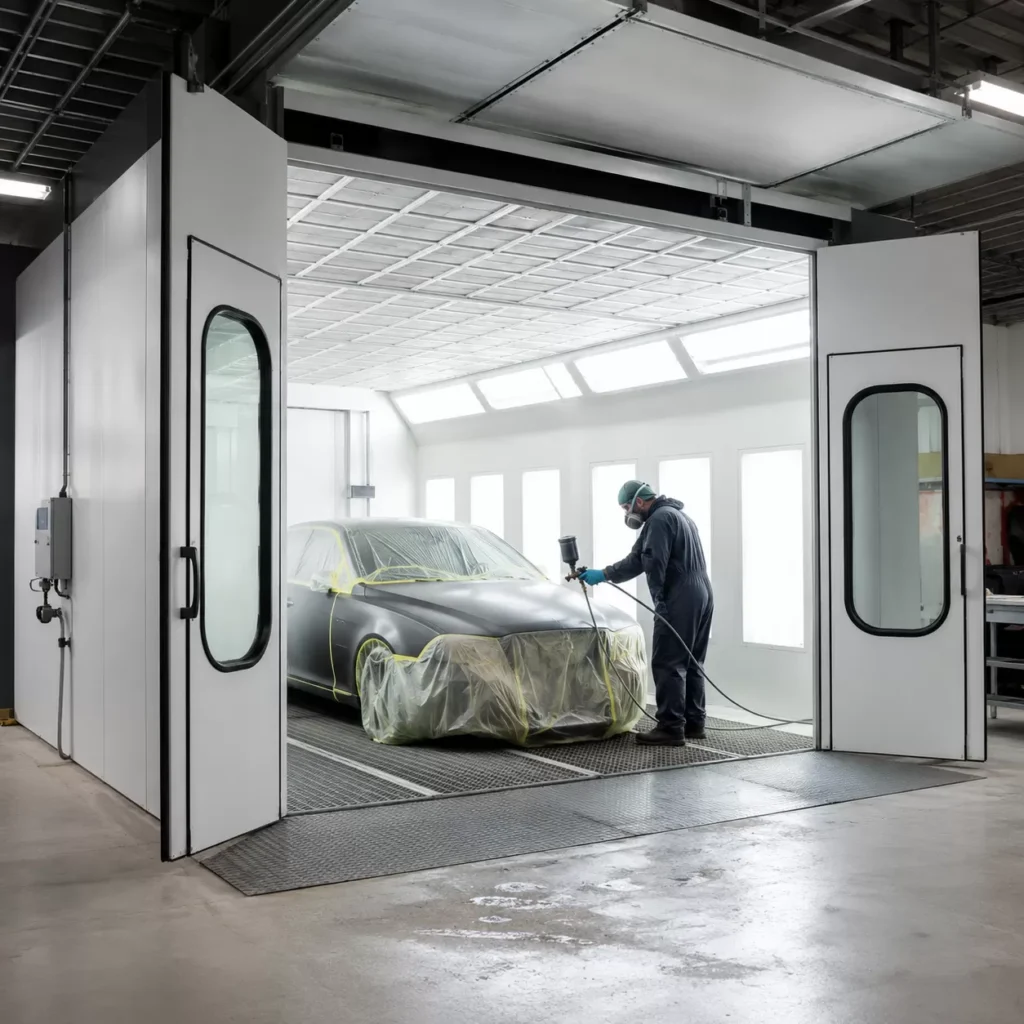
When managing high-volume collision centers, vehicle throughput optimization depends entirely on your booth’s airflow. If your air handling system can’t clear overspray instantly, your technicians are stuck waiting, and your cycle times plummet. For a top-tier full downdraft configuration, the ventilation system is the true engine of your shop’s daily production.
Page URL: https://sprayboothmanufacturer.com/product/
CFM Requirements and Benchmarks
To maintain a clean painting environment and meet strict safety standards, you need massive air volume.
- The Baseline: A standard high-volume automotive booth requires an Air Makeup Unit (AMU) capable of delivering between 10,000 to 14,000 CFM (Cubic Feet per Minute).
- The High-Volume Target: For heavy duty or rapid-cycling operations, look for specs pushing 15,000+ CFM to ensure rapid air changes.
Laminar Air Velocity
Volume alone isn’t enough; the air movement must be perfectly directed. Laminar air velocity prevents turbulence that kicks up dust or creates inconsistent finishes.
- Ideal Speed: You want a steady downward flow of 100 feet per minute (FPM) across the entire cabin.
- The Benefit: This targeted movement pulls overspray straight down into the paint booth floor pits, protecting your paint job and keeping the air crystal clear for the painter.
Static Pressure Management and Filter Life
As overspray containment and filtration systems do their job, filters inevitably load up with particulate. This increases static pressure and strains your fans.
| Ventilation Metric | Target Specification | Impact on Production |
|---|---|---|
| Airflow Volume | 12,000 – 15,000 CFM | Maximizes overspray clearing speed |
| Draft Velocity | 100 FPM (Laminar) | Eliminates turbulence and drift |
| Pressure Balance | Auto-adjusting (Magnehelic/Digital) | Extends exhaust filter life |
Investing in a premium air handling setup means fewer filter changes, consistent cabin pressure, and the reliable velocity needed to keep your high-volume shop moving.
Downdraft Paint Booth for High-Volume Auto Body Shops: Thermal Engineering & Cure Cycles
Accelerating the “bake” cycle is where high-volume collision centers make their money. If your booth takes too long to heat up or cool down, it creates a massive bottleneck in your vehicle throughput optimization. When we design high-efficiency setups, we focus heavily on the thermal dynamics that slash cycle times without compromising the finish.
Direct-Fired Gas Heating Systems
For serious production, direct-fired natural gas or propane air makeup units (AMU) are non-negotiable. They deliver the raw thermal efficiency and BTU output needed to hit target baking temperatures almost instantly.
- Rapid Heat Rise: Direct-fire burners deliver 100% thermal efficiency, heating the incoming air directly with an open flame.
- Fuel Economy: Unlike indirect systems, no heat is wasted through a exhaust stack, keeping utility costs low for busy shops.
- Precise Modulation: Advanced burners modulate gas flow precisely to maintain a steady baking temperature, preventing hot spots that can ruin a clear coat.
Spray-to-Bake Cycle Efficiency
The transition from spraying to baking needs to be seamless. High-volume operations cannot afford to wait 20 minutes for a booth to reach cure temperatures.
| Phase | Target Temperature | Purpose |
|---|---|---|
| Spray Mode | 70°F – 75°F (21°C – 24°C) | Operator comfort and optimal paint atomization. |
| Flash-Off | 80°F – 90°F (26°C – 32°C) | Safely evaporates solvents/water before the bake. |
| Bake Mode | 140°F – 160°F (60°C – 71°C) | Rapidly cures clear coats and primers. |
To maximize spray-to-bake cycle efficiency, we utilize automated recirculation systems. During the bake cycle, the AMU recirculates up to 80% of the heated air, drastically cutting the energy required to maintain the high temperatures needed for a fast cure.
Waterborne Paint Adaptability
Most modern collision centers in the United States rely heavily on water-based coatings. Because water evaporates slower than traditional solvents, standard downdraft airflow isn’t enough to dry basecoats quickly.
We integrate dedicated waterborne paint drying systems directly into the booth cabin. These systems use auxiliary air movers or dynamic ceiling nozzles to flash off the water layer fast.
- Boundary Layer Disruption: High-velocity air target systems break the stagnant air barrier directly above the wet paint panel.
- Accelerated Evaporation: This targeted airflow cuts flash times for waterborne paints by up to 50%.
- Flash-on-the-Fly: Operators can run flash cycles between coats without switching the entire booth into a full bake mode, keeping the line moving.
Cabin Construction and Structural Integrity
A high-volume downdraft paint booth for auto body shops must withstand constant, heavy-duty use. We prioritize heavy-duty materials and tight engineering to ensure our cabins maintain a perfect seal and last for decades under high-production stress.
18-Gauge Galvanized Steel Panels for Longevity
We construct our booth cabins using premium 18-gauge galvanized steel panels. High-volume collision centers cannot afford structural warping or air leaks over time.
- Dual-Skin Insulation: Fully insulated panels lock heat inside during bake cycles, maximizing thermal efficiency.
- Corrosion Resistance: The galvanized finish protects the cabin structure from rust and chemical damage caused by waterborne and solvent-borne materials.
Pre-Engineered Precision
Our cabins feature pre-engineered precision alignment. This exact manufacturing eliminates structural gaps that could compromise your finishing environment.
- Perfect Seals: Prevents outside shop dust from entering the spray zone.
- Pressure Management: Ensures predictable static pressure control for the exhaust system.
- Fast Assembly: Standardized fitments mean less downtime during installation on your shop floor.
Paint Booth Floor Pits and Grating Design
The pit configuration dictates how smoothly air flows down and away from the vehicle. Modern high-volume shops require robust floor engineering to handle diverse vehicle types.
| Feature | Specification Priority | Practical Purpose |
|---|---|---|
| Grating Load Capacity | Heavy-duty rated (2,000+ lbs per wheel) | Safely supports heavy electric vehicles (EVs) and full-size trucks. |
| Pit Depth & Width | Fully optimized airflow channels | Eliminates dead air spots and prevents overspray pockets. |
| Filtration Placement | Easy-access floor extractors | Allows for rapid exhaust filter changes to maximize daily vehicle throughput. |
Downdraft Paint Booth for High-Volume Auto Body Shops: Lighting Specs
LED Color-Correct Lighting Fixtures
In high-volume collision centers, redoing a bad paint match kills your throughput. We prioritize daylight-balanced lighting because your painters need to see the exact hue and metallic flake they are laying down before the clear coat goes on.
- Natural Daylight Simulation: Stick to 5000K to 6500K color temperatures.
- High Color Rendering Index (CRI): Demand a CRI of 90 or above to ensure perfect color accuracy and blend matching.
- LED Upgrades: LED color-correct lighting fixtures pull less power and emit zero radiant heat compared to outdated fluorescent tubes, keeping your booth’s temperature stable.
Fixture Placement & Hazard Ratings
Shadows are the enemy of precision refinishing. It is not just about how bright the booth is, but exactly where that light comes from. Because you are spraying volatile materials, strict safety standards are non-negotiable here in the US.
- Strategic Positioning: Combine upper-hip ceiling angle lights with lower-wall fixtures. This completely eliminates blind spots and shadows around lower bumpers and rocker panels.
- Hazard-Rated Safety: Every single light fixture inside the cabin must be Class 1 Division 2 rated. Maintaining strict NFPA 33 and OSHA compliance guarantees you are protected against accidental ignition.
- Overspray Protection: Opt for tempered, diffused glass covers. They cut the glare for the painter and make it incredibly easy to peel off protective films during routine maintenance.
Smart Controls & Energy Efficiency Automation
To maximize vehicle throughput optimization in high-volume collision centers, you cannot rely on manual, outdated control systems. Modern high-volume auto body shops require automated intelligence to manage the intense energy demands of a full downdraft paint booth. By automating airflow and temperature adjustments, smart controls directly lower utility bills while maintaining peak performance.
Variable Frequency Drives (VFDs)
Variable Frequency Drives (VFDs) are the ultimate game-changer for energy efficiency in high-volume collision centers. Instead of running the exhaust and air makeup units (AMU) at 100% capacity all day, VFDs automatically modulate motor speeds based on real-time needs.
- Idle Mode Savings: Drops airflow and heating output when a painter is prepping a vehicle or changing guns, cutting electricity use by up to 50%.
- Static Pressure Management: Automatically adjusts fan speeds as filters load up with overspray, maintaining perfect laminar air velocity without manual balancing.
- Soft Starts: Reduces mechanical wear and tear on the motors, preventing expensive peak-demand utility charges.
Intuitive Control Interfaces
A paint booth is only as efficient as the technician operating it. Modern booths feature smart, user-friendly touchscreens that simplify the entire spray-to-bake cycle efficiency.
| Feature | Operational Benefit |
|---|---|
| Pre-Programmed Cycles | One-touch selection for flash-off, bake, and waterborne paint drying systems. |
| Real-Time Diagnostics | Instant alerts for filter changes, burner faults, and booth pressure deviations. |
| Data Logging | Tracks energy consumption, cycle times, and booth usage for precise cost-per-job accounting. |
These smart control interfaces take the guesswork out of booth management, allowing your team to focus entirely on turning out flawless, high-volume refinish jobs.
Regulatory Compliance & Local Safety Mandates for a Downdraft Paint Booth for High-Volume Auto Body Shops
Running a high-volume collision center means balancing massive vehicle throughput with strict local and national safety codes. You cannot afford the downtime or the massive fines that come with a non-compliant setup. When we install a high-volume downdraft paint booth, safety and compliance are built into the design from day one to protect your crew and keep the inspectors happy.
The Baseline Certifications
Your new booth must meet rigorous American safety standards before you ever spray a drop of paint. We engineer our equipment to ensure your shop stays fully compliant with local United States zoning and environmental laws.
- NFPA 33 Compliance: This is the gold standard for spray application using flammable and combustible materials. Our booths strictly adhere to these fire protection codes.
- OSHA Regulations: We design our systems to meet OSHA ventilation and air contaminant standards, ensuring a safe breathing environment for your technicians.
- UL/ETL Listed Components: All electrical systems, control panels, and air makeup units (AMU) feature ETL or UL listings, proving they have passed rigorous independent safety testing.
Safety Interlocks
Automation should do more than just speed up production; it needs to fail-safe when things go wrong. A premium downdraft paint booth for high-volume auto body shops uses smart, integrated safety interlocks to prevent accidents before they happen.
| Interlock Feature | How It Protects Your Shop |
|---|---|
| Airflow-to-Spray Interlock | Automatically cuts off compressed air to the spray gun if the exhaust fans or makeup air units aren’t running. This prevents dangerous overspray containment failures. |
| Limit Switches | If a booth door is opened during a high-heat spray-to-bake cycle, the system instantly shuts down the burner to protect your team and the vehicle. |
| Purge Cycle Timers | Forces the ventilation system to clear out any lingering flammable vapors before the heating element can ignite for the bake cycle. |
| Static Pressure Alarms | Monometers track real-time pressure; the system alerts techs or halts operation if clogged filters choke the airflow. |
FAQs: Downdraft Paint Booth for High-Volume Auto Body Shops: What Specs to Prioritize
I regularly field questions about the exact specs needed to outfit high-volume collision centers. Here is the straight talk on what you actually need to keep your vehicle throughput optimized and your shop running at peak performance.
CFM Requirements
What is the ideal CFM for a high-volume downdraft paint booth?
For a busy production shop, you need aggressive and consistent air movement.
- The Benchmark: Aim for 14,000 to 18,000 CFM for a standard automotive downdraft cabin.
- The Impact: Hitting this target guarantees rapid overspray containment and filtration, keeping the environment pristine and allowing your painters to lay down glass-like finishes without waiting for the air to clear.
Variable Frequency Drives (VFD)
Why are Variable Frequency Drives (VFDs) important in auto body shops?
If you run direct-drive motors at full tilt all day, you are burning cash.
- Energy Savings: VFDs automatically throttle the fan speed down during idle phases or prep work.
- Automated Pressure Control: They handle static pressure management automatically. As your exhaust filters load up with paint dust, the VFD ramps up the motor to maintain perfect cabin balance.
Waterborne Paint Drying Systems
How do waterborne paint drying systems speed up cycle times?
Waterborne paint behaves differently than solvent; it requires intense air movement to evaporate the water molecules, not just raw heat.
- Turbulent Airflow: Dedicated waterborne drying systems use corner blowers or ceiling-mounted nozzles to blast high-velocity air directly across the vehicle panels.
- The Result: This process slashes flash-off times, massively improving your overall spray-to-bake cycle efficiency.
Paint Booth Floor Pits and Grating
What flooring pit and grating design do heavy electric vehicles (EVs) require?
Electric vehicles carry massive, heavy battery packs. If you try to roll an EV over standard floor grates, you are asking for trouble.
- Heavy-Duty Load Capacity: You must upgrade to reinforced paint booth floor pits and grating.
- The Spec: Look for structural grating rated to handle a minimum of 10,000 lbs per wheel pad to safely support the concentrated weight of modern electric trucks and SUVs without sagging or warping.
Related Pages
- Bus Spray Booth Design Guide → https://sprayboothmanufacturer.com/transit-coach-spray-booth-requirements/
- Truck Paint Booth Guide → https://sprayboothmanufacturer.com/truck-paint-booth-semi-truck-spray-booth-specifications-buying-guide/
- Other related products → https://www.autokemanufacture.com/product
- Contact our sales Team → https://sprayboothmanufacturer.com/contact-us/
✅ CE Certified | ✅ ISO 9001:2015 | ✅ Factory Direct | ✅ Ships to 60+ Countries | ✅ 1-Year Warranty | 🔒 HTTPS Secured