The Sticker Shock of Heavy-Duty Paint Booth Setup
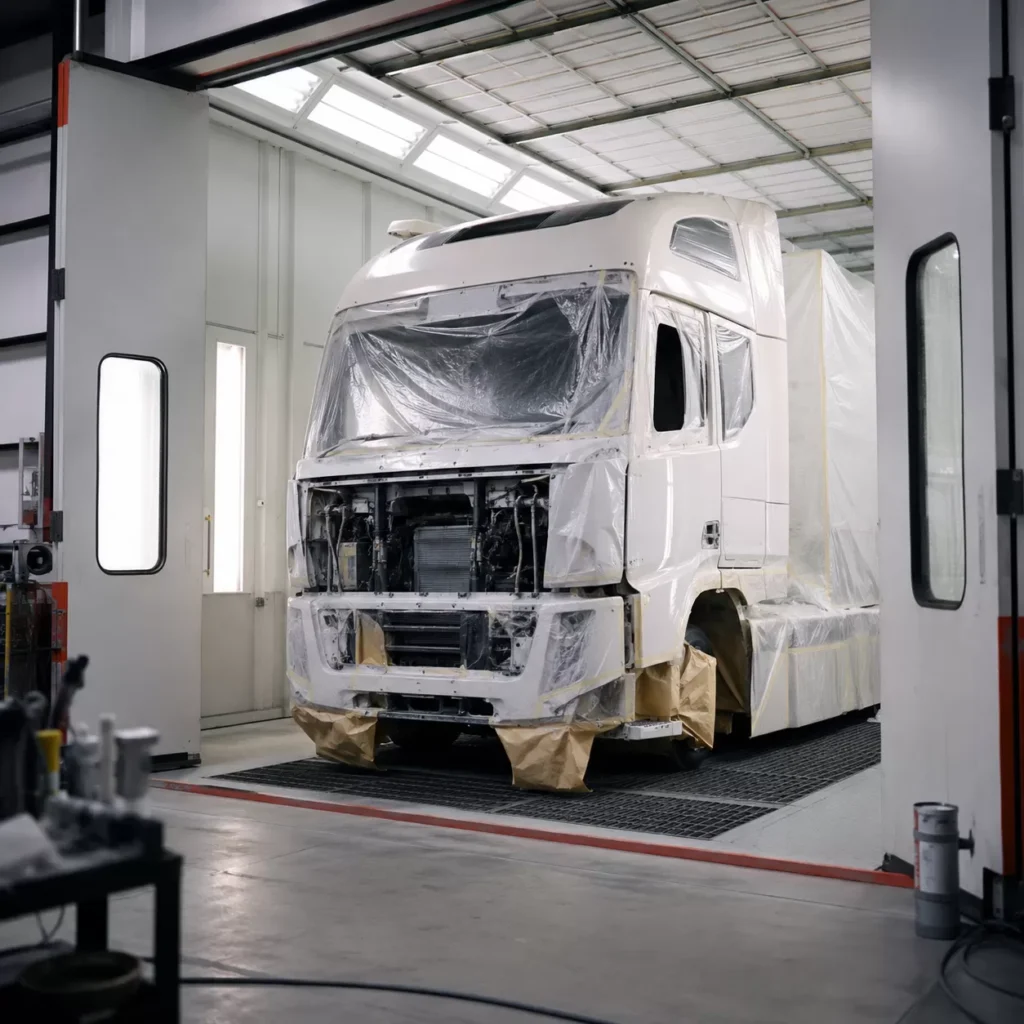
When you first start shopping for a heavy-duty spray booth cost, the numbers on the manufacture’s price sheet look manageable. You might see a baseline shell listed for around $40,000, or a fully customized, massive setup for $150,000+.
But here is the industry reality check: the list price of a commercial truck spray booth is only 40% to 60% of the final operational cost.
If you only budget for the equipment itself, you will face massive financial surprises. Many shop owners buy the hardware, only to get hit with unexpected delays, failed inspections, or steep code enforcement fines because they didn’t account for the total capital expenditure (CapEx).
Page URL: https://sprayboothmanufacturer.com/product/
Total CapEx Budget Breakdown
To plan a semi-truck paint booth installation without hitting blind spots, you must look at the complete financial picture:
| Expense Category | Percentage of Total Budget | What It Covers |
|---|---|---|
| Equipment Purchase | 40% – 60% | The actual booth shell, fans, lights, and control panels. |
| Site Prep & Civil Works | 15% – 25% | Concrete pouring, pit excavation, and structural engineering. |
| Mechanical & Electrical (MEP) | 15% – 20% | 3-phase high-voltage wiring, gas lines, and ductwork. |
| Permits & Compliance | 5% – 10% | Engineering stamps, EPA/AQMD approvals, and fire marshal sign-offs. |
Eliminating the Blind Spots
We design our engineering and quoting process to be completely transparent. We help logistics fleets and collision centers map out every single dollar before the equipment even leaves the factory.
By calculating your local utility requirements, physical space constraints, and regional code compliance upfront, we ensure your shop gets a fully operational, legal, and high-performing setup with zero hidden fees.
Part 1: “What’s in the Box?” — Typical Factory-Included Components
When you buy a heavy-duty spray booth, you need to know exactly what your initial investment covers. Most manufacturers ship a baseline package designed to get the physical structure standing, but the quality of these components varies wildly across the industry.
The Structural Shell
The core of your booth is the cabin itself. Standard entry-level models often use single-skin sheet metal, which loses heat rapidly and rattles under heavy airflow. Premium setups utilize dual-skin tongue-and-groove insulated wall panels. These interlocking panels lock in thermal energy during curing cycles, provide structural rigidity, and significantly lower your monthly utility bills.
Standard Mechanical Assemblies
Every baseline package includes the hardware to move air. This typically consists of:
- Exhaust Fans: Either axial fans (cost-effective, louder) or centrifugal fans (quieter, handles higher static pressure).
- Intake Filtration Plenums: The overhead or front-facing housings that hold your initial pocket or pad pre-filters to catch incoming dust.
Lighting Arrays
Because you are spraying flammable materials, standard shop lighting won’t cut it. Factory kits include specialized Class I Division II (explosion-proof) LED light fixtures and ballasts. These are engineered to prevent any electrical sparks from contacting airborne paint vapors while providing the bright, color-accurate visibility needed for fleet painting.
The Entry System
To get massive assets like semi-trucks, trailers, or buses inside, the booth includes heavy-duty product doors.
- Product Doors: Typically configured as standard swing doors or multi-panel bi-fold doors.
- Personnel Escape Doors: OSHA and NFPA mandated side-doors equipped with panic hardware, allowing painters to exit quickly in an emergency without opening the main bay doors.
Control Infrastructure
To manage the system daily, standard packages bundle basic control components:
- Non-Programmable Control Panels: Simple start/stop switches for fans and lights.
- Manometers: Analog draft gauges that measure pressure drop across the exhaust filters, signaling your team when it’s time for a filter change.
The AUTOKE Distinction: Factory Standards vs. Competitor Upgrades
We don’t believe in nickel-and-diming fleet owners for hardware required to do the job right. Many items that our competitors classify as “premium upgrades” are built directly into our standard truck paint booth setup costs.
| Component | Standard Competitor Kit | Our AUTOKE Factory Standard |
|---|---|---|
| Wall Construction | Single-skin raw steel | Dual-skin insulated panels |
| Airflow Management | Fixed-speed motors | Variable Frequency Drives (VFDs) |
| Control Interface | Analog push-button switches | Smart touchscreen PLC controls |
| Lighting | T8 Fluorescent (high energy draw) | High-output, explosion-proof LEDs |
By bundling these premium components into our base price, we eliminate the mid-project cost spikes that derail commercial shop budgets.
Airflow Layout Selection and Its Initial Cost Impact
Choosing the right airflow style is the biggest fork in the road for your truck paint booth setup costs. The way air moves through the cabin dictates not only your upfront equipment price but also how much your shop will spend on concrete work and building modifications.
Crossdraft & Semi-Downdraft Systems: The Economical Entry Point
If you are looking to get a heavy-duty spray booth running without a massive upfront capital hit, crossdraft or semi-downdraft configurations are the go-to choices.
- Average Cost: $40,000 to $60,000.
- How They Work: Air enters through the front doors or a ceiling plenum and moves horizontally or diagonally across the vehicle before exiting out the back wall.
- The Upside: These systems require lower upfront mechanical costs and completely eliminate the need for expensive floor excavation.
- The Trade-off: Air travels across the entire length of the truck or trailer, meaning overspray from the front can drift toward the back. This lengthens your finish drying cycles and increases the time your team spends color-sanding and buffing out imperfections.
Side-Downdraft & True Downdraft Systems: Premium Fleet Setups
For logistics fleets and high-volume collision centers where a factory-floor finish is non-negotiable, a premium downdraft layout is the industry standard.
- Average Cost: $70,000 to $120,000+.
- How They Work: Air is pulled straight down from the ceiling ceiling plenums, moving over the vehicle and exiting through floor grates or side exhaust channels.
- The Upside: This directional flow delivers superior finish clarity on commercial fleets by instantly pulling overspray and airborne dust down and away from the fresh paint.
- The Trade-off: This is a premium investment that demands intensive physical site preparation. For a true downdraft setup, you must factor in the serious cost of engineering and cutting concrete pits directly into your shop floor.
| Airflow Type | Equipment Cost Range | Concrete Modification Required? | Finish Quality | Production Speed |
|---|---|---|---|---|
| Crossdraft | $40,000 – $50,000 | No | Standard | Slower (Longer Flash Times) |
| Semi-Downdraft | $45,000 – $60,000 | No | Moderate | Moderate |
| Side-Downdraft | $70,000 – $95,000 | Minimal (Side Ducts) | High | Fast |
| True Downdraft | $90,000 – $120,000+ | Yes (Full Pit Excavation) | Premium / Showroom | Fastest (Optimal Throughput) |
The True “Hidden Extras” in Truck Paint Booth Setup Costs
When you buy a heavy-duty spray booth, the factory invoice only tells half the story. The price tag on the crate doesn’t include the infrastructure required to make the system operational. To build a realistic truck paint booth setup costs budget, you must account for several major field expenses that manufacturers leave off their quotes.
Civil Engineering & Concrete Work
If you choose a true downdraft setup, you are looking at serious dirt work. Excavating concrete floors to build exhaust tunnels and grated floor pits requires structural engineering blueprints, specialized contractors, and heavy equipment.
- The Pitfall: Cutting and hauling existing reinforced concrete slabs.
- The Fix: Budgeting for soil testing, rebar engineering, and high-strength concrete pours to handle heavy commercial fleet loads.
The Air Make-Up Unit (AMU) & Climate Control
A massive commercial truck cabin requires an equally massive volume of airflow. Standard shop heating won’t cut it. You need a dedicated Air Make-Up Unit (AMU) to replace the heavy CFM (Cubic Feet per Minute) of exhausted air.
- The Reality: High-output natural gas or propane burner units are mandatory to maintain steady spraying and curing temperatures.
- Cost Drivers: Extreme winter climates require higher BTU capacities, drastically raising your initial equipment purchase price and utility hookup fees.
Mechanical Ductwork & Roof Penetrations
Getting the fumes out of the building requires a clear path to the sky. Factories ship standard exhaust fans, but they do not supply the custom ductwork tailored to your shop’s ceiling height.
| Ductwork Component | Cost & Installation Factors |
|---|---|
| Exhaust Stacks | Priced per linear foot; requires heavy-gauge galvanized steel. |
| Roof Penetrations | Specialized roof flashing, curbing, and professional sealing to prevent leaks. |
| Stability & Control | Exterior guy-wire installation for high-wind zones and automated backdraft dampers. |
Fire Suppression Integration
Every commercial spray booth must comply with NFPA 33 compliance requirements. You cannot spray a drop of paint until a certified fire protection company integrates a code-compliant suppression system.
- Dry Chemical Systems: The industrial standard, requiring tank mounting, piping, and trip switches linked to the booth’s main control panel.
- Wet Sprinkler Tie-ins: Branching off your building’s existing fire mains, which often requires a separate plumbing permit and hydraulic calculations.
MEP Contractors (Mechanical, Electrical, Plumbing)
Hooking up a heavy-duty system requires certified professionals. Your factory warranty depends on proper utility connections, which means you cannot cut corners here.
- Electrical: Hiring a commercial electrician to run 3-phase high-voltage power lines to the booth, wire the control panels, and ground the structure against static buildup.
- Plumbing: Certified pipefitters must run high-pressure gas lines to the AMU heating source and clean, dry compressed air lines to the painting manifold.
Truck Paint Booth Setup Costs: Navigating Permits and Local Code Compliance
Setting up a heavy-duty spray booth means running a strict regulatory gauntlet. You cannot simply buy a shell, hook up the power, and start spraying commercial fleets. Local fire marshals, environmental protection agencies like the EPA or regional AQMDs, and OSHA inspectors all have a say in your operation. Missing a single requirement from these agencies will completely stall your production timeline.
The Necessity of Professional Engineering Stamps
Before your city issues building permits, they will require proof that your system is safe and structurally sound. This means you must factor the cost of certified professionals into your total truck paint booth setup costs.
- Structural Engineers: Needed to review and seal blueprints for massive booth structures, overhead duct supports, and concrete foundations.
- Mechanical Engineers: Required to sign off on airflow calculations, CFM exchanges, and exhaust stack heights to ensure the setup complies with local environmental laws.
The True Cost of Non-Compliance
Cutting corners on your industrial spray booth building permits or skipping official channels is a massive financial risk. If you install uncertified equipment or fail to secure the proper sign-offs, the consequences are immediate and severe.
Risk Alert: Local authorities can issue immediate red-tag shutdown orders, halting your business operations completely. Furthermore, operating an uncertified spray booth can result in the immediate cancellation of your commercial insurance policy, leaving you liable for millions in potential damages.
Meeting NFPA 33 Compliance Requirements
To protect your capital investment and keep your shop legal, your setup must adhere strictly to NFPA 33 compliance requirements. This standard regulates the spray application of flammable and combustible materials.
| Regulatory Body / Standard | Primary Focus Area | Required Action for Approval |
|---|---|---|
| NFPA 33 / Local Fire Marshal | Fire prevention, electrical zoning, and automatic fire suppression. | Mandated dry chemical or wet sprinkler tie-ins. |
| EPA / Regional AQMD | Overspray collection efficiency and hazardous air pollutant emissions. | Certified multi-stage filtration and compliant exhaust stacks. |
| OSHA | Worker safety, continuous ventilation, and proper respiration space. | Verified airflow velocity (LFPM) and clear personnel escape doors. |
Our transparent engineering process eliminates these compliance blind spots. We provide the exact documentation, certifications, and structural details your local general contractors and engineers need to secure city approvals quickly, keeping your heavy-duty spray booth cost on budget and completely above board.
Turnkey vs. Self-Installation Dilemma for Truck Paint Booths
When calculating your total truck paint booth setup costs, deciding who actually builds the equipment is just as critical as the purchase price. A heavy-duty spray booth isn’t a plug-and-play appliance; it’s a massive industrial installation. Choosing the wrong assembly route can quickly tank your budget and delay your operations.
The Manufacturer-Direct Installation Approach
Hiring a dedicated factory technical crew means paying for specialized expertise, field labor, and travel expenses. While this increases your upfront heavy-duty spray booth cost, it eliminates guesswork.
- Labor Rates: Specialized field technicians typically cost $150 to $250 per hour per person, plus travel, lodging, and per diem.
- Speed: Factory crews know the hardware inside and out. A build that takes an untrained crew three weeks usually takes a manufacturer team less than a week.
- Guaranteed Alignment: Precision assembly ensures that heavy dual-skin insulated panels seal perfectly, preventing structural sagging and air leaks.
The Risks of DIY and Local Subcontractors
Attempting a self-installation or hiring cheap, uncertified local labor to save on initial semi-truck paint booth installation costs often backfires. Large-scale truck booths have tight tolerances, and minor mistakes create massive financial headaches.
| Risk Factor | The Hidden Cost Reality |
|---|---|
| Improper Alignment | Panels that don’t square up lead to air leaks, warped doors, and poor static pressure. |
| Failed Pressure Testing | If the cabin fails initial airflow testing, you face costly troubleshooting and teardowns. |
| Voided Warranties | Most manufacturers will not honor factory warranties if the equipment was damaged during an uncertified installation. |
| Redo Labor Fees | Fixing a bad DIY install often costs double the price of doing it right the first time. |
Warning: A single misaligned plenum or poorly balanced exhaust fan can ruin a turnkey paint booth setup, triggering immediate failure during local building and fire code inspections.
The AUTOKE Turnkey Blueprint
We do things differently to protect your investment. Instead of leaving you to manage complex logistics alone, the AUTOKE turnkey blueprint bridges the gap between factory engineering and local execution.
- On-Site Coordination: We work directly alongside your local general contractors, mechanical engineers, and electricians.
- Precision Blueprints: We provide exact anchor points, utility connection schematics, and weight-distribution specs before hardware arrives.
- Streamlined Compliance: By aligning our factory standards with your local contractor’s site preparation, we ensure immediate regulatory sign-off from fire marshals and building inspectors, getting your fleet operation up and running without costly delays.
Long-Term Truck Paint Booth Setup Costs and ROI
Getting your heavy-duty spray booth up and running is only the first part of the financial equation. To protect your investment and maintain a profitable fleet maintenance or collision operation, you have to account for the ongoing monthly and annual expenses. Managing these long-term truck paint booth setup costs ensures your equipment runs efficiently without draining your bottom line.
Monthly Energy Consumption
Operating a heavy-duty spray booth requires serious utility power. Your monthly overhead will be driven by two main factors:
- High-Horsepower Fan Motors: Moving the massive volume of air required for a semi-truck booth takes heavy-duty motors that draw significant three-phase electricity every hour they run.
- Heavy BTU Burner Draw: Your Air Make-Up Unit (AMU) consumes large amounts of natural gas or propane to heat incoming air, especially during winter months and high-temperature baking cycles.
Filtration Maintenance Schedules
To keep your finishes flawless and comply with EPA regulations, routine filter changes are non-negotiable. Skipping these leads to poor airflow, overspray buildup, and premature motor failure.
| Filter Type | Function | Replacement Cycle |
|---|---|---|
| Pre-Filter Media | Captures large intake dust particles | Every 2 to 4 weeks |
| Exhaust Ceiling Rolls | Traps paint overspray before air exits | Every 50 to 60 spraying hours |
| Carbon Pocket Filters | Controls VOC emissions and odors | Every 6 to 12 months |
Annual Equipment Certification
Staying compliant means budgeting for regular professional check-ups. Local fire marshals, OSHA inspectors, and insurance providers often require documented proof that your system is operating safely.
- Airflow Adjustments: Velvet-smooth air movement requires routine balancing of your exhaust and intake fans to maintain proper cabin pressure.
- Compliance Audits: Annual inspections verify that your safety interlocks, fire suppression systems, and emergency doors are fully functional.
Truck Paint Booth Setup Costs: Frequently Asked Questions
How much does a commercial semi-truck paint booth cost on average?
A standard, entry-level commercial semi-truck paint booth shell starts around $40,000 to $60,000. However, the equipment list price is only a fraction of the total investment. For a fully operational, custom heavy-duty spray booth setup with heat systems and compliance features, total capital expenditures routinely range from $150,000 to over $250,000 once installation, mechanical hookups, and concrete work are finished.
What are the hidden costs of setting up a heavy-duty spray booth?
The list price on your invoice rarely covers the total turnkey paint booth setup cost. The most common “hidden” expenses include:
- Civil Engineering: Concrete pit excavation and grading.
- MEP Contractors: Certified commercial electricians and gas plumbers to run high-voltage 3-phase power and fuel lines.
- Ductwork & Roof Penetrations: Exhaust stack piping, roof flashing, and structural supports.
- Permits & Engineering Stamps: Local building department fees and certified blueprint reviews.
Do I need a concrete pit for a true downdraft truck paint booth?
Yes. To achieve a true downdraft airflow pattern, air must be pulled straight down past the vehicle and through the floor. This requires professional excavation, structural engineering, and concrete pour costs for sub-floor exhaust tunnels and grated steel pits. If a concrete pit is impossible due to your shop’s foundation or lease terms, a side-downdraft or semi-downdraft configuration serves as the best alternative.
What are the NFPA 33 compliance requirements for industrial spray booths?
NFPA 33 regulates the use of flammable and combustible materials during the spray application process. Key compliance mandates include:
- Fire Suppression Integration: Automatic dry chemical or wet sprinkler systems tied directly into the booth’s control panel.
- Airflow Interlocks: The spray equipment must automatically shut off if the exhaust fans stop running.
- Clearance Zones: A strict 3-foot clear perimeter around the booth structure, completely free of storage, electrical panels, or spark sources.
- Explosion-Proof Lighting: Class I, Division II rated fixtures to eliminate ignition hazards.
How much does an Air Make-Up Unit (AMU) add to the installation price?
An Air Make-Up Unit (AMU) is essential for heavy-duty setups, and it typically adds $30,000 to $60,000+ to your initial industrial spray booth price guide. Because commercial trucks require massive cubic feet per minute (CFM) air rotation, a heavy-duty burner unit is required to heat incoming outdoor air and maintain proper curing temperatures. This cost increases depending on whether you choose a direct-fired natural gas or propane system, plus the necessary Variable Frequency Drive (VFD) airflow systems used to control energy draw.
Related Pages
- Bus Spray Booth Design Guide → https://sprayboothmanufacturer.com/transit-coach-spray-booth-requirements/
- Truck Paint Booth Guide → https://sprayboothmanufacturer.com/truck-paint-booth-semi-truck-spray-booth-specifications-buying-guide/
- Other related products → https://www.autokemanufacture.com/product
- Contact our sales Team → https://sprayboothmanufacturer.com/contact-us/
✅ CE Certified | ✅ ISO 9001:2015 | ✅ Factory Direct | ✅ Ships to 60+ Countries | ✅ 1-Year Warranty | 🔒 HTTPS Secured