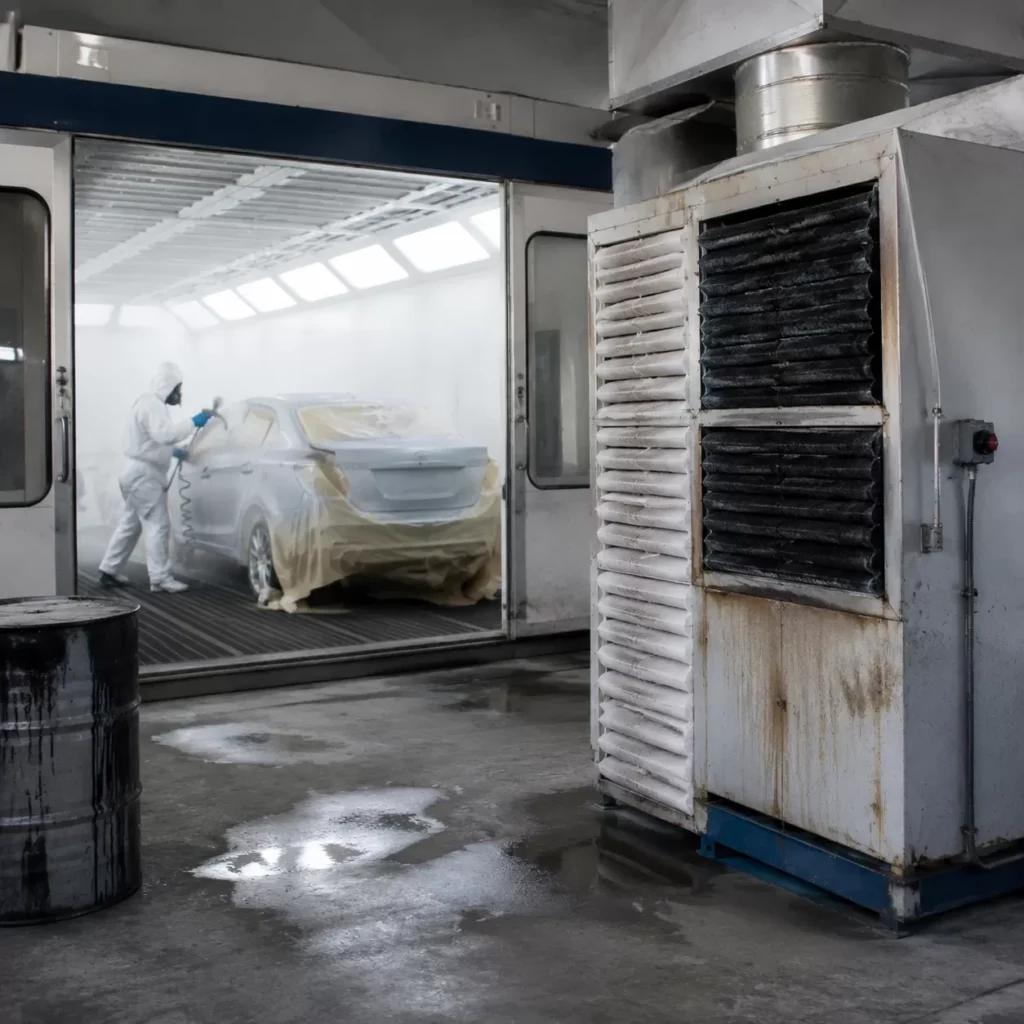
For most shops, the spray booth is one of the biggest energy consumers on the floor. That’s unavoidable — moving thousands of cubic feet of air per minute and heating it to precise temperatures takes real power. What isn’t unavoidable is running that system inefficiently. Poor configuration, overdue maintenance, and outdated equipment can quietly double your utility costs without any increase in production. This guide covers five signs your booth is wasting energy, why it happens, and what actually fixes it.
Page URL: https://sprayboothmanufacturer.com/product/
Understanding Where the Energy Goes
A spray booth draws from two separate energy sources, and both need to be managed to keep costs under control.
The electrical load comes from the exhaust and intake fan motors. Moving the volume of air a paint booth requires takes significant amperage, and anything that makes those motors work harder — clogged filters, pressure imbalances, worn belts — drives that number up.
The thermal load comes from the burner. Heating outside air to spray or bake temperatures burns fuel constantly, and if the booth can’t hold temperature efficiently — because of poor seals, inadequate insulation, or a poorly tuned burner — the system compensates by running longer and harder.
When these two loads are in balance and the system is running properly, a booth is manageable. When either side gets out of control, the other usually follows. That’s when utility bills start climbing without any change in how many cars are going through.
5 Signs Your Booth Is Costing More Than It Should
1. Bake Cycles Taking Longer Than They Used To
If the booth is taking noticeably longer to reach target temperature, the burner is working harder than it needs to. This can come from a drop in thermal efficiency — an aging heat exchanger, a poorly tuned burner, or an indirect-fired system that was never particularly efficient to begin with. Extended bake times mean fuel burning for no useful output, and the problem compounds across every cycle during a production day.
2. Weak Airflow or Spray Mist That Lingers
A cloud of overspray that hangs in the cabin after the trigger is released is a clear sign airflow has dropped below where it should be. The most common cause is clogged intake filters forcing the fan motor to pull against increased resistance. The motor draws more current trying to move the same volume of air through a restricted path — energy consumption goes up while actual airflow goes down. The finish quality suffers at the same time.
3. Whistling Seals or Drafts Around Doors
Air escaping through door seals or panel gaps means the booth can’t hold stable pressure. The system compensates by running harder to maintain the environment inside, which wastes both electricity and heated air. A booth that whistles or drafts is paying to heat air that immediately leaks out — and it usually gets worse over time as seals continue to degrade.
4. Running Full Fresh-Air Intake When the Booth Is Idle
If the booth runs at full capacity during flash-off, prep time, or idle periods — pulling in and heating fresh outside air continuously — a large portion of that energy is wasted. During phases where active spraying isn’t happening, the system doesn’t need to operate at full load. A booth without variable speed controls or recirculation capability during these phases is paying full operating cost for partial productivity.
5. Utility Bills Going Up Without More Work Going Through
Steady production volume with rising monthly bills points to something mechanical degrading. Slipping fan belts, a burner that’s no longer combusting cleanly, or motor efficiency dropping over time can all cause gradual cost increases that don’t have an obvious visible symptom. If the work hasn’t changed but the bills have, the equipment is working harder than it should be to deliver the same output.
| Warning Sign | What It’s Costing You |
|---|---|
| Longer bake cycles | Excess burner fuel per job |
| Lingering spray mist | High fan electrical draw, quality risk |
| Whistling door seals | Heat loss and motor strain |
| Full intake when idle | Thermal energy wasted constantly |
| Rising bills, same volume | Mechanical wear accumulating |
Four Ways to Fix It
Switch to Variable Speed Drives
Running exhaust and intake fans at 100% capacity all day is the single easiest thing to change. Variable Speed Drives (VSDs) adjust motor speed based on what the booth actually needs at each stage — spraying, flash-off, bake, idle. Dropping fan speed by 20% cuts power consumption by close to half on those motors. The soft-start function also reduces the electrical spike when motors come on, which helps with peak demand charges on commercial utility plans.
Retrofitting an existing booth with VSDs is straightforward in most cases and typically one of the fastest payback upgrades available.
Use Heated Air Recirculation During Bake Cycles
During a bake cycle, the booth already contains warm air. Without recirculation, that air gets exhausted and replaced with fresh cold air that the burner then has to heat again from scratch. A recirculation system routes the majority of that already-warmed air back through the booth during curing, so the burner only needs to maintain temperature rather than rebuild it continuously. The fuel savings during extended bake cycles are significant, especially in colder months.
Upgrade to a Direct-Fired Burner
Indirect-fired heating systems transfer heat through a heat exchanger, and some of that energy is lost through the flue before it ever reaches the cabin. Direct-fired gas burners transfer heat directly into the incoming airstream — efficiency close to 100% of the fuel consumed. If your booth is running an older indirect system and bake cycles feel slow, the heating system itself may be the bottleneck.
| Heating System | Efficiency | Energy Waste |
|---|---|---|
| Indirect-Fired | 70–80% | Heat lost through flue |
| Direct-Fired Gas | Near 100% | Minimal — direct transfer |
Keep Filters and Burner on a Real Schedule
Maintenance is where most of the gradual efficiency losses happen. Exhaust filters should be changed every 50 to 60 hours of spraying. Intake filters typically last three to six months depending on production volume. Running past these intervals forces the fan motor to work against increasing restriction — a direct electricity cost with no benefit.
Burner tuning should happen at least twice a year. A burner that’s running a dirty or incomplete flame wastes fuel on every cycle. It’s a straightforward service call that has a measurable impact on monthly gas bills.
FAQ
How often should filters be changed to control energy costs? Exhaust filters every 50 to 60 hours of spraying. Intake filters every three to six months. The more reliable indicator is your draft gauge — a pressure drop higher than normal means the filters are restricting airflow and the motor is compensating with increased electrical draw. Don’t wait for visible buildup on the walls to confirm what the gauge is already telling you.
Can I add a variable speed drive to an older booth? Yes, in most cases. VSDs can be retrofitted to existing fan motors and paired with automated controls so the system adjusts based on which operational mode the booth is in. The energy reduction during flash-off and idle phases typically makes this one of the fastest-payback modifications available for an existing booth.
What’s the right airflow speed for efficient operation? 100 feet per minute across the booth’s working cross-section during active spraying. During idle or prep phases, 50 FPM or lower is sufficient. During a bake cycle with recirculation active, the goal shifts to maintaining temperature rather than maximum airflow. Running at 100 FPM during prep or flash-off doesn’t improve finish quality — it just pulls heated air out of the booth and drives up operating costs.
What causes utility bills to go up without any production increase? Usually mechanical wear that’s accumulating gradually — slipping fan belts, a burner losing combustion efficiency, or motor performance dropping over time. These don’t always produce obvious visible symptoms until the problem is significant, which is why tracking monthly energy costs against production volume is worth doing. A sustained increase without a workload change is a signal to inspect the mechanical systems rather than wait for something to fail.
Tell Us What You’re Working With
Share your current booth setup, heating system type, and where you’re seeing the highest energy costs. We’ll put together a recommendation and a quote — usually within 48 hours.
Related Pages
- Bus Spray Booth Design Guide → https://sprayboothmanufacturer.com/transit-coach-spray-booth-requirements/
- Truck Paint Booth Guide → https://sprayboothmanufacturer.com/truck-paint-booth-semi-truck-spray-booth-specifications-buying-guide/
- Other related products → https://www.autokemanufacture.com/product
- Contact our sales Team → https://sprayboothmanufacturer.com/contact-us/
✅ CE Certified | ✅ ISO 9001:2015 | ✅ Factory Direct | ✅ Ships to 60+ Countries | ✅ 1-Year Warranty | 🔒 HTTPS Secured