
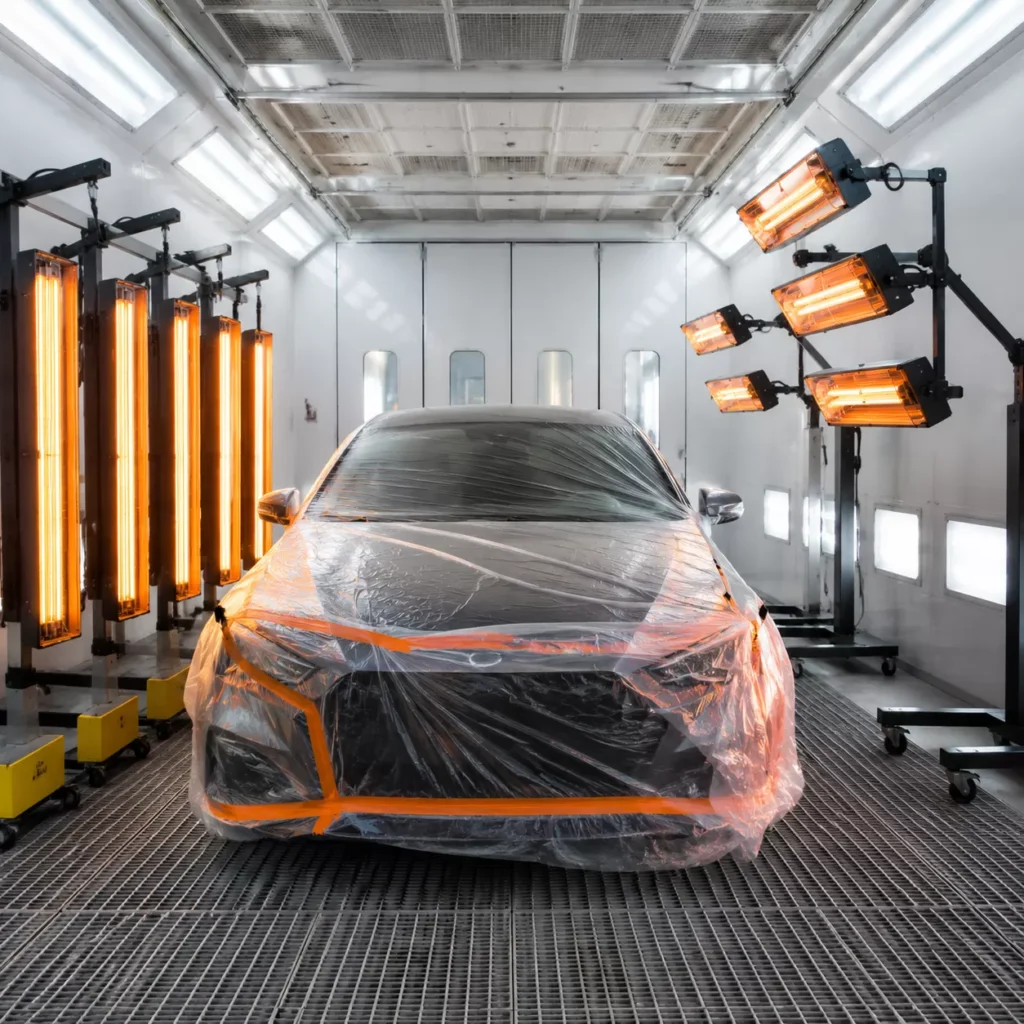
Slow drying times, trapped solvents, and uneven finishes usually come back to the same root cause — the wrong heating technology for the job. Understanding how different heat sources interact with paint layers and the vehicle substrate is what separates a shop that consistently produces clean results from one that fights contamination and rework on every car. This guide breaks down how convection and radiant heating differ, where halogen and far infrared each stand, and what quantum emitter technology actually changes.
Page URL: https://sprayboothmanufacturer.com/product/
How Heat Works in a Paint Booth
Convection vs. Radiant Heat
Traditional convection systems heat the air inside the booth, which eventually transfers energy to the vehicle surface. The problem is that this process heats everything in the cabin — the air, the walls, the empty space — before meaningful heat reaches the paint. That’s wasted energy, and it’s slow.
Radiant heating works differently. Like sunlight, it transfers energy directly to the target surface without needing to heat the surrounding air first. For automotive finishing, this means faster flash-off, less dust circulation from air movement, and significantly lower energy consumption per cure cycle.
The Wavelength Difference
When comparing different radiant heating technologies, the key variable is where on the electromagnetic spectrum the energy falls. Different wavelengths interact with paint layers and substrates in fundamentally different ways.
Shortwave infrared (halogen) operates at very high temperatures and heats the surface of the paint rapidly. The problem is that intense surface heat can cause the top layer to skin over before the solvents underneath have had a chance to escape — leading to solvent pop and blistering.
Far infrared (longwave) operates at lower temperatures but penetrates through the wet paint layers and heats the substrate — the metal or plastic beneath the coating. When the panel warms first, the paint cures from the inside out. Solvents are pushed upward through the paint film and exit safely before the surface seals. This eliminates trapped VOCs and dramatically improves flash-off times.
Medium-wave infrared falls in between and is used in some standard curing setups, offering a balance of surface and substrate heating without going all the way to either extreme.
Halogen Paint Booth Heating: The Traditional Standard
Halogen heat lamps have been the default choice in auto body shops for decades. They use a tungsten filament enclosed in halogen gas to generate intense shortwave infrared heat — and they get to temperature fast.
Where Halogen Works
The speed advantage is real. Halogen units heat up almost instantly, which means painters aren’t waiting for the system to come up to temperature before they can start working. They deliver a high-intensity heat output right from the moment they’re switched on, and the initial equipment cost is lower than more advanced alternatives.
Where Halogen Falls Short
The energy draw is the first problem. Running halogen units through a full production day puts a significant load on your electrical system, and the monthly utility cost reflects it. The shortwave heat’s shallow penetration is the second and more critical issue — because halogen heats from the surface down, it creates conditions where solvents get trapped beneath a quickly dried top layer. That’s what causes solvent pop and orange peel on the finished clear coat.
Durability is the third issue. Halogen bulbs are fragile. In the vibration-heavy environment of a busy shop, frequent bulb failures and replacements are a recurring maintenance cost and source of downtime.
Far Infrared Heating: Deep Curing From the Inside Out
Far infrared takes a completely different approach. Longwave radiation passes through the wet paint rather than heating the surface first, warming the substrate beneath the coating and driving the cure process from the inside out.
The Quality Advantage
Because the substrate heats first, solvents and water in the paint have a clear path out through the still-open paint surface before it seals. This eliminates the solvent pop problem that halogen creates. The result is a harder, smoother finish coming out of the booth with far less risk of surface defects caused by trapped volatiles.
For waterborne coatings specifically, far infrared is particularly effective because it drives water evaporation efficiently from below the paint film — the exact mechanism waterborne systems need for proper flash-off.
Energy Efficiency
Far infrared panels convert a high percentage of consumed electricity into usable radiant heat rather than wasting energy heating ambient air. This efficiency shows up directly on the monthly utility bill — operating costs are meaningfully lower than halogen setups running the same number of cure cycles.
The Trade-Offs
Far infrared elements take slightly longer to reach peak operating temperature than halogen’s near-instant response. For high-volume shops where every minute counts, this warm-up time is worth factoring into the workflow. Placement precision also matters more — far infrared emitters need to be positioned at the correct distance from the vehicle surface to deliver even penetration. Too close or too far and the curing becomes uneven across the panel.
Quantum Emitter Technology: Bridging the Gap
The newest development in automotive curing technology addresses the trade-off between halogen’s speed and far infrared’s quality. Quantum emitters use an advanced ceramic and quartz hybrid element that targets a specific wavelength optimized for paint absorption rather than simply generating broad-spectrum heat.
What Makes Quantum Different
Standard halogen elements blast shortwave energy at high intensity. Standard far infrared panels emit longwave energy at consistent output. Quantum technology manipulates photon release to match the energy frequency to what the paint and substrate actually absorb most efficiently — delivering fast response closer to halogen’s warm-up time while retaining far infrared’s inside-out curing mechanism.
The practical results: a 90% heat-to-energy conversion rate that keeps operating costs in check, and a component lifespan of 80,000 hours that eliminates the frequent replacement cycle that makes halogen so expensive to maintain over time. In a shop running multiple cure cycles per day, that lifespan difference between quantum emitters and halogen bulbs translates to years of reduced maintenance costs.
Smart Substrate Adaptation
Modern vehicles are a mix of steel, aluminum, plastic bumpers, and increasingly carbon fiber composite panels. Hitting all of these with the same heat intensity is a problem — what cures steel properly can warp or melt plastic trim. Quantum emitters adapt their output to the substrate in the spray zone, delivering deeper heat to metal panels while reducing intensity for plastics and composites. This means the entire vehicle cures correctly without the risk of heat damage on sensitive parts.
Head-to-Head: How the Three Technologies Compare
| Feature | Halogen (Shortwave) | Far Infrared (Longwave) | Quantum Emitter |
|---|---|---|---|
| Operating Costs | High — large power draw | Low — efficient conversion | Lowest — 90% conversion rate |
| Curing Speed | Very fast | Moderate | Fast and adaptive |
| Finish Quality | Prone to solvent pop | Excellent — inside-out cure | Flawless — no hot spots |
| Maintenance | High — frequent bulb replacement | Low — durable elements | Minimal — 80,000-hour lifespan |
| Energy Consumption | High | Low | Lowest |
Operating Costs
Halogen heaters consume the most energy, creating the highest long-term cost in this comparison. Far infrared technology slashes energy use dramatically with efficient longwave radiation. Quantum technology optimizes energy output and only consumes the exact amount required for operation, resulting in lower utility costs than both conventional options throughout the entire production lifecycle.
Curing Speed and Flash-Off
Halogen is fast at the start but creates bottlenecks when solvent pop forces correction work. Far infrared produces consistent, reliable cures but with a slightly slower warm-up. Quantum emitters deliver the responsive heat-up of halogen with the penetration quality of far infrared — pushing cars through the booth faster without compromising the finish.
Finish Quality
This is where the shortwave vs. longwave difference matters most in practice. Halogen’s surface-level heat traps solvents and creates orange peel and popping in the clear coat. Far infrared cures from the substrate up, eliminating those defects. Quantum technology adapts to the material being sprayed, ensuring even curing across the full vehicle without the inconsistency that comes from applying the same heat profile to different substrates.
Maintenance and Lifespan
Halogen bulbs break from vibration, age quickly under heavy use, and need replacing regularly. Far infrared elements are more robust. Quantum emitters are built specifically for high-production environments — the 80,000-hour rated lifespan means the replacement cycle that halogen creates simply doesn’t exist. Less downtime for maintenance means more productive hours in the booth.
Which Technology Fits Your Shop?
For low-volume operations doing occasional work with less demanding finish requirements, halogen remains a functional option where the lower upfront cost justifies the ongoing expense and quality trade-offs.
For shops focused on finish quality and operating efficiency, far infrared is the stronger choice. The inside-out curing mechanism eliminates the most common source of clear coat defects, and the lower energy consumption reduces overhead on every cycle.
For high-production shops where speed, quality, and operating costs all matter, quantum emitter technology offers the most complete solution. The 90% heat conversion rate keeps utility bills down. The 80,000-hour lifespan eliminates the maintenance overhead that halogen creates. And the adaptive substrate targeting means the same system handles every vehicle that comes through the door without adjustment.
As US regulations continue pushing shops toward lower VOC emissions and waterborne coatings, the precision of quantum technology becomes increasingly relevant. Waterborne paints need controlled, efficient heat transfer to flash off correctly — the same characteristics that quantum emitters are designed to deliver.
Common Questions
Why does halogen cause solvent pop but far infrared doesn’t? The wavelength difference determines where heat energy is absorbed. Halogen’s shortwave energy heats the surface of the paint first, sealing it before solvents underneath can escape. Far infrared’s longwave energy passes through the paint and heats the substrate, so solvents push out through the still-open surface before it seals. Quantum emitters replicate this inside-out curing mechanism with faster response times.
How much does the 90% conversion rate on quantum emitters actually matter? On a single cure cycle, the difference is noticeable but not dramatic. Across a production week of multiple cycles per day, the cumulative energy savings become significant. Over the multi-year lifespan of the equipment, the cost difference between quantum and halogen in electricity alone typically represents a meaningful return on the upgrade investment.
What makes the 80,000-hour lifespan practical for a busy shop? Running a booth for 40 hours per week, 80,000 hours represents roughly 38 years of continuous operation. In practice, elements will see some degradation over time, but the working lifespan still dramatically exceeds halogen bulbs that need replacement every few hundred hours in a high-vibration shop environment. The elimination of that recurring replacement cost and the downtime it creates is one of the clearest ROI arguments for quantum technology.
Is far infrared or quantum heating compatible with waterborne coatings? Yes — both are well-suited to waterborne systems. The inside-out curing mechanism that far infrared and quantum technology both use is precisely what waterborne coatings need for proper flash-off. The heat drives water evaporation from below the paint surface rather than sealing the surface before water can escape, which is what makes these technologies the right fit for shops that have made the switch to water-based materials.
Tell Us What You’re Working With
Share your current curing setup, coating type, production volume, and any specific quality or efficiency challenges you’re dealing with. We’ll help identify the right heating technology for your operation and send a detailed equipment quote — usually within 48 hours.
Related Pages
- Bus Spray Booth Design Guide → https://sprayboothmanufacturer.com/transit-coach-spray-booth-requirements/
- Truck Paint Booth Guide → https://sprayboothmanufacturer.com/truck-paint-booth-semi-truck-spray-booth-specifications-buying-guide/
- Other related products → https://www.autokemanufacture.com/product
- Contact our sales Team → https://sprayboothmanufacturer.com/contact-us/
✅ CE Certified | ✅ ISO 9001:2015 | ✅ Factory Direct | ✅ Ships to 60+ Countries | ✅ 1-Year Warranty | 🔒 HTTPS Secured