
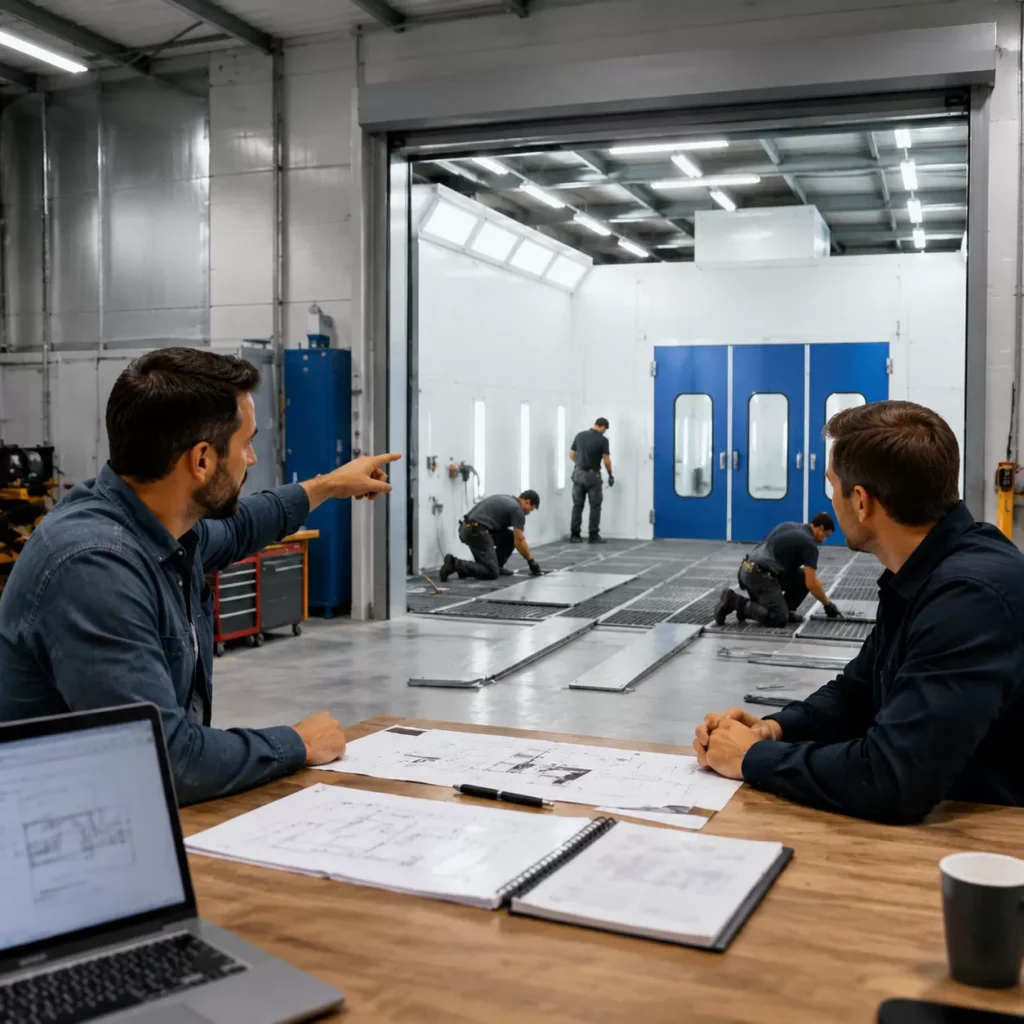
One of the most common mistakes shops make when planning a paint booth installation is underestimating how long the process actually takes from start to finish. The booth itself is only part of the picture. Permitting, site preparation, manufacturing lead times, and final inspections all run in sequence — and delays in any one phase push everything else back. This guide walks through each stage of a realistic installation timeline so you can plan around it instead of being caught off guard by it.
Page URL: https://sprayboothmanufacturer.com/product/
The Full Timeline at a Glance
From the day you sign the order to your first operational spray, a typical commercial paint booth installation takes 12 to 16 weeks. The majority of that time is manufacturing and shipping. The physical assembly on your shop floor usually only takes one to two weeks. The rest is design, permitting, site preparation, and testing — none of which can be rushed without creating problems downstream.
Phase 1: Planning, Customization, and Permitting (Weeks 1–4)
The first month is about getting the design locked in and the paperwork moving. Neither of these can wait.
Design and Specification
Getting the booth configuration right starts with understanding your facility footprint and production goals. The airflow style — crossdraft, semi-downdraft, or full downdraft — gets determined by your ceiling height, available floor space, and the finish quality your work requires. The Air Makeup Unit gets sized based on how many vehicles you’re pushing through and what coatings you’re running. These decisions need to be finalized before manufacturing can begin, so the earlier you can confirm the spec, the better.
The Permitting Process
Permitting consistently causes the biggest delays in paint booth installation projects — not because the requirements are complicated, but because shops start too late. Local municipality approvals, fire marshal sign-off, and EPA-compliant exhaust documentation all take time that you can’t compress. Some jurisdictions take weeks; others take longer.
Start submitting engineered drawings to your local building department and fire marshal on the same day you confirm the order. Don’t wait until the drawings are fully finalized to begin outreach — make contact early, understand what documentation they need, and get it in front of them as soon as it’s ready. Every week of delay here pushes your first spray date back by a week.
Phase 2: Manufacturing Lead Times (Weeks 4–10)
Once the design is confirmed and the deposit is paid, manufacturing begins. What happens on the factory floor during this phase determines when equipment arrives at your shop.
Raw materials get pulled, panel cutting gets scheduled, and mechanical components — exhaust fans, motors, control panels — get staged. The timeline from here depends on what you ordered.
Standard stock configurations with pre-engineered dimensions move through production in roughly four to six weeks. Custom builds with non-standard dimensions, heavy-duty structural requirements, or specialized airflow configurations take the full eight to ten weeks. There’s no shortcut — cutting time in manufacturing means cutting corners in fabrication.
Material availability occasionally introduces variability. Steel supply, motor availability, and freight logistics can all shift delivery dates. The way to mitigate this is to lock in materials and order long-lead components as soon as drawings are approved, not after. Waiting to place material orders until everything else is settled is one of the more common causes of extended lead times.
Phase 3: Site Preparation (Concurrent with Manufacturing)
While the booth is being built at the factory, site preparation should be happening simultaneously at your facility. Running these two phases in parallel is what keeps the overall paint booth installation timeline from stretching unnecessarily.
Concrete Foundation and Pit Work
If you’re installing a downdraft system, pit excavation and concrete work need to happen during the manufacturing phase, not after the booth arrives. Cutting the floor, excavating to the right dimensions, pouring the pit walls and floor, and allowing adequate cure time before equipment arrives is a process that takes weeks. Trying to do this after the booth is on-site means your equipment sits in crates while you wait for concrete to cure.
For crossdraft or semi-downdraft installations where no pit is required, verify that the existing slab is level and structurally adequate. An uneven floor creates gaps under the booth panels that affect pressure balance and contamination control.
Electrical and Gas Rough-Ins
Most professional booths require three-phase power for the exhaust fans and AMU. If your shop currently runs single-phase service, that needs to be addressed before the booth arrives — not after. Have a licensed electrician confirm your panel capacity and run the required conduit and breakers to the control panel location during the manufacturing phase.
Gas lines to the AMU location also need to be roughed in during this window. Trying to schedule these trades after the booth arrives creates bottlenecks that add weeks to your timeline.
Exhaust Ductwork and Roof Penetrations
Mark and cut the roof openings for exhaust stacks and fresh air intake during site preparation, then have a licensed roofer install the curbs and flashing immediately. Getting this done before the booth arrives means the ductwork connections happen quickly during assembly — and your roof is weatherproofed even if there’s a gap between when the penetrations are cut and when the stacks go up.
Phase 4: Delivery and Assembly (1–2 Weeks)
When the freight truck arrives, have a forklift ready. Unload the crates carefully, take immediate inventory against the packing list, and stage the components systematically on the shop floor. Missing parts discovered during assembly — rather than at unloading — cost time.
Erecting the cabin involves bolting the galvanized steel panels together, hanging the doors, and securing the structural supports. The key outcome of this step is a cabin that’s square, sealed tightly at every joint, and structurally sound. Panel gaps that allow air infiltration or an improperly hung door that won’t seal properly both create airflow problems that affect every job the booth ever runs.
Once the shell is standing, mechanical installation follows — the AMU gets positioned and connected, exhaust fans get mounted and tied into the roof penetrations, and lighting fixtures go in. Explosion-proof LED fixtures rated for Class I, Division 2 hazardous locations are the required specification for the spray zone.
Fire Suppression
Near the end of the assembly phase, certified contractors come in to complete the fire suppression installation. Whether your jurisdiction requires dry chemical or wet sprinkler systems, the piping and nozzles need to be integrated into the cabin before any inspections happen. This isn’t something to schedule as an afterthought — coordinate these contractors early in the manufacturing phase so they’re available when the booth is ready for them.
Phase 5: Connections, Testing, and Inspections (1 Week)
The final week turns an assembled structure into an operational finishing environment.
Electricians and plumbers make the final utility connections to the control panel and burner. Once power is live, the airflow testing begins. Calibrating cabin pressure, testing Variable Frequency Drives, and verifying airflow balance are what confirm that the ventilation system will actually perform as designed. A booth that hasn’t been properly calibrated will either over-pressure or under-pressure the cabin, affecting both finish quality and compliance.
The formal inspection walkthrough with the local building inspector and fire marshal is what officially clears the booth for operation. Everything that happened in the previous four phases — correct construction materials, fire suppression integration, exhaust configuration, electrical ratings — gets verified here. Failing this inspection delays your first spray date further and typically requires rework before a re-inspection can be scheduled.
After the inspection clears, operator training is the final step. Your painters need hands-on instruction on the control panel, filter change schedules, safety protocols, and daily maintenance routines before the booth goes into production. A piece of equipment your team doesn’t know how to run correctly won’t perform at the level you invested in.
Delays That Actually Happen and How to Avoid Them
Permitting delays. The most common cause of extended timelines. The fix is simple: start the permitting process the same day you order the equipment, not when the booth is about to arrive.
Contractor scheduling conflicts. Booth arrives on schedule, but the electricians and plumbers aren’t available for another three weeks. The fix is to book these trades during the manufacturing phase, give them firm deadlines, and confirm they’ll be available before the freight truck shows up.
Facility readiness issues. Wrong voltage, insufficient panel capacity, a ceiling beam that blocks the planned exhaust route. These get discovered at the worst possible time if the facility isn’t fully assessed before the order is placed. The fix is to do a thorough walkthrough with a licensed electrician before signing the purchase order — verify power supply, ceiling clearance, exhaust path, and floor condition as a first step, not an afterthought.
Common Questions
How long does a full paint booth installation take? Realistically, 12 to 16 weeks from order to first spray. Manufacturing takes most of that time. Physical assembly on site typically runs one to two weeks.
Can I install a paint booth myself? Not the parts that matter. Bolting the panels together is straightforward, but gas connections, electrical wiring, and fire suppression installation all require licensed contractors. DIY on these systems typically voids the manufacturer warranty and results in a failed inspection.
When should I start the permitting process? Day one — the same day you confirm the order. Every week you delay starting the permitting process is a week added to the end of your timeline.
What electrical supply do I need? Most professional booth setups require a dedicated three-phase power supply for the exhaust fans, AMU, and lighting. Confirm your incoming service and panel capacity with a licensed electrician before placing the deposit, not after the equipment has been ordered.
Tell Us What You’re Working With
Share your facility dimensions, planned booth configuration, and target date for first spray. We’ll put together a realistic project timeline for your specific installation and send a detailed quote with layout drawings — usually within 48 hours.
Related Pages
- Bus Spray Booth Design Guide → https://sprayboothmanufacturer.com/transit-coach-spray-booth-requirements/
- Truck Paint Booth Guide → https://sprayboothmanufacturer.com/truck-paint-booth-semi-truck-spray-booth-specifications-buying-guide/
- Other related products → https://www.autokemanufacture.com/product
- Contact our sales Team → https://sprayboothmanufacturer.com/contact-us/
✅ CE Certified | ✅ ISO 9001:2015 | ✅ Factory Direct | ✅ Ships to 60+ Countries | ✅ 1-Year Warranty | 🔒 HTTPS Secured