
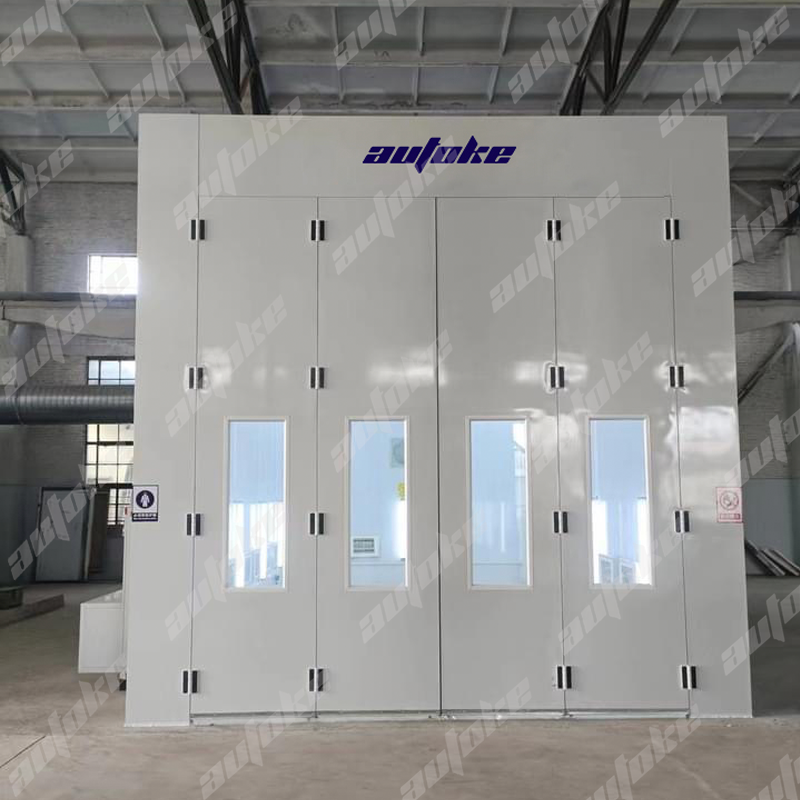

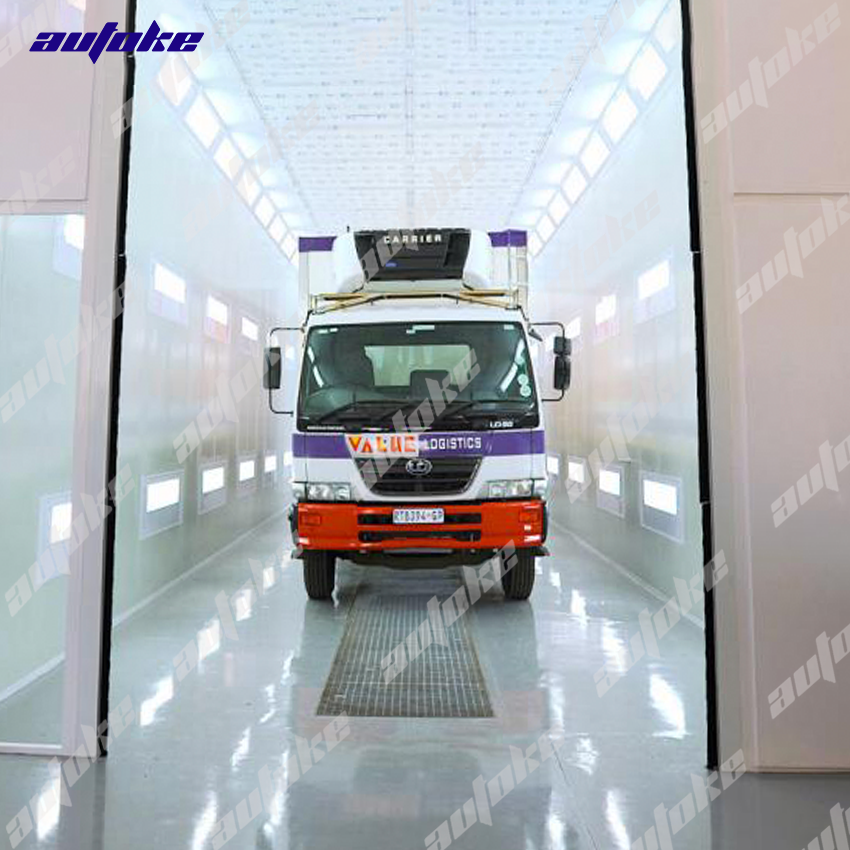
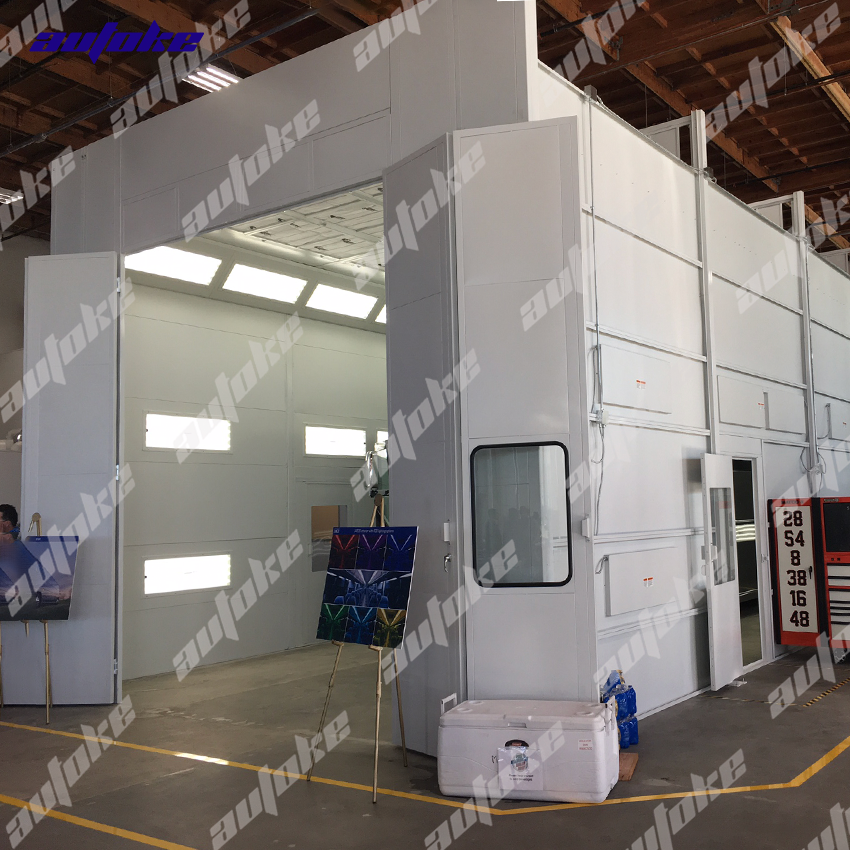
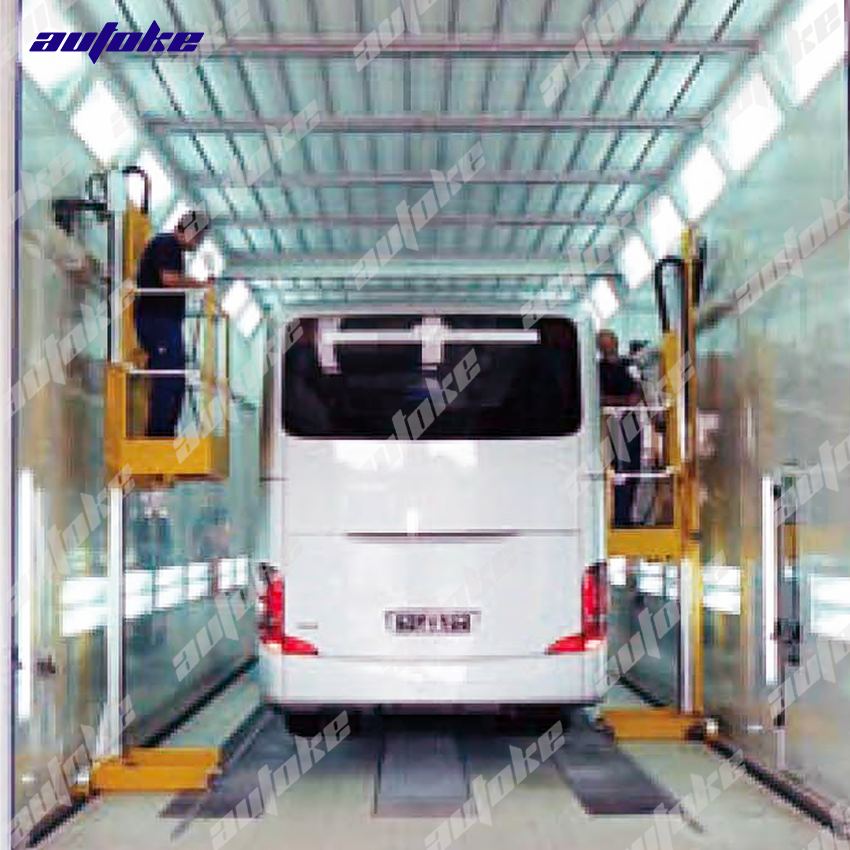
A baking oven for bus is a large-scale industrial curing chamber designed specifically for buses and other long commercial vehicles. It creates a sealed, insulated environment where painted surfaces are exposed to controlled heat and airflow, allowing coatings to cure evenly and efficiently.
Compared with standard car paint ovens, a bus paint baking oven offers:
Extended internal dimensions to fit full-length buses
Stronger heating capacity to handle thick coatings
Reinforced insulation to maintain stable temperatures
Optimized airflow systems to ensure uniform curing
This makes it suitable not only for buses, but also for coaches, articulated vehicles, and other large commercial applications.
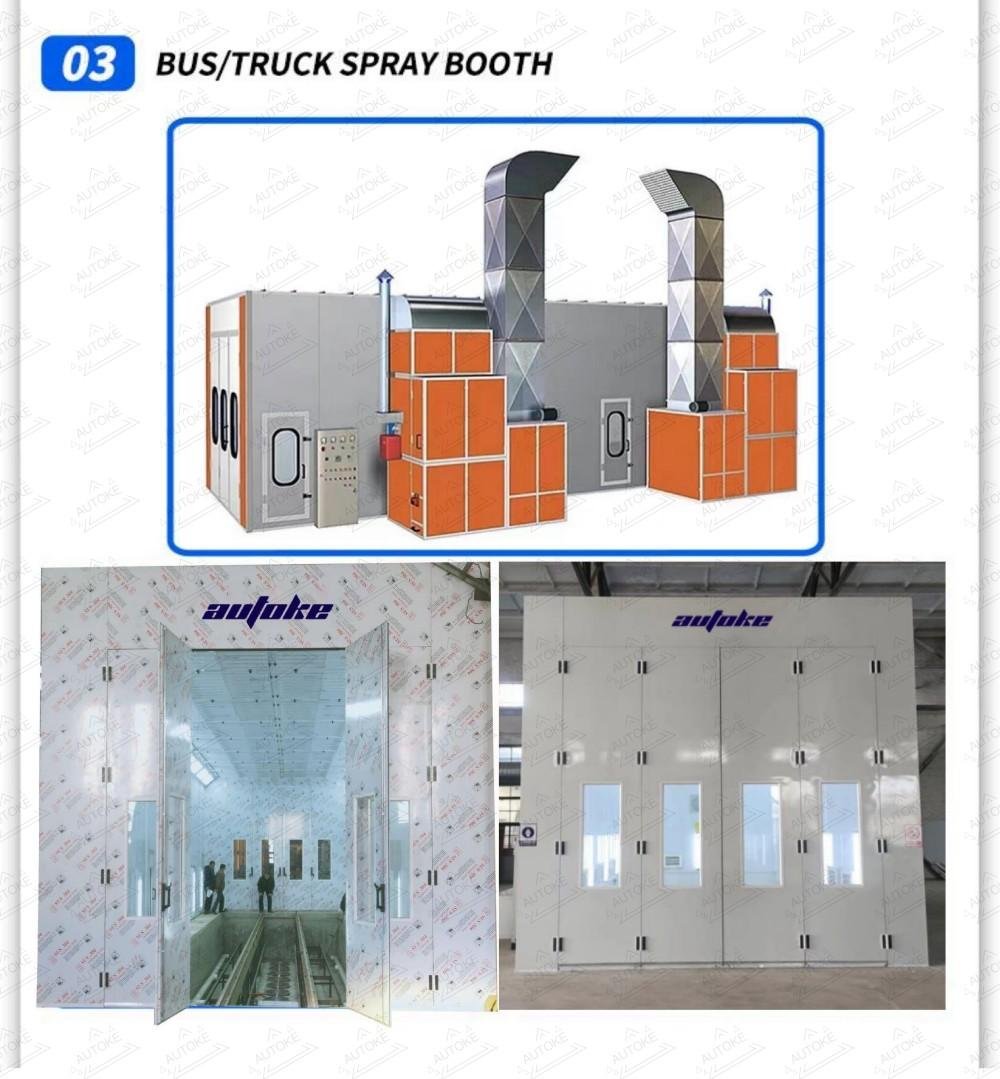
The baking oven uses diesel, gas, or electric heating systems to raise the internal temperature gradually. Heat exchangers distribute warm air evenly, preventing hot spots or uneven curing on large bus panels.
Air circulation systems move heated air continuously around the vehicle body. This balanced airflow ensures that every painted surface—roof, sides, and rear—receives consistent heat exposure.
Digital control panels allow operators to set curing temperatures typically between 60°C and 80°C, depending on paint specifications. Once the target temperature is reached, the system maintains it automatically throughout the curing cycle.
Exhaust fans remove excess heat and fumes, while pressure relief systems maintain a stable internal environment. This ensures safe operation and compliance with workshop safety standards.
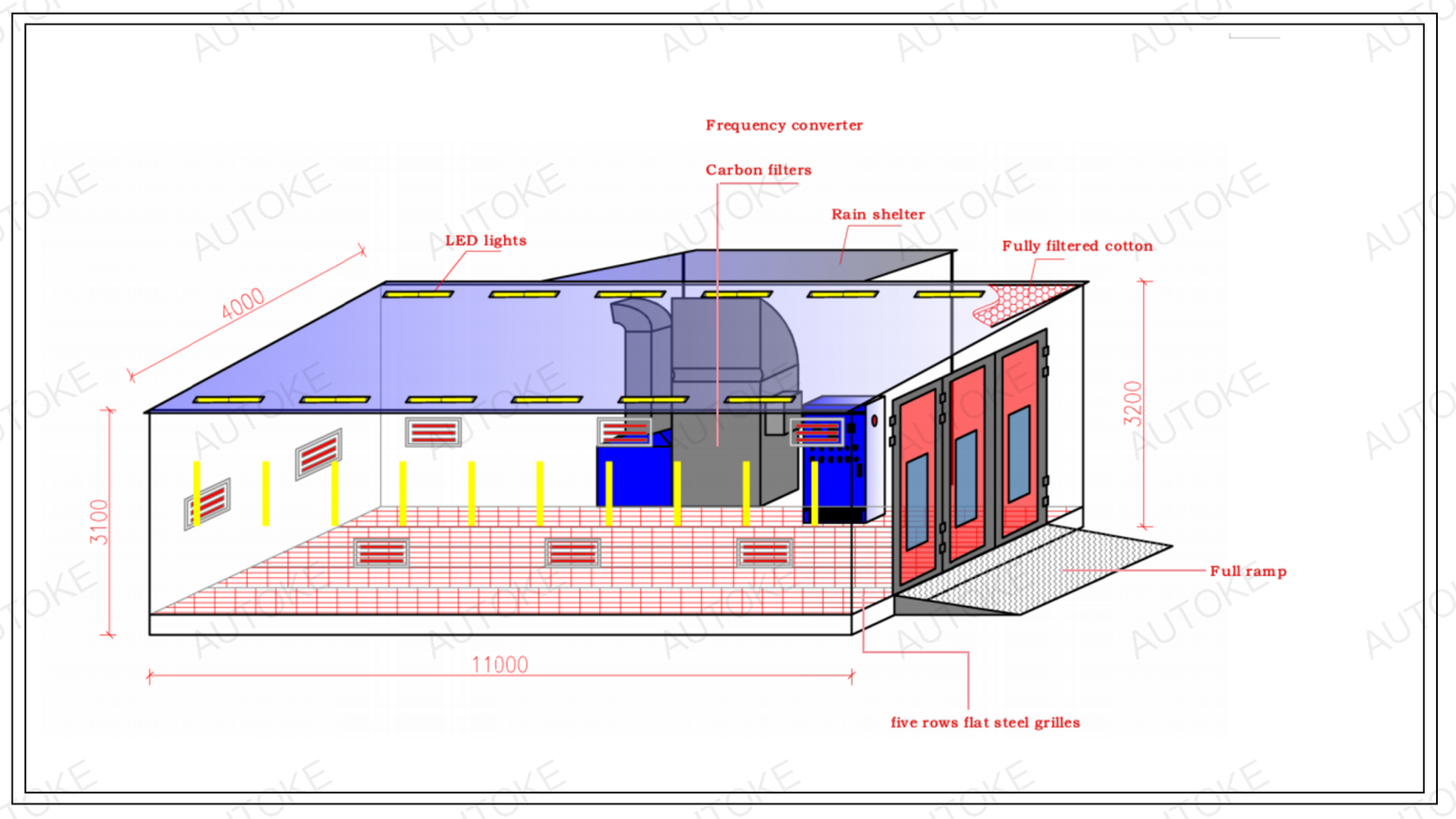
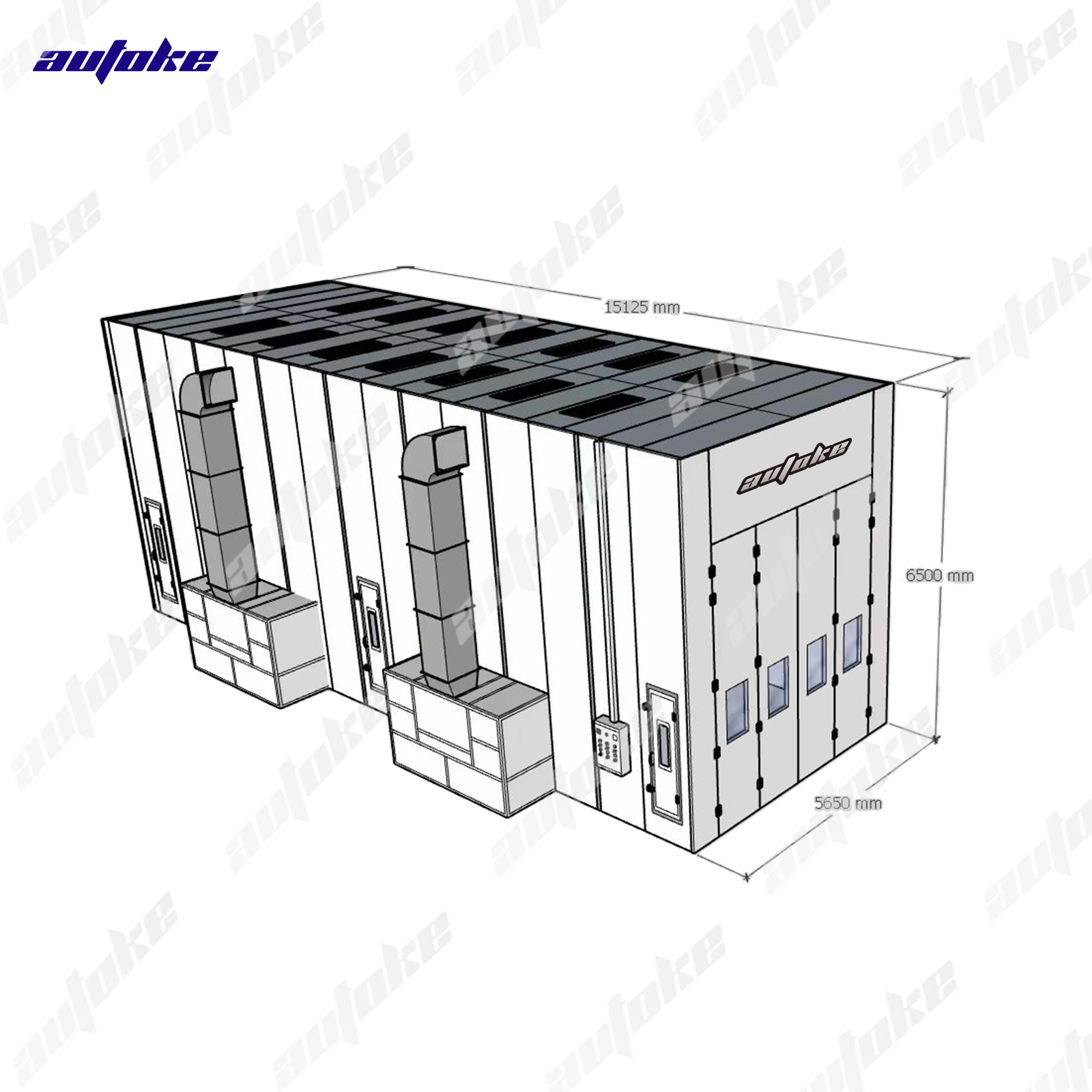
The oversized internal space allows full buses to be cured without repositioning, reducing labor and handling risks.
Compared to air drying, controlled heating dramatically shortens curing time, allowing workshops to complete more vehicles per day.
Uniform heat distribution prevents defects such as blistering, cracking, or uneven gloss.
Proper curing enhances paint adhesion and long-term resistance to weather and wear.
Shorter drying cycles mean less downtime and better utilization of workshop space.
Insulated panels and optimized airflow reduce heat loss and operating costs, even for large vehicle ovens.
A large vehicle baking oven performs consistently in cold, humid, or rainy regions where natural drying is unreliable.
A commercial vehicle paint curing oven is widely used in:
Bus manufacturing plants
Public transportation maintenance depots
Fleet refurbishment centers
Commercial vehicle repair workshops
It is especially valuable for operations that require stable quality across high-volume or repeated paint jobs.
When selecting a baking oven for bus, workshops should evaluate:
Maximum bus length, height, and width
Available heating energy source (diesel, gas, electric)
Insulation thickness and panel materials
Air circulation and exhaust design
Local safety and environmental regulations
A well-designed bus spray booth baking system ensures long-term reliability, consistent curing results, and lower maintenance costs.
A professional baking oven for bus is a long-term investment that directly impacts paint quality, productivity, and operational efficiency. With proper heating control, airflow design, and insulation, workshops can achieve consistent results while reducing curing time and labor costs.
For businesses handling buses and other large vehicles, a dedicated curing solution is essential to meet modern quality and efficiency standards.
Most bus paints cure effectively between 60°C and 80°C, depending on paint type and manufacturer recommendations.
Yes. Many workshops use an integrated bus spray booth baking system for spraying and curing in one enclosed space.
Typical curing time ranges from 30 to 90 minutes, depending on temperature and coating thickness.
Yes. Proper insulation and controlled airflow ensure stable curing even in high-humidity environments.
Yes. Size, heating method, airflow configuration, and control systems can all be customized based on workshop needs.
If you are planning to upgrade your bus painting operation, contact us to discuss specifications and customized baking oven for bus solutions tailored to your facility.